
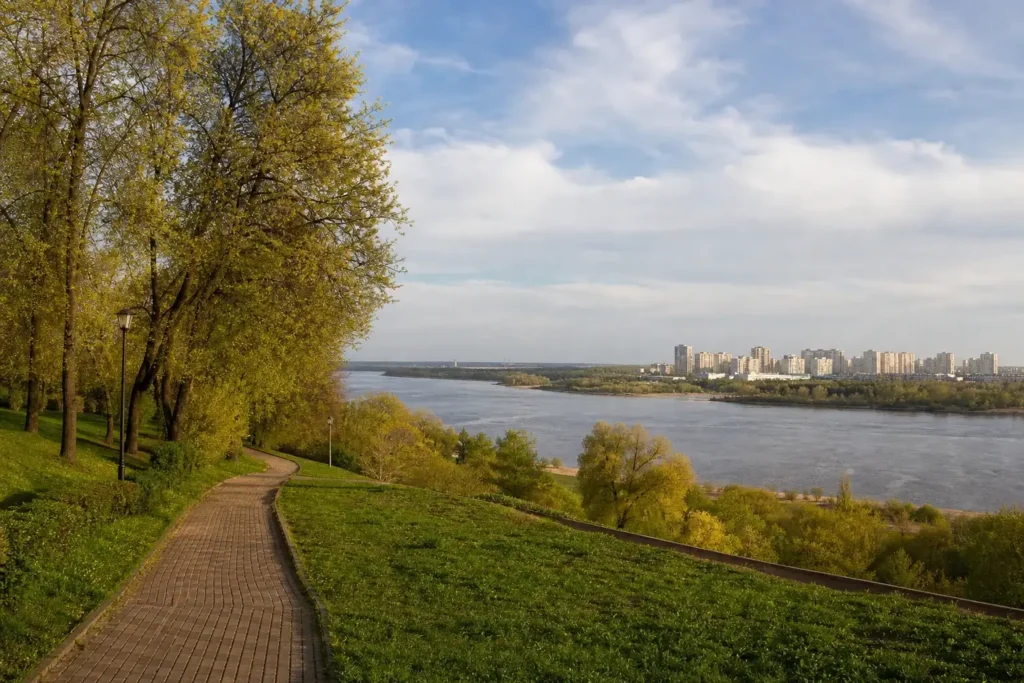
Prioksky District, one of Nizhny Novgorod‘s eight districts, occupies the upper part of the city on the high right bank of the Oka River. This is the city’s most spacious and verdant neighborhood, historically significant and increasingly popular with visitors exploring the Upper City’s residential, cultural and recreational character.
The Upper City is the historical and cultural part of Nizhny Novgorod, located on the right hilly bank of the Oka River, and is divided into three districts. Prioksky sits alongside Nizhegorodsky (home to the Kremlin) and Sovetsky, each distinct in character and offerings.
Quick Facts
| Russian name | Приокский район |
|---|---|
| Address | OpenStreetMap · Google Maps |
| District | Prioksky |
| Metro | Gorkovskaya (1, main exit) Chkalovskaya (1, main exit) |
| Best time to visit | Spring (April–May) and early autumn (September–October) offer pleasant weather for walking parks and exploring green spaces. Shveytsariya Park is most inviting during these seasons with blooming flora and comfortable temperatures. Summer (June–August) brings warmth but occasional crowds on weekends.Winter transforms the riverside landscape into a stark, snow-covered scene; visiting is possible but less comfortable. Midweek visits are generally quieter than weekends, allowing for peaceful exploration of residential neighborhoods and museums. |
| Recommended duration | 2–4 hours |
What Is (and Isn't) Part of a Visit to Prioksky District, Nizhny Novgorod?
| Part | Status | Notes |
|---|---|---|
| Shveytsariya Park | Included in the standard ticket | Major recreational park within the district; free entry and open to public. |
| Museum of Wooden Architecture | Separate ticket or institution | Open-air museum at Shchelokovsky Farm with separate admission; verify hours before visiting. |
| Sakharov Museum | Separate ticket or institution | Dedicated museum in Shcherbinki neighborhood; limited hours, advance confirmation recommended. |
| Nizhny Novgorod Kremlin | Outside / not part of it | Located in neighboring Nizhegorodsky District; not part of Prioksky District. |
| Chkalov Staircase | Outside / not part of it | Located in Nizhegorodsky District near the Kremlin; not within Prioksky borders. |
| Metro stations Gorkovskaya and Chkalovskaya | Included in the standard ticket | Both metro stations serve the district; standard metro fares apply. |
Why Visit Prioksky District, Nizhny Novgorod?
Prioksky is the greenest district in Nizhny Novgorod, making it ideal for visitors seeking parks, walking paths and nature. Along the whole district on the right bank of the Oka is a huge park called Shveytsariya (Switzerland), a four-kilometer recreational zone stretching along the river. The district offers a quieter alternative to the central Kremlin area while remaining accessible via metro and public transport.
The neighborhood combines Soviet-era residential architecture, recreational facilities and cultural institutions. Culture institutions include three movie theaters, one specialized for children, the large Switzerland park and Shchyolokovsky Khutor forest, making it accessible for families and those seeking everyday Nizhny Novgorod beyond tourist hotspots.
How Prioksky District, Nizhny Novgorod Is Laid Out
The main north-south transportation line is Gagarin Avenue, which forks into Arzamas and Bogorodsk roads after crossing the city border, with its southern section now known as Sakharov Avenue. This avenue serves as the district’s spine, connecting different neighborhoods and micro-districts.
The district has a land border with Sovetsky District to the south along Meditsinskaya Street and connects via the Myza Bridge to Avtozavodsky District across the Oka. Visitors entering from the metro stations arrive in the central parts near Soviet-era housing and move outward toward parks and peripheral areas.
The western and northern portions of the district encompass Shveytsariya park and the forest park Shchelokovsky farm, known as the Museum of Wooden Architecture, making these the primary recreational zones for day trips.
Highlights of Prioksky District, Nizhny Novgorod
Shveytsariya Park (Park Switzerland)
The Switzerland entertainment park stretches for four kilometers along the high bank of the Oka River. Two monuments in the park are dedicated to the memory of fallen Russian soldiers in local armed conflicts and to participants of the workers' movement in the early 20th century. The park offers river views, walking trails and green space, particularly appealing in warm months. Free entry.
Tip: Start your visit early in the morning to avoid crowds and enjoy the quietest time for photography of the Oka River landscape.
Museum of Wooden Architecture at Shchyelokovsky Farm
A forest park known as the Museum of Wooden Architecture is located on the district territory. This open-air museum displays traditional wooden buildings and structures, offering insight into regional rural architecture and heritage. The setting among trees and nature makes it distinct from urban museums.
Tip: Wear comfortable shoes for walking between exhibits scattered across the forest grounds; bring a camera for architectural photography.
Gorkovskaya Metro Station
Gorkovskaya is a station on the Avtozavodskaya line of Nizhny Novgorod Metro and is the northern terminus; it opened on November 4, 2012. As a modern station in the Upper City, it represents the metro's recent expansion and serves as an entry point to the district. The station architecture reflects contemporary Russian metro design.
Tip: This station connects to buses and trolleybuses; check schedules before planning onward travel from here.
Sakharov Museum
The Nizhny Novgorod Andrey Sakharov Museum is located in an apartment in the Shcherbinki neighborhood where the scientist had to live in the 1980s. This small, intimate museum commemorates the Nobel Prize-winning physicist and dissident's period under house arrest in the city. The historic apartment offers rare firsthand perspective on Cold War surveillance.
Tip: Call ahead to confirm visiting hours, as this museum operates on a limited, unpredictable schedule.
Chkalovskaya Metro Station and Neighborhood
Chkalovskaya is a station on the Avtozavodskaya line and opened on 20 November 1985 as one of six initial stations of the Metro. Located in the district's southern section, it provides access to surrounding residential areas and serves as a junction with local transit. The station represents early Soviet metro design.
Tip: This station is less crowded than central stations; it's a good starting point for exploring quieter residential streets of the district.
Soviet Residential Blocks and Urban Planning
The district is essentially residential. Prioksky's housing stock reflects Soviet-era urban planning—large apartment complexes typical of 1960s–1980s construction. The orderly layout and green spaces between buildings characterize the neighborhood's architecture and streetscape.
Tip: Walk the side streets near metro stations to see authentic Soviet-era housing and suburban-style planning; avoid busy Gagarin Avenue if seeking quieter exploration.
Atmosphere
Prioksky District feels distinctly residential and suburban compared to central Nizhny Novgorod. Wide avenues, green spaces and Soviet apartment blocks create an atmosphere of calm order rather than bustle. The riverside sections near Shveytsariya Park offer peaceful settings with views across the Oka.
During daytime hours, the district is quiet with local residents about their daily routines—shopping, walking, using public transport. Weekends bring families to parks and recreational areas. The district has fewer tourists than the Kremlin area, making it feel more authentically lived-in. In autumn and spring, the parks are particularly pleasant; winter transforms the riverside into a stark, bare landscape.
History of Prioksky District, Nizhny Novgorod
Prioksky City District was established in 1935 and is located on the high right bank of the Oka River. The founding date reflects Soviet administrative reorganization of the city into districts during the rapid industrialization era. The district’s boundaries on the Oka River have remained stable, making it a coherent geographic entity for nearly a century.
Industrial development included radio, electric, and electronics state-owned enterprises such as the Frunze Plant and JSC Thermal, while scientific institutions focused on telecommunications and radar applications. This industrial legacy shaped the district’s economy and workforce during the Soviet period, though manufacturing has since declined.
The district developed as a primarily residential area after the 1950s, with suburban-style apartment complexes and green spaces becoming dominant features. Infrastructure for transportation includes a Myza commuter train rail station and Shcherbinki bus station for interurban travel, facilitating connections to surrounding regions.
Plan and Book
Advertisement: these are partner links. If you book or buy through them, we may earn a commission at no extra cost to you.
Suggested itineraries Prioksky District, Nizhny Novgorod
2 hours
Visit Shveytsariya Park along the Oka riverbank, viewing monuments and walking the riverside paths. Explore the immediate surroundings via Gorkovskaya or Chkalovskaya metro stations and the residential neighborhoods nearby. End at a local café or shop.
3–4 hours
Start at Shveytsariya Park in the morning, then travel to the Museum of Wooden Architecture at Shchelokovsky Farm (via minibus or taxi from the park). Explore wooden structures and forest setting. Return to central Prioksky and visit the Sakharov Museum in Shcherbinki neighborhood if open.
Half day
Combine the museum sites with a walking tour of Soviet-era residential blocks along Gagarin Avenue and nearby streets. Visit one of the three local cinemas or shops. Finish with a walk through Shveytsariya Park at sunset for river views, then dine at a local restaurant.
How to Get to Prioksky District, Nizhny Novgorod
By Metro: Two metro stations serve the district on Line 1 (Avtozavodskaya line). Gorkovskaya is the northern terminus, opening directly to upper district areas. Chkalovskaya serves the southern section. Both connect with local buses and trolleybuses.
From Gorkovskaya: Exit the station and ascend to street level. You are in central upper Prioksky. Walk east or south to explore residential areas, or head toward Shveytsariya Park (20–30 minute walk or short bus ride northwest).
From Chkalovskaya: Exit to reach the southern residential neighborhoods. This station connects to surrounding streets and shopping areas; Shcherbinki neighborhood (home to the Sakharov Museum) is accessible by local transit.
By Commuter Train: Myza station serves interurban passengers; it is in the western part of the district.
By Bus: City buses connect all metro stations; routes 1, 3, 6, 27, 40, 41, 43, 45 and others serve the district. Schedules vary; check local transit information upon arrival.
Accessibility
Sidewalks are available throughout the district, though conditions vary in older residential areas. Soviet-era apartment blocks have stairs; not all have lifts. Shveytsariya Park includes accessible paths along the river, though some sections are unpaved. Metro stations Gorkovskaya and Chkalovskaya have standard accessibility features for a modern Russian metro system; verify specific accommodations with the station staff upon arrival.Taxis and ride-share apps (such as Yandex Taxi) are available for transport within the district and are recommended for those with mobility limitations.
Food Nearby
Local cafés and small restaurants serve typical Russian comfort food and Soviet-style canteens throughout the district. The areas near Gorkovskaya and Chkalovskaya metro stations have small shops, bakeries and casual dining. Shveytsariya Park has informal food stands and kiosks during warmer months. For sit-down meals, explore the side streets off Gagarin Avenue where family-run restaurants serve traditional dishes.
What to Bring
Comfortable walking shoes are essential for exploring parks and neighborhoods. In spring and autumn, bring a light jacket; in winter, warm clothing including a coat, hat and gloves. A camera or smartphone for photography of parks and architectural details is useful. Sunscreen in summer and an umbrella in unpredictable seasons. Small denomination rubles for park kiosks and informal vendors; most cafés accept cards.
Best Views and Photo Spots of Prioksky District, Nizhny Novgorod
Shveytsariya Park riverside overlook
Wide views across the Oka River to the lower city and landscape beyond. Trees frame the water. Soviet monuments visible on the park grounds. Best for landscape and architectural perspective shots.
Best time: Late afternoon for warm, directional light; early morning for mist and soft light off the water. Autumn colors enhance composition.
Soviet apartment block facades, Gagarin Avenue and side streets
Characteristic 1960s–1980s Soviet residential architecture with colorful panels, regular fenestration and utilitarian design. Green spaces between buildings add depth.
Best time: Midday for even light on building faces; overcast sky reduces shadows and highlights façade colors.
Myza Bridge approach from the district
Views of the bridge structure spanning the Oka, with lower city visible beyond. Industrial and urban landscape perspective.
Best time: Golden hour (morning or late afternoon) for dramatic lighting and bridge shadows.
Shchelokovsky Farm forest path
Traditional wooden structures among trees. Seasonal foliage frames buildings. Quiet, rural atmosphere contrasts with urban surroundings.
Best time: Autumn for colorful leaves; late spring for fresh green growth and blooming understory.
Photography Rules
Photography is generally unrestricted in Shveytsariya Park and public areas. Indoor museums may restrict flash photography; confirm with museum staff. Tripods require permission in many public spaces. Drones are not permitted over parks or residential areas. The riverside sections offer scenic perspectives, particularly at sunset or during golden-hour light.
Family Suitability
Prioksky District is reasonably family-friendly. Shveytsariya Park offers safe, open green space ideal for children to run and play. Strollers are manageable on park paths and main streets, though some sidewalks in residential areas are narrow or uneven. One of the three local movie theaters is specialized for children, providing entertainment options.The district lacks major child attractions (unlike central Nizhny Novgorod's zoo and museums), making it more suitable for families seeking quiet outdoor time than those wanting intensive kid-focused activities. Soviet-era housing and residential character mean fewer restaurants with kids' menus compared to central areas; plan meals accordingly.
Russia Vibes Tips
- Gorkovskaya station is the terminus and becomes crowded during rush hours; visit parks and museums outside peak times (typically 8–9 AM and 5–7 PM on weekdays) for a quieter experience.
- Shchyelokovsky Farm's Museum of Wooden Architecture operates on irregular hours; call or check locally before making the journey. It is not consistently posted online.
- Sakharov Museum requires advance arrangement and has very limited hours; do not rely on it as a walk-in visit. Contact local tourism or the district administration for current access.
- Use Yandex Maps or Google Maps to navigate the district; many streets follow a logical Soviet-era grid, making self-guided walks straightforward once oriented from the metro station.
- Gagarin Avenue has heavy traffic and narrow sidewalks in places; quieter exploration happens on parallel side streets that connect it to the Oka and residential blocks.
- Bring a physical map or offline map function; cellular data coverage in parks and peripheral areas is sometimes spotty, and few signs are in English.
Explore Nearby Prioksky District, Nizhny Novgorod
Sights near Prioksky District, Nizhny Novgorod
 Nizhny Novgorod Kremlin – about 9.3 km away · typical visit: 2–3 hoursOpen daily 06:00–22:00
Main image: AI-generated illustration. It may not show the place exactly as it looks.
Browse more: More in Prioksky · All Neighborhoods · All Neighborhoods · All Neighborhoods in Nizhny Novgorod · All Nizhny Novgorod
FAQ: Prioksky District, Nizhny Novgorod
Is Prioksky District the same as the Upper City?
No. Prioksky is one of three districts within the Upper City; it shares the Upper City with Nizhegorodsky (which contains the Kremlin) and Sovetsky District. All three sit on the high right bank of the Oka River.
Can I visit the Kremlin from Prioksky District?
The Kremlin is in neighboring Nizhegorodsky District, not Prioksky. From Gorkovskaya or Chkalovskaya metro stations, the Kremlin is accessible by metro (one stop south) or by walking south through residential areas; it takes about 15–20 minutes on foot.
What is the Museum of Wooden Architecture, and how do I get there?
It is an open-air museum at Shchelokovsky Farm in the western part of the district, showcasing traditional wooden structures and rural architecture. Access is by minibus, taxi or organized tour from central Nizhny Novgorod. Hours are unpredictable; verify locally before planning a visit.
Are there restaurants in Prioksky District?
Yes, small local cafés, canteens and informal restaurants serve traditional Russian food. However, the selection is more limited than in central Nizhny Novgorod. Most are family-run establishments on side streets, not major chains.
Is Shveytsariya Park free to enter?
Yes, entry to the park is free. It is an open public space. There are no gates or admission fees. Individual attractions or events within the park may occasionally charge fees.
How long should I spend in Prioksky District?
Most visitors spend 2–4 hours exploring parks and residential areas. A half-day (4–6 hours) allows time to visit multiple sites including the Museum of Wooden Architecture if accessible. Overnight stays are uncommon as the district is residential and lacks major hotels.
Is the Sakharov Museum hard to find?
Yes. It is a small, intimate museum in a residential apartment in Shcherbinki neighborhood and does not have prominent signage. Advance contact with local tourism is strongly recommended; arriving without confirmed hours risks finding it closed.
Are English signs common in the district?
No. Prioksky is a residential neighborhood with minimal tourist infrastructure. Russian language skills or offline translation apps are useful. Metro signage has English transliterations; street names and museum signs are primarily in Russian.
Russia Vibes is a one-person project. A coffee keeps it going
How we research and update our guides
About this guide: AI assistance and accuracy
This guide is created with the help of AI and is based on official sources where available. Mistakes can still happen. Opening hours, prices, rules and other details are given to the best of our knowledge as of the date shown and can change without notice. It offers general recommendations only, not professional, legal or travel advice. Please confirm important details with the official source before you travel; you are responsible for your own plans and decisions.

Take this guide with you
Get a free PDF of this guide to print or read offline: key facts, tips and a map link on a few clean pages.
Report an issue on this page
Paying for your trip: please read
International sanctions affect payments between Russia and many other countries. In practice, cards issued in the EU, the UK, the US and several other countries often do not work in Russia, Russian cards usually do not work abroad, and some booking platforms, airlines and payment providers limit or suspend their services for Russia. The situation changes frequently.
We do not give legal or financial advice, and this site does not encourage anyone to break or circumvent sanctions. Whatever you plan, you are responsible for following the laws and regulations that apply to you, including those of your country of residence and citizenship.
Many travelers still organise their stay lawfully. It is worth asking your bank or payment provider what is currently permitted, contacting hotels, tour operators and carriers directly about the payment methods they accept, and checking which services are open to customers from your country. Clarify payment, cancellation and refund terms before you commit to a booking, and keep your plans flexible.
Partner links on this site may not be available in every country, and prices, availability and rules in our guides can differ from what you see when you book.