
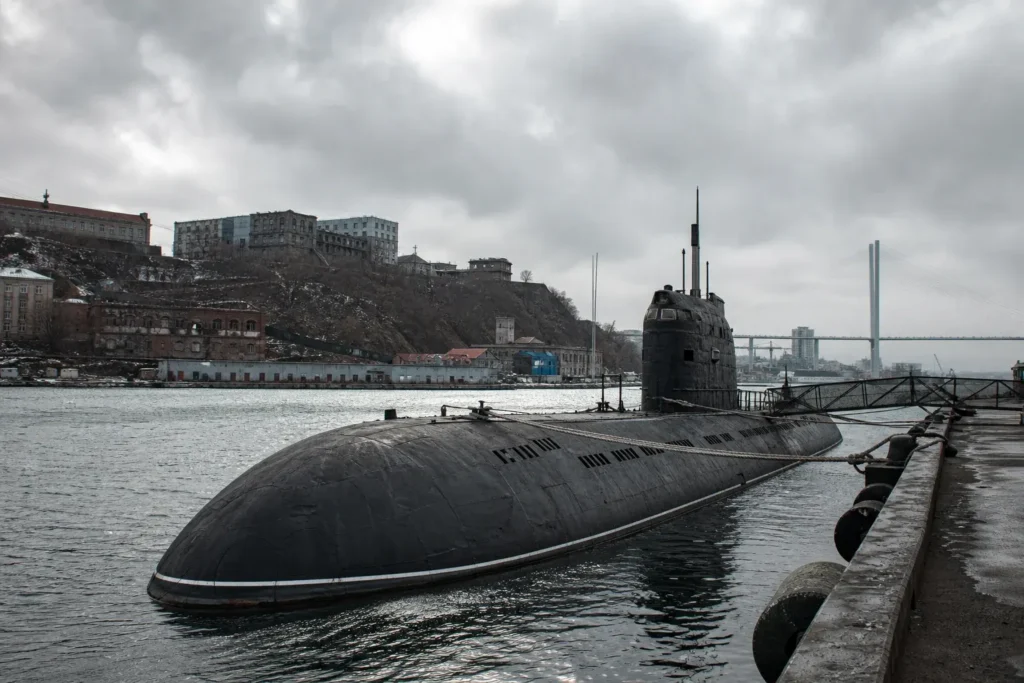
This itinerary traces Vladivostok‘s extraordinary maritime heritage, from late 19th-century military fortifications to Cold War submarines. The route assumes a leisurely pace with time to explore interior museum spaces and absorb the stories behind each vessel and installation.
Over three days, you’ll board a famous Soviet submarine that circumnavigated the globe, climb through an early 20th-century guard ship, walk fortress tunnels built to defend Russia’s eastern borders, and visit the museum dedicated to the Pacific Fleet’s development. You’ll finish understanding why Vladivostok became one of the world’s most strategically significant naval ports.
At a glance: Day 1 focuses on the waterfront submarines and ships near Korabelnaya Embankment. Day 2 explores the Pacific Fleet Museum and Golden Horn Bay views. Day 3 ventures to Vladivostok Fortress on Russky Island to see military engineering and artillery batteries.
Day 1: Submarines and the Waterfront
Start at the iconic S-56 submarine, moored on Korabelnaya Embankment. This WWII-era diesel-electric vessel sank 10 enemy ships and survives as one of the world's best-preserved submarines. Walk its seven compartments, including the restored crew quarters, torpedo room, and central control post. Then tour the nearby Krasny Vympel, a guard ship built in Finland in 1911 that served both world wars and the Russian Civil War. Finish at the waterfront promenade for views of Golden Horn Bay.
- Submarine S-56 Museum – WWII diesel-electric vessel with seven compartments; climb through crew quarters and torpedo room (1.5–2 hours)
- Krasny Vympel Memorial Ship – 1911 Finnish-built guard ship; interior with historical documents and bay views from upper decks (45 minutes–1 hour)
- Korabelnaya Embankment Promenade – Waterfront walk with views of the bay and naval vessels; cafés and rest areas (30 minutes)
- Golden Horn Bay Viewpoint – Panoramic views of the Zolotoy Bridge and surrounding waters (20 minutes)
Tip: The S-56 has narrow corridors and multiple levels—wear comfortable shoes. The two museum ships are adjacent, so combine them into one 2–3 hour waterfront session starting early to avoid afternoon crowds.
Day 2: Pacific Fleet History and Harbor Views
Devote the day to the Pacific Fleet Museum, housed in a 1903 building that once served as quarters for Siberian Naval Crew officers. Inside, explore exhibits on the development of Russia's submarine forces, naval medals, uniforms, maps, and models of historic warships. The museum traces the Pacific Fleet from the Imperial Russian period through Soviet times to the modern era. Spend the afternoon walking Golden Horn Bay and resting at viewpoints, or visit the nearby promenade to observe active naval operations in the harbor.
- Pacific Fleet Museum – 1903 building with exhibits on naval development, submarines, uniforms, and WWII artifacts (1.5–2 hours)
- Museum Outdoor Displays – Naval equipment, weaponry, and the TK-351 torpedo boat from WWII (30 minutes)
- Golden Horn Bay Promenade – Leisurely walk with cafés and views of the harbor; best in late afternoon for light (1–1.5 hours)
- Sportivnaya Harbor Area – Watch active naval vessels; observation spots and rest benches (1 hour)
Tip: The Pacific Fleet Museum does not allow photography inside; plan accordingly. Combine the museum visit with a long waterfront walk in the afternoon. The harbor comes alive with naval activity in the late afternoon—time your walk for this period.
Day 3: Fortifications and Island Defense
Travel to Russky Island to explore Vladivostok Fortress, built in the late 19th century to defend the city against naval threats. This sprawling complex features intricate underground tunnels, artillery batteries, and fortifications that demonstrate advanced military engineering of the era. The fortress has never been attacked in combat, preserving its original layout. Visit the Museum of the Pacific Fleet branch within the fortress, explore the Voroshilovskaya Battery with its outdoor military equipment (tanks, guns), and enjoy panoramic views of the city and bays from the elevated positions.
- Vladivostok Fortress Museum – Complex of underground tunnels, batteries, and fortifications; guided tours available (2–2.5 hours)
- Vorosilovskaya Battery – Outdoor display of tanks, anti-tank guns, and infantry vehicles; original architecture preserved (1 hour)
- Fortress Panoramic Viewpoint – Elevated views of Vladivostok city, Golden Horn Bay, and surrounding terrain (30 minutes)
- Russky Island Beach or Park – Rest and refreshment after fortress exploration (1 hour)
Tip: Reaching Russky Island requires crossing the Russky Bridge (or taking a boat; check current ferry schedules). The fortress terrain is hilly with multiple levels—bring water and wear sturdy walking shoes. Tours are often in Russian, so consider hiring a guide or downloading a translated audio guide beforehand.
Russia Vibes Tips
- Book S-56 tours in advance during peak season (May–September); the submarine interior fills quickly and can close if crowds reach capacity. Arrive at opening time for the best experience.
- The two waterfront ships (S-56 and Krasny Vympel) open Wednesday–Sunday, 10am–6pm. Verify current hours before visiting on Monday or Tuesday, as hours change seasonally and museums may close for restoration.
- Wear layers and bring waterproof jackets. Vladivostok's climate is cool and windy, especially near the water. May–September is best; October can be unpredictable and winters are harsh.
- Photographs are often restricted inside the S-56 and Pacific Fleet Museum. Exterior shots of the ships and fortress are excellent for photography—visit in late afternoon when light is warm and the bay becomes golden.
- Naval vessels and fortifications remain active military sites. Do not attempt to enter restricted areas marked with signs or fencing. Respect security perimeters, especially around active harbor installations.
- Combine Days 1 and 2 if short on time; both center on the waterfront within walking distance. Skip the submarine interior if claustrophobia is a concern—the exterior and museum context alone convey the historical significance.
Explore Nearby Navy & Maritime Heritage, Vladivostok
Browse more: All Itineraries · All Itineraries in Vladivostok · All Themed Routes · All Vladivostok
FAQ
Is the S-56 submarine actually a combat veteran from WWII?
Yes. S-56 was commissioned in 1941 and completed eight combat patrols. It sank 10 enemy ships and was later transferred to the Arctic, surviving a depth-charge attack. The sub was decommissioned in 1955 and converted to a museum in 1975. Every compartment you visit today is the authentic original vessel.
Can I go inside both the submarine and the Krasny Vympel ship?
Yes, both museums allow interior access. The S-56 interior is divided into seven compartments; four in the aft section display exhibits, while three forward compartments preserve the original crew quarters and combat stations. Krasny Vympel's interior contains historical documents and photos from its service in both world wars.
Are these museums open year-round?
Officially yes, but hours vary seasonally. The S-56 and Krasny Vympel typically open Wednesday–Sunday, 10am–6pm. The Pacific Fleet Museum and Vladivostok Fortress have similar schedules. Winter hours (November–March) may be shorter. Always check the Museum of the Pacific Fleet website before planning visits on Monday–Tuesday or in winter.
What is the difference between the S-56 submarine and the Pacific Fleet Museum?
S-56 is a single vessel that preserves the daily life and combat history of one submarine crew. The Pacific Fleet Museum is a building-based institution that chronicles the entire development of Russia's Pacific naval forces from the Imperial era to today, featuring models, uniforms, medals, and artifacts. The two complement each other.
Is Vladivostok Fortress on the same island as the museums?
No. The waterfront museums (S-56, Krasny Vympel, Pacific Fleet Museum) are in central Vladivostok. Vladivostok Fortress is on Russky Island, accessed by the Russky Bridge or boat. Plan 1–2 hours for travel; it requires a separate half-day or full-day visit.
Can I board the submarine if I have claustrophobia or mobility issues?
The S-56 has very narrow corridors, steep ladders between compartments, and low ceilings. It is not recommended for those with claustrophobia, mobility disabilities, or knee/back problems. You can view the exterior, see photos of the interior, and visit the Pacific Fleet Museum instead.
Are guided tours necessary, or can I explore alone?
Self-guided visits are possible, especially at the waterfront ships which have informational plaques. However, many exhibits lack English translations. The Vladivostok Fortress benefits from a guide due to the complexity of its layout and lack of clear signage. Consider hiring a local guide (available through hotels) for the fortress or S-56.
What does 'S-56' mean in the submarine's name?
'S' stands for Srednyaya (Средняя), meaning 'medium' in Russian, referring to the submarine's class size. '56' is its hull number within the S-class fleet.
Russia Vibes is a one-person project. A coffee keeps it going
How we research and update our guides
About this guide: AI assistance and accuracy
This guide is created with the help of AI and is based on official sources where available. Mistakes can still happen. Opening hours, prices, rules and other details are given to the best of our knowledge as of the date shown and can change without notice. It offers general recommendations only, not professional, legal or travel advice. Please confirm important details with the official source before you travel; you are responsible for your own plans and decisions.

Take this guide with you
Get a free PDF of this guide to print or read offline: key facts, tips and a map link on a few clean pages.
Report an issue on this page
Paying for your trip: please read
International sanctions affect payments between Russia and many other countries. In practice, cards issued in the EU, the UK, the US and several other countries often do not work in Russia, Russian cards usually do not work abroad, and some booking platforms, airlines and payment providers limit or suspend their services for Russia. The situation changes frequently.
We do not give legal or financial advice, and this site does not encourage anyone to break or circumvent sanctions. Whatever you plan, you are responsible for following the laws and regulations that apply to you, including those of your country of residence and citizenship.
Many travelers still organise their stay lawfully. It is worth asking your bank or payment provider what is currently permitted, contacting hotels, tour operators and carriers directly about the payment methods they accept, and checking which services are open to customers from your country. Clarify payment, cancellation and refund terms before you commit to a booking, and keep your plans flexible.
Partner links on this site may not be available in every country, and prices, availability and rules in our guides can differ from what you see when you book.