
Updated
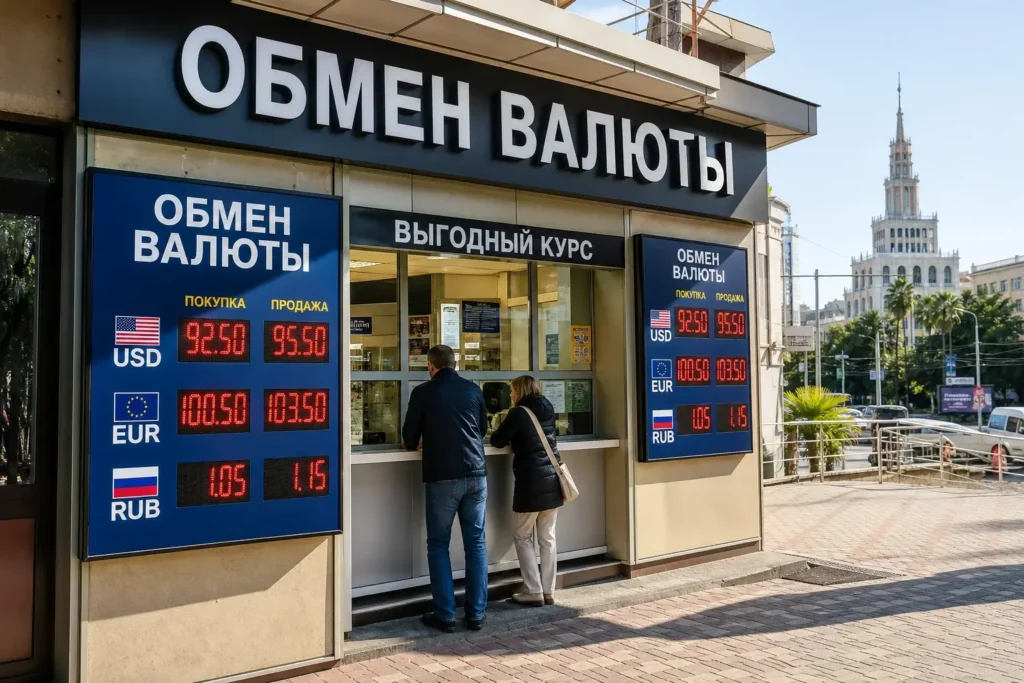
If you are arriving in Sochi with foreign cash and need to exchange it for rubles, this guide walks you through your options. Whether you land at the airport or arrive in the city centre, currency exchange, Sochi where to change money is straightforward if you know where to look.
You will learn how to find official exchange offices and banks, what documents are needed for larger amounts, and why certain locations offer better rates than others. The recommended approach is to exchange a small amount at the airport for immediate expenses, then find a better rate in the city for the rest.
Quick answer: Exchange at a bank or licensed exchange office (обмен валюты) in Sochi. At the airport, expect slightly higher rates; in the city centre or near major hotels, rates are better. Total time: 5–10 minutes once you arrive at the counter.
At a Glance
| Total time | 5–10 minutes |
|---|---|
| Typical cost | ₽ |
What You Need Before You Start
- Foreign cash (EUR, USD, or other major currencies)
- Passport (required if exchanging more than 40,000 RUB in a single transaction)
- Clean, undamaged banknotes (torn or marked notes may be refused or discounted)
- Knowledge that foreign credit/debit cards (Visa, Mastercard) do not work at ATMs in Russia
Compare Your Options
| Option | Duration | Price | Notes |
|---|---|---|---|
| Bank (Sberbank, VTB, Alfa-Bank) | 10–15 minutes | ₽₽ | Official, safest option with transparent posted rates. Open Monday–Friday, typically 9am–5pm. Weekend hours limited. Passport required for amounts over 40,000 RUB. Best rates among banks but often less competitive than dedicated exchange offices. |
| Licensed exchange office (обмен валюты) in city centre | 5–10 minutes | ₽ | Common in tourist areas, near major hotels, Nevsky Prospekt, and metro stations. Usually open 9am–8pm daily. Look for large red signs with currency symbols (USD, EUR). Better rates than banks. Confirm the rate on the board before approaching the counter. |
| Sochi Airport exchange (Sberbank, Cifra Bank) | 5–10 minutes | ₽₽₽ | Available 24 hours. Sector C, floors 1–2. Convenient but rates are typically 2–5% worse than city centre. Use only for small amounts (taxi, first meals). Better options available 30 minutes away in central Sochi. |
| ATM cash withdrawal (Russian card only) | 2–3 minutes | ₽ | Foreign Visa/Mastercard do not work. Only option: open a Russian debit card (T-Bank) upon arrival with passport, then deposit exchanged rubles and withdraw via ATM. MIR or UnionPay cards (if you have one) can withdraw at ATMs. Not an option on arrival with foreign cash alone. |
₽ budget · ₽₽ moderate · ₽₽₽ upscale · ₽₽₽₽ splurge. Price levels are estimates compared with typical prices for visitors.
Step-by-Step Instructions
Step 1: Arrive at the airport or city centre
If you are landing at Sochi International Airport (Adler), exchange offices are located throughout the terminal on floors 1–2 in sectors A, B, and C. Look for Sberbank or Cifra Bank signs; they clearly display exchange rates on boards outside. If you arrive by train or prefer better rates, wait until you reach the city centre on Nevsky Prospekt or near major hotels.
Tip: At the airport, exchange only what you need for the first day (taxi, small meals, tips). Better rates await in the city.
Step 2: Check the rate board
Before you approach the counter, look at the electronic board showing current rates. Rates vary between providers, so if exchanging a large sum, check a couple of locations first. The board will show how much you receive for one unit of your currency.
Tip: Compare rates: airport = worst, city-centre exchanges = better, major banks like Sberbank = competitive but not always best.
Step 3: Hand over your cash and passport (if needed)
Count your notes carefully in front of you. Place them on the counter. If you are exchanging more than 40,000 RUB in one transaction, the clerk will ask for your passport. This is normal and a legal requirement. No visa or special paperwork beyond your passport is needed.
Tip: Bring large-denomination notes (€100, $100) rather than small ones; the rate is often fractionally better.
Step 4: Confirm the final figure
Before the money leaves your hand, the clerk will show you the amount in rubles you will receive. Verify this figure on a calculator if needed. Repeat it aloud to confirm. Only then hand over your foreign notes.
Tip: Never hand over cash before seeing and confirming the rouble amount. This prevents short-changing.
Step 5: Receive your rubles and receipt
Take the rubles from the teller. Count them quickly in front of them. Ask for a receipt (квитанция). Keep the receipt until you leave the exchange office in case there is a discrepancy.
Tip: Set aside some notes for immediate use (hotel check-in, transport) and secure the rest in your hotel safe.
Step 6: Use your rubles to pay locally
Rubles can be spent at shops, restaurants, transport, and hotels throughout Sochi. Small denominations (500 and 1,000 RUB notes) are most practical for everyday purchases. Larger denominations are accepted but change may be slow.
Tip: Keep a small amount of small-denomination notes for taxis and tips; drivers and street vendors prefer them.
Common Mistakes to Avoid
- Exchanging large amounts at the airport: rates are 2–5% worse than in the city. Exchange minimally at the airport and find better rates in central Sochi within an hour.
- Bringing torn, marked, or old-looking banknotes: these are often refused or discounted by up to 10%. Ensure notes are clean and in good condition before you travel.
- Attempting to use foreign credit/debit cards at ATMs: Visa and Mastercard issued outside Russia do not work. This is a surprise for many visitors. Plan to exchange cash or open a Russian card instead.
- Not confirming the rouble amount before handing over cash: count the rubles on the counter while the clerk is present. Short-changing is rare but possible if you don't verify the sum.
- Exchanging at unofficial street touts or unmarked offices: only use licensed banks and clearly marked exchange offices (обмен валюты). Counterfeit notes and unfair rates are the main tricks used by street changers.
- Exchanging more than 40,000 RUB without your passport: this triggers a legal requirement. Always carry your passport when exchanging larger sums to avoid being turned away.
Tickets, Payment and Booking
Official exchange locations in Sochi:
- Sberbank – main branches at Donskaya Street, 96 and other locations. Open 8:30am–5pm weekdays. Visit sberbank.ru to find the nearest branch.
- VTB Bank – multiple city-centre branches. Open 9am–6pm weekdays, limited weekend hours.
- Alfa-Bank – central locations. Open 9am–7pm.
- Licensed exchange offices (обмен валюты) – found near Nevsky Prospekt, major hotels, and city-centre streets. Typically 9am–8pm daily. No booking required; walk in.
- Airport exchange – Sberbank and Cifra Bank in terminal sectors A, B, C. Open 24 hours.
Payment methods: Cash only. Bring clean EUR, USD, or other major currencies. No credit cards, cheques, or traveller’s cheques accepted. Foreign Visa/Mastercard do not work. Only official Russian banks and licensed offices should be used; avoid street touts and unofficial changers.
Helpful Links
Compare hotel pricesSearch flights
Advertisement: these are partner links. If you book or buy through them, we may earn a commission at no extra cost to you.
Russia Vibes Tips
- Bring high-denomination notes (€100, $100 USD) if possible. They often get a slightly better rate than smaller notes and reduce the number of transactions you need.
- Exchange on a weekday morning if possible. Banks and exchange offices are quieter, and rates may be more competitive. Weekends often see longer queues and, occasionally, slightly worse rates at smaller offices.
- Do not exchange money immediately before leaving Sochi. Unused rubles are difficult to exchange back to foreign currency; most countries charge high fees. Exchange only what you plan to spend.
- Keep a small amount of rubles in low denominations (500, 1,000 RUB notes) separate from the rest for taxis, tips, and street vendors. Large notes (5,000 RUB+) can be slow to change in small shops.
- If you are staying longer than a few days, consider opening a T-Bank or Tinkoff card at the airport with your passport. You can deposit your foreign cash and withdraw from ATMs at competitive rates, avoiding repeated exchange fees.
Explore Nearby Currency exchange, Sochi
Sights near Currency exchange, Sochi
 Nevsky Prospekt, Saint Petersburg · typical visit: 2–4 hours for the main stretch; a full day with stops1 min on foot from Gostiny Dvor metro
Main image: AI-generated illustration. It may not show the place exactly as it looks.
Browse more: All How-To · All How-To in Sochi · All Money and Cards · All Sochi
FAQ
Can I use my foreign credit card to withdraw rubles from an ATM?
No. Visa and Mastercard issued outside Russia do not work in Russian ATMs since 2022. Only Russian cards (T-Bank, Sberbank MIR card, Tinkoff) or UnionPay cards work. Plan to exchange cash or open a Russian card after arrival.
Is it better to exchange at the airport or in the city?
City-centre exchange offices offer 2–5% better rates than the airport. Exchange a small amount (enough for taxi and meals) at the airport, then find a better rate in central Sochi within an hour. Major hotels can also direct you to nearby licensed exchanges.
Do I need my passport to exchange money?
Only if exchanging more than 40,000 RUB in a single transaction. For smaller amounts, cash alone is sufficient. Always carry your passport when exchanging to be safe.
How much should I exchange at once?
Exchange enough for 2–3 days at a time if rates are good, to avoid repeated fees. For a rough estimate: budget ₽₽–₽₽₽ per day depending on your activities. Keep unused notes secure in a hotel safe.
What if my banknotes are old, torn, or marked?
Torn or marked notes are often refused or discounted by 5–10%. Ensure your cash is clean and in good condition before you travel. Old notes are acceptable as long as they are not damaged.
Are there 24-hour exchange offices in Sochi?
The airport has 24-hour exchange at Sberbank and Cifra Bank. In the city, most exchange offices close by 8–9pm. Plan accordingly if you arrive late.
What currencies can I exchange?
Major currencies (USD, EUR, GBP, CHF) are accepted everywhere. At the airport, Cifra Bank also handles CNY (Chinese yuan), AMD (dram), KZT (tenge), and ILS (shekel). Check with smaller offices first if exchanging less common currencies.
Is it safe to exchange money on the street?
No. Only use official banks and clearly licensed exchange offices marked 'обмен валюты'. Street touts may offer counterfeit notes or short-change you. Stick to official locations.
Russia Vibes is a one-person project. A coffee keeps it going
Not legal advice. This is general information for visitors. Rules on visas, entry, registration, customs and similar matters change often and can depend on your nationality. Check the official source and, if in doubt, ask your embassy or a qualified adviser.
How we research and update our guides
About this guide: AI assistance and accuracy
This guide is created with the help of AI and is based on official sources where available. Mistakes can still happen. Opening hours, prices, rules and other details are given to the best of our knowledge as of the date shown and can change without notice. It offers general recommendations only, not professional, legal or travel advice. Please confirm important details with the official source before you travel; you are responsible for your own plans and decisions.

Take this guide with you
Get a free PDF of this guide to print or read offline: key facts, tips and a map link on a few clean pages.
Report an issue on this page
Paying for your trip: please read
International sanctions affect payments between Russia and many other countries. In practice, cards issued in the EU, the UK, the US and several other countries often do not work in Russia, Russian cards usually do not work abroad, and some booking platforms, airlines and payment providers limit or suspend their services for Russia. The situation changes frequently.
We do not give legal or financial advice, and this site does not encourage anyone to break or circumvent sanctions. Whatever you plan, you are responsible for following the laws and regulations that apply to you, including those of your country of residence and citizenship.
Many travelers still organise their stay lawfully. It is worth asking your bank or payment provider what is currently permitted, contacting hotels, tour operators and carriers directly about the payment methods they accept, and checking which services are open to customers from your country. Clarify payment, cancellation and refund terms before you commit to a booking, and keep your plans flexible.
Partner links on this site may not be available in every country, and prices, availability and rules in our guides can differ from what you see when you book.