
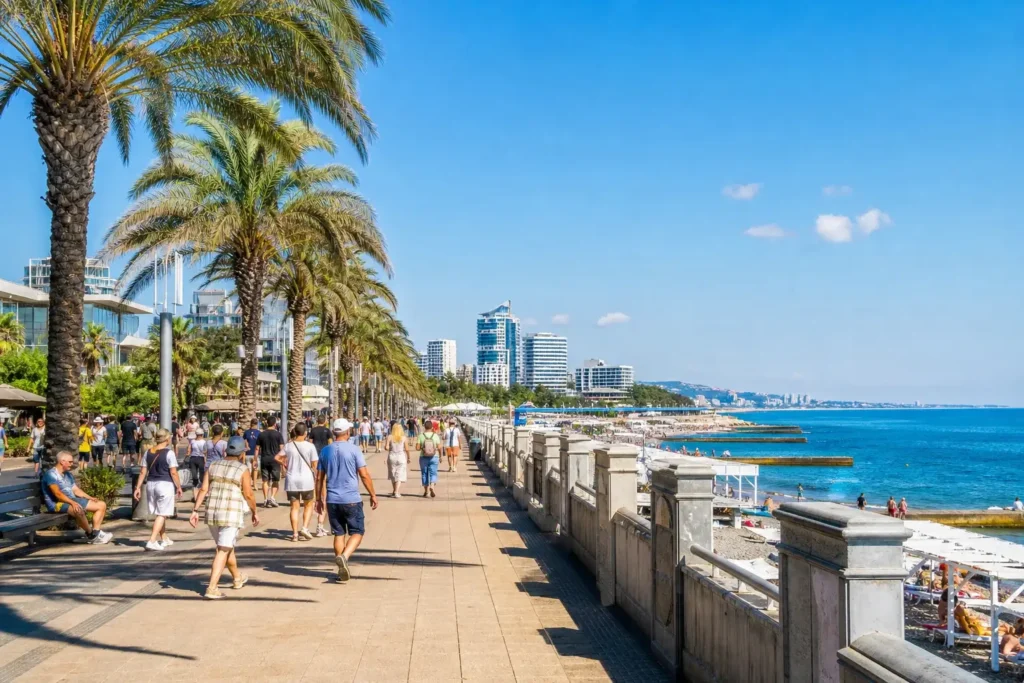
Sochi is generally safe for tourists, with low violent crime rates and a friendly atmosphere. However, like any resort city, it has petty theft and scams that target visitors, especially in crowded areas and around transport hubs. This guide covers the essential safety basics that will help you navigate the city confidently and avoid common tourist pitfalls.
By the end of this guide, you’ll know how to protect your belongings, which areas to avoid at night, how to handle taxis safely, and what documents you must carry. The recommended approach is to use common sense precautions: keep your valuables secure, avoid displaying wealth, use official transport, and carry your documents at all times.
Quick answer: Stay safe in Sochi by keeping your passport and registration documents with you at all times, avoiding unmarked taxis and crowded tourist areas after dark, using hotel safes for valuables, and staying alert to scams at transport hubs. Most safety concerns are preventable through standard precautions.
At a Glance
| Total time | Ongoing throughout your stay |
|---|---|
| Typical cost | free |
What You Need Before You Start
- Passport with valid visa
- Migration card (given at entry)
- Registration notification from your hotel (if staying over 7 working days)
- Travel insurance that covers medical evacuation
- Mobile phone with emergency numbers saved
- Secure bag or money belt
Compare Your Options
| Option | Duration | Price | Notes |
|---|---|---|---|
| Hotel accommodation with built-in registration | Entire stay | varies | The hotel will fill out the "notification form for the arrival of a foreign citizen to the Russian Federation" and notify the Russian immigration authorities within 1 business day. Russian authorities need to approve the registration, which usually happens quickly (less than 1 day). The tourist accommodation will provide you with the approved registration certificate. This is the easiest option for most tourists. |
| Private rental with self-registration | Entire stay | Free | If staying in a private apartment or rental, if you have a legal rental contract and the landlord is willing to cooperate by providing their documents, you can handle the registration yourself at an MFC office. This requires more paperwork and coordination. |
| Short stay under 7 days | Up to 7 days | Free | No registration needed if your stay is under 7 working days (including arrival and departure day). Simply carry your passport, visa, and migration card. |
₽ budget · ₽₽ moderate · ₽₽₽ upscale · ₽₽₽₽ splurge. Price levels are estimates compared with typical prices for visitors.
Step-by-Step Instructions
Step 1: Carry required documents at all times
Carry your passport, visa, and migration card with you at all times. Authorities won't accept copies. If you are staying at a hotel, if you stay more than 7 working days, including your arrival and departure day, you must register with the Russian Ministry of Internal Affairs. Most hotels do this for their guests, but you're legally responsible. Confirm with check-in staff on arrival that they've registered you. Keep your registration notification safe; you may be asked to show it at transport hubs or police checkpoints.
Tip: Take a photo of your documents and store it separately in case of loss.
Step 2: Avoid displaying expensive items
Don't show signs of affluence or wear expensive jewellery. Keep phones, cameras, and watches hidden in your bag or pocket. Don't carry a lot of cash and expensive things with you – it is better to leave them in the hotel safe. This is especially important in crowded public spaces.
Tip: Use a money belt or secure inner pocket for cash and cards.
Step 3: Watch for pickpockets in crowded areas
Pickpocketing is not the first thing people associate with Sochi, but crowded promenades, railway stations, markets, beach areas, and event zones always raise the odds. In a city that gets seasonal tourist flows, theft is most likely to be opportunistic rather than aggressive. Keep phones zipped away, avoid carrying documents loosely, and be especially alert in busy transport areas.
Tip: Keep your bag zipped and in front of you on crowded public transport or at train stations.
Step 4: Use official taxis and transport
The main issue is not a lack of transport, but the usual resort-city problem of overcharging, unofficial drivers, and confusion at transport hubs. Stick with official taxis or booked transfers rather than grabbing random rides outside arrivals. At Sochi Airport or the railway station, use taxis with official markings or book through your hotel.
Tip: Ask your hotel to arrange a transfer or call an official taxi company rather than flagging one down on the street.
Step 5: Be alert to common scams
You might be charged exorbitant fares by unlicensed taxi drivers, especially near airports and train stations. Confirm the price beforehand or use official taxi services. Individuals posing as official guides may offer tours at inflated prices or provide misleading information. Verify credentials before booking any tours. You could receive counterfeit bills or unfavorable exchange rates at unofficial currency exchange points. Use banks or authorized exchange offices.
Tip: Ask your hotel for a list of recommended tour operators and licensed guides before booking activities.
Step 6: Avoid certain areas and times
While Sochi is generally safe, it's advisable to avoid the outskirts of the city and less populated areas, especially at night. The usual late-night rules still apply. Empty side streets, poorly lit underpasses, and isolated waterfront stretches are not the places to test your luck after midnight. Stick to well-lit, populated areas when walking at night.
Tip: Use a taxi or request hotel transport if you need to travel after dark.
Step 7: Protect belongings at the beach
Stay vigilant on the beach, do not leave your belongings unattended when you go swimming. Thieves often target unattended bags and valuables. Either take a friend or lock valuables in your hotel safe before heading to the beach.
Tip: Leave expensive items at your hotel; theft from beach bags is opportunistic and common.
Step 8: Know emergency contact procedures
If you are a victim of crime, report it immediately to the local police (dial 102 from a Russian mobile, or 112 for universal emergency services). Keep a copy of your hotel's phone number and your embassy contact information saved in your phone. For medical emergencies, dial 112.
Tip: Ask your hotel for a list of English-speaking doctors or medical facilities before you need them.
Common Mistakes to Avoid
- Assuming registration is optional: If you don't register, authorities can fine you or delay your departure. Even though you may not be checked, the requirement is mandatory for stays over 7 days.
- Leaving valuables unattended on the beach or in public spaces: Theft is opportunistic. Never leave bags, phones, or wallets visible while swimming or eating at beach cafés.
- Using unofficial currency exchanges or money changers: You could receive counterfeit bills or unfavorable exchange rates at unofficial currency exchange points. Use banks or authorized exchange offices.
- Accepting rides from unmarked taxis outside transport hubs: Unlicensed drivers often overcharge tourists and may take inefficient routes. Always use marked taxis or arrange transport through your hotel.
- Walking alone in poorly lit or isolated areas after dark: Even in generally safe Sochi, empty underpasses and deserted streets attract opportunistic crime. Use taxis or stay in populated, well-lit areas.
- Carrying all your money, cards, and documents together: If your bag is stolen, you lose everything. Split valuables between your person and hotel safe.
- Trusting unsolicited tour guides or help at transport hubs: Watch your pockets and do not trust those who ask for help or offer it. These are often scammers.
Tickets, Payment and Booking
Documents and Registration
- Your passport and visa must be valid for your entire stay. Keep your passport and other travel documentation safe.
- If staying at a hotel over 7 working days, ask the front desk to register you on arrival. Sometimes hotels do not hand this certificate to the client, but you can request it.
- If staying in private accommodation, arrange registration yourself at an MFC service centre or police office before authorities ask.
- Always carry your original documents; authorities won’t accept copies.
Emergency and Insurance
- Carry travel insurance that covers medical evacuation; for emergencies dial 112.
- Save your insurance provider’s contact number in your phone before arrival.
Russia Vibes Tips
- Register with your embassy or consulate before traveling, especially if your home country has a diplomatic mission in Moscow. This helps them reach you in an emergency and ensures you receive travel advisories.
- Learn a few Russian phrases for emergencies: "помощь" (pomoshch – help), "полиция" (politsiya – police), and "больница" (bolnitsa – hospital). English is not widely spoken outside major hotels and tourist areas.
- Avoid changing money on the street or at unauthorized exchange booths. Use your hotel reception, bank ATMs, or official currency exchange offices. Rates are fair and you reduce the risk of counterfeit notes.
- If you are a solo female traveler, solo travelers should use normal big-city caution and then add a little more. Avoid isolated nightlife situations, be cautious with alcohol, and do not rely on strangers for transport or lodging help.
- During peak season (summer), transport hubs and beaches are most crowded. Scams and pickpocketing increase. Keep extra vigilance in July and August, especially during midday crowds.
- If staying longer than a week, confirm your hotel's registration process in writing at check-in and request a copy of your registration certificate before you check out. This protects you if questions arise at the airport.
Explore Nearby Safety basics for tourists, Sochi
Related guides
 How to Book a Taxi, Irkutsk: Apps, Phone Orders and Safety
Main image: AI-generated illustration. It may not show the place exactly as it looks.
 How to Use Maps and Public Transport Apps, Saint Petersburg: 8 Steps
Main image: AI-generated illustration. It may not show the place exactly as it looks.
Browse more: All Etiquette and Safety · All How-To · All How-To in Sochi · All Sochi
FAQ
Do I need to carry my passport with me everywhere?
Carry your passport, visa, and migration card with you at all times. Authorities won't accept copies. Police can conduct routine checks in public spaces, especially at transport hubs and checkpoints.
What happens if I don't register my accommodation?
If you don't register, authorities can fine you or delay your departure. In some cases, visitors may face expulsion from Russia and a ban from re-entering of up to 5 years. If staying at a hotel, registration is done automatically. If renting privately, arrange it yourself.
Is Sochi safe to visit alone?
Sochi is a relatively safe city with low crime rates making it a suitable destination for solo female travelers. It can have occasional instances of petty crimes like pickpocketing, especially in crowded tourist areas. It is particularly safe during the daytime but it's advisable to avoid less crowded areas and walking alone at night.
What should I do if I'm pickpocketed or robbed?
If you are a victim of crime, report it immediately to the local police (dial 102 from a Russian mobile, or 112 for universal emergency services). Report the incident to your hotel and contact your insurance provider. Get a police report in writing for insurance claims.
Are there areas of Sochi I should avoid?
While Sochi is generally safe, it's advisable to avoid the outskirts of the city and less populated areas, especially at night. The main tourist zone (Riviera Park, the beach promenade, and central streets) is well-policed and safe. Avoid wandering into residential suburbs after dark.
Is tap water safe to drink?
Tap water in many hotels is chlorinated—check locally before drinking. It is generally safe in major hotels but ask staff about the local water quality. Bottled water is widely available and inexpensive.
Can I use my credit cards in Sochi?
Card use is limited outside major hotels and restaurants. Visitors to Sochi should expect to conduct daily transactions in cash as local businesses may not have the ability to accept credit cards. Withdraw cash from ATMs or exchange money at your hotel or official exchange offices.
What if I lose my documents?
Contact your embassy or consulate immediately to report the loss and begin the replacement process. Carry photocopies of your passport information page separately from your original passport. Replacing documents is complex and can delay your departure, so protect your originals carefully.
Russia Vibes is a one-person project. A coffee keeps it going
Not legal advice. This is general information for visitors. Rules on visas, entry, registration, customs and similar matters change often and can depend on your nationality. Check the official source and, if in doubt, ask your embassy or a qualified adviser.
How we research and update our guides
About this guide: AI assistance and accuracy
This guide is created with the help of AI and is based on official sources where available. Mistakes can still happen. Opening hours, prices, rules and other details are given to the best of our knowledge as of the date shown and can change without notice. It offers general recommendations only, not professional, legal or travel advice. Please confirm important details with the official source before you travel; you are responsible for your own plans and decisions.

Take this guide with you
Get a free PDF of this guide to print or read offline: key facts, tips and a map link on a few clean pages.
Report an issue on this page
Paying for your trip: please read
International sanctions affect payments between Russia and many other countries. In practice, cards issued in the EU, the UK, the US and several other countries often do not work in Russia, Russian cards usually do not work abroad, and some booking platforms, airlines and payment providers limit or suspend their services for Russia. The situation changes frequently.
We do not give legal or financial advice, and this site does not encourage anyone to break or circumvent sanctions. Whatever you plan, you are responsible for following the laws and regulations that apply to you, including those of your country of residence and citizenship.
Many travelers still organise their stay lawfully. It is worth asking your bank or payment provider what is currently permitted, contacting hotels, tour operators and carriers directly about the payment methods they accept, and checking which services are open to customers from your country. Clarify payment, cancellation and refund terms before you commit to a booking, and keep your plans flexible.
Partner links on this site may not be available in every country, and prices, availability and rules in our guides can differ from what you see when you book.