
Updated
Loo is a microdistrict of Lazarevsky City District located 18 kilometers from the city center of Sochi. Despite its official administrative status, it functions as an independent resort and is one of the largest settlements in the district. The neighborhood draws visitors seeking quiet seaside relaxation away from central Sochi’s bustle.
Once owned by Princes Loov, a noble Abkhazian family, Loo has roots in the medieval period and remains a working resort with hotels, guest houses, and beaches alongside its historical attractions.
Quick Facts
| Russian name | Лоо |
|---|---|
| Address | Loo Microdistrict, Lazarevsky City District, Sochi OpenStreetMap · Google Maps |
| District | Lazarevsky City District |
| Best time to visit | May to September for swimming, with June to August warmest but most crowded. April and October offer mild weather and fewer visitors. Winter (November to February) is cool and wet; Aqualoo operates year-round but sea swimming is not practical. Autumn (September–October) offers warm water with fewer tourists than summer. |
What Is (and Isn't) Part of a Visit to Loo, Sochi?
| Part | Status | Notes |
|---|---|---|
| Loo neighborhood and beach | Included in the standard ticket | The public beach and open waterfront are free to access. |
| Loo Temple | Separate ticket or institution | A separate site requiring a hike from the village; located 1.5 km inland on a hilltop. |
| Aqualoo Water Park | Separate ticket or institution | A separate facility with its own ticket and operating hours; operates year-round. |
| Loo Railway Station | Included in the standard ticket | The transport hub is part of the village infrastructure; train tickets required only for travel. |
Why Visit Loo, Sochi?
Loo is characterized by low prices for accommodation, making it ideal for budget-conscious visitors. The beach offers a peaceful vibe where visitors can unwind away from the bustle, complemented by marine life and occasional dolphin sightings near the shore. The area combines beach access with cultural attractions: the best-preserved ruins of a medieval temple and the largest water park in Sochi. Proximity to central Sochi (a 20–30 minute train ride) allows easy day trips while maintaining a quieter resort atmosphere.
Highlights of Loo, Sochi
Loo Temple
The ruins of an 11th-century Byzantine basilica, founded in the 8th century, rebuilt in the 11th century, and converted into a fortress in the Late Middle Ages. The site sits on a hilltop away from the sea at 1.5 km distance. Visitors hike uphill through forests to reach the Northern wall, built from limestone blocks and better preserved than the rest of the structure. The location offers mountain views and forest trails.
Tip: Allow at least two hours for the hike from the main road; wear hiking boots and bring water, as the steep trail lacks shade.
Loo Beach
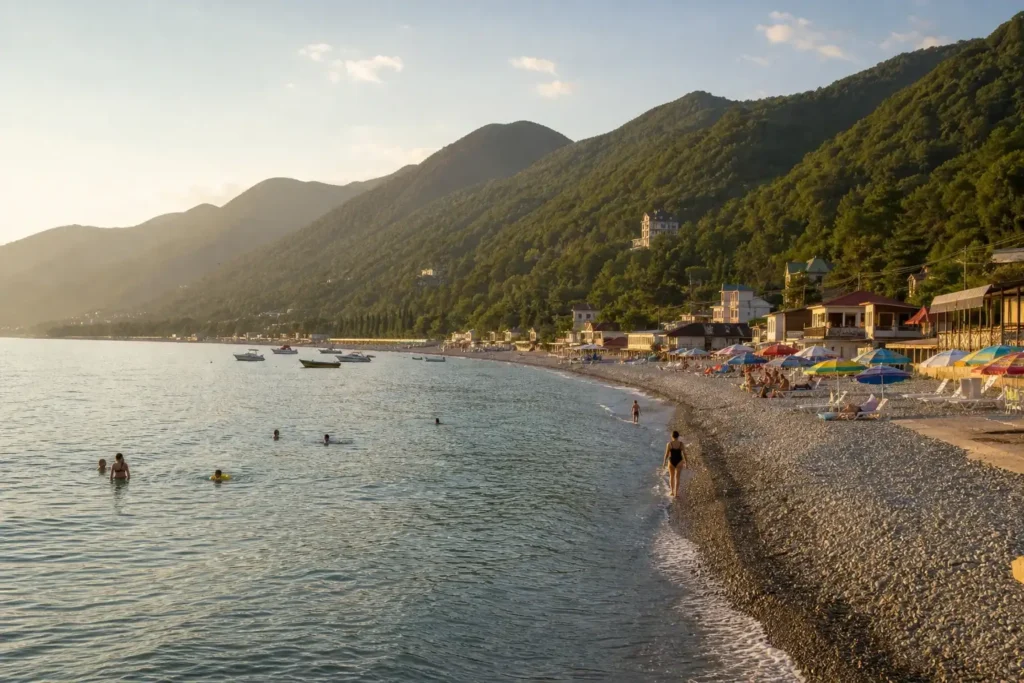
Loo Beach combines natural charm with easy access to urban amenities, offering a peaceful setting where visitors can unwind away from bustle, with occasional dolphin sightings near the shore. The beach is pebbly, typical of the Black Sea coast. Unlike the central Sochi beaches, it remains less crowded and retains a quieter resort character.
Tip: Bring water shoes or flip-flops for the pebbled shoreline; the beach is accessible directly from the village with free access to the water.
Aqualoo Water Park
The largest water park in Sochi, which also operates year-round. Facilities include pools, water slides, and attractions for families. Located within walking distance of the beach, it provides an alternative to sea bathing during cooler months or rough water conditions.
Tip: Check opening hours and seasonal facilities before visiting in winter; the park can be busy during July and August.
Loo Railway Station
Loo railway station is a station on the North Caucasus Railway subsidiary of Russian Railways. Long-distance trains make short stops here, and it is possible to travel inside the city by these trains. The station serves as the main transport hub connecting Loo to Sochi city center and other Sochi districts.
Tip: Buy tickets at the station; the train from central Sochi typically takes 30 minutes and is faster than marshrutka buses during peak season.
Black Sea Coast and Marine Life
Loo's stretch of the Black Sea shoreline remains relatively undeveloped compared to central Sochi, preserving a more natural coastal environment. The calm waters near the shore make it suitable for families, and the clear sea occasionally brings dolphins close to shore, particularly in early summer months.
Tip: Visit during shoulder seasons (May or September) for fewer crowds while water temperature remains warm enough for comfortable swimming.
Atmosphere
Loo feels like a working resort town rather than a polished destination—modest pensions and guest houses line the streets, and the beach remains quieter than Sochi’s central beaches. The air carries salt and greenery; hillsides covered in Mediterranean and subtropical vegetation rise steeply from the narrow coastal strip. Mornings are peaceful, with locals and guests taking slow walks along the promenade. Midday brings families and swimmers to the beach. Evenings become animated as restaurants open along the waterfront, and the temperature drops to comfortable levels for evening strolls.
The urban and tourist infrastructure is satisfactorily developed, with restaurants, small shops, and cafes scattered throughout the village. The pace is relaxed: visitors rent rooms, swim, explore the temple ruins, or sit by the water without the commercial intensity of central Sochi.
History of Loo, Sochi
The name “Loo” derives from the name of an Abazin feudal family, Lau or Loo. Until 1864, Ubykhs from the Vardane community lived in the Loo river valley, with an aul (settlement) of Ismail Barakai Dzepsh, one of the Ubykh leaders during the Caucasian War, on the sea coast.
Medieval history runs deeper. Loo was once owned by Princes Loov, a noble Abkhazian family. The district contains the ruins of a medieval church, founded in the 8th century, rebuilt in the 11th century, and converted into a fortress in the Late Middle Ages. The Byzantine temple dates to a period when Christian kingdoms controlled the Caucasian coast and built stone churches at strategic points along trade routes.
Since 1872, the Loo river basin became the property of Vardane, a neighboring settlement. The modern resort developed much later as Sochi was established as a destination. Loo’s inception as a settlement is recorded in 1872, and it grew into a coastal resort during the Soviet period when beach towns became popular. The railway station opened in the early 20th century, connecting Loo to other parts of the Russian railway network and making it accessible to visitors from across the country.
Tickets and Booking for Loo, Sochi
Loo is a neighborhood with no central ticket or entry fee. Accommodation, restaurants, and shops accept walk-in visitors and bookings. For specific attractions, refer to their individual sites: the water park has its own entrance and fees; the temple is free to visit but may require a guide or park permit depending on access.
Suggested itineraries Loo, Sochi
Half day
Arrive by train or marshrutka. Walk the beach and waterfront, visit local cafes and shops. Swim or relax on the pebbly shore. Return by late afternoon train if day-tripping from Sochi.
Full day
Morning: train to Loo, beach time and light meal. Midday: hike to Loo Temple ruins (2–3 hours round trip with breaks). Evening: return to village, dinner at a seafront restaurant, evening walk along the water.
2–3 days
Stay overnight to pace activities. Day 1: arrive, swim, explore the village. Day 2: hike to temple, visit water park. Day 3: leisure beach time, explore nearby Vardane or return to central Sochi.
How to Get to Loo, Sochi
By train: Long-distance trains stop at Loo railway station. From central Sochi, the journey takes about 30 minutes. Regional trains run several times daily. The station is a short walk from the beach and village center.
By bus: Bus 155 runs from the central bus terminal to Lazarevskoye via most sub-districts including Loo. The journey takes 30–45 minutes depending on traffic. Buses are less frequent than trains but run through the day.
By taxi or car: The road distance is 15 miles and takes approximately 22 minutes to drive from Sochi. Taxis are available from Sochi or book online apps; a ride costs a moderate amount.
Accessibility
Loo village is relatively flat along the coast, making the beach area accessible for visitors with limited mobility. The temple hike on steep mountain terrain is not suitable for wheelchairs or those with difficulty walking uphill. Hotels and guest houses vary in accessibility; confirm facilities when booking. Beaches are accessed by walkways; some sections have steps to the water.
Food Nearby
Numerous cafes and restaurants line the beach area and main streets, serving fish, seafood, and Russian dishes. Small shops and bakeries sell groceries and snacks. The area offers modest dining rather than fine restaurants; prices are lower than central Sochi. Beach bars offer drinks and light meals during the day.
What to Bring
Flip-flops or water shoes for pebbly beaches. Sun protection (hat, sunscreen, sunglasses) is essential May to September. For the temple hike, bring sturdy hiking boots, water, and snacks; the uphill path through forest has no facilities. Light layers for evening; temperatures cool after sunset even in summer. A light rain jacket for autumn and winter.
Best Views and Photo Spots of Loo, Sochi
Loo Beach at sunset
The pebbly shoreline with the Black Sea stretching to the horizon, backed by forested hillsides. The late afternoon light turns the water golden and the sky pink. Few tourists are present, giving an uncluttered frame.
Best time: May to August, one hour before sunset; September–April at any clear afternoon.
Loo Temple ruins on the hilltop
The weathered limestone northern wall of the Byzantine church against the forest canopy. The stone blocks catch directional light beautifully, and the tree framing adds depth. Views down toward the sea are glimpsed through breaks in the forest.
Best time: Morning light from the east; clear days for visibility down to the coast.
Beach promenade from the pier or jetty
Looking back toward the village and mountains, with swimmers, local fishing boats, and cafes in the foreground. The composition shows the working character of the resort rather than pristine landscape.
Best time: Morning when light is soft and the beach is less crowded; June–August for animation.
Photography Rules
Photography on public beaches and in the village is unrestricted. The temple ruins allow photography but are best shot in morning or late-afternoon light. No drones without permits; check with local authorities. Flash photography not needed outdoors; the temple interior is dark.
Family Suitability
Loo is family-friendly. The beach is calm and less crowded than central Sochi, suitable for children. The water is warm May to September. Aqualoo water park has slides and pools for children. The temple hike is not suitable for very young children or strollers due to steep terrain; older children (8+) with hiking experience may enjoy it. Guest houses and small hotels accommodate families; facilities vary but many offer basic family rooms.
Russia Vibes Tips
- The train from Sochi to Loo is faster, cheaper, and more reliable than buses during summer. Buy round-trip tickets to ensure a return journey.
- Loo Temple requires a serious hike—do not attempt it in sandals, late in the day, or without water. The path is steep, muddy in rain, and poorly signed. A local guide or detailed GPS directions are recommended for first-time visitors.
- Avoid peak July and August for swimming unless you like crowds. June and September offer warm water with far fewer tourists and better hotel availability.
- Budget accommodation is genuinely cheap here compared to central Sochi, but reserve in advance during summer. Walking the street to find a room is possible in shoulder seasons but risky in peak summer.
- Most restaurants are casual; evening meals are reasonable. There is no fine dining; expect simple seafood and Russian food at family-run establishments.
Explore Nearby Loo, Sochi
Related guides
 Lazarevskoye, Sochi: A Quieter Black Sea Beach Escape
Main image: AI-generated illustration. It may not show the place exactly as it looks.
Browse more: More in Lazarevsky City District · All Neighborhoods · All Neighborhoods · All Neighborhoods in Sochi · All Sochi
FAQ: Loo, Sochi
Is Loo part of Sochi?
Administratively, yes—it is a microdistrict of Lazarevsky City District within Sochi. Functionally, it operates as a separate resort village with its own character, 18 km from central Sochi.
How do I get to Loo from Sochi city center?
Train is fastest (30 minutes) and most frequent from Sochi railway station. Bus 155 is slower (45 minutes) but runs throughout the day. A taxi or rental car takes about 22 minutes.
Is the beach free?
Yes, beach access and swimming are free. Some beach clubs charge for loungers and umbrellas, but sitting on rocks or sand costs nothing.
Can I visit the Loo Temple?
Yes, it is free and open. The site sits 1.5 km inland on a hilltop and requires a steep 2–3 hour hike from the village or nearby road. Wear hiking boots and bring water.
Is Loo good for families?
Yes. The beach is calm and suitable for children, the water is warm in summer, and Aqualoo water park offers family facilities. The temple hike is only for older children with hiking experience.
When is the best time to visit?
June and September offer warm water, pleasant weather, and fewer crowds than July–August. May and October are pleasant but water is cooler. Winter is quiet but cold and wet.
Is accommodation in Loo expensive?
No, Loo is known for budget-friendly prices. Guest houses and modest hotels are significantly cheaper than central Sochi for similar quality.
What should I bring for the temple hike?
Sturdy hiking boots, water, snacks, sun protection, and a light rain jacket. The path is steep, muddy in rain, and shaded; allow 2–3 hours for the round trip.
Russia Vibes is a one-person project. A coffee keeps it going
How we research and update our guides
About this guide: AI assistance and accuracy
This guide is created with the help of AI and is based on official sources where available. Mistakes can still happen. Opening hours, prices, rules and other details are given to the best of our knowledge as of the date shown and can change without notice. It offers general recommendations only, not professional, legal or travel advice. Please confirm important details with the official source before you travel; you are responsible for your own plans and decisions.

Take this guide with you
Get a free PDF of this guide to print or read offline: key facts, tips and a map link on a few clean pages.
Report an issue on this page
Paying for your trip: please read
International sanctions affect payments between Russia and many other countries. In practice, cards issued in the EU, the UK, the US and several other countries often do not work in Russia, Russian cards usually do not work abroad, and some booking platforms, airlines and payment providers limit or suspend their services for Russia. The situation changes frequently.
We do not give legal or financial advice, and this site does not encourage anyone to break or circumvent sanctions. Whatever you plan, you are responsible for following the laws and regulations that apply to you, including those of your country of residence and citizenship.
Many travelers still organise their stay lawfully. It is worth asking your bank or payment provider what is currently permitted, contacting hotels, tour operators and carriers directly about the payment methods they accept, and checking which services are open to customers from your country. Clarify payment, cancellation and refund terms before you commit to a booking, and keep your plans flexible.
Partner links on this site may not be available in every country, and prices, availability and rules in our guides can differ from what you see when you book.