
Updated
This route is designed for visitors interested in Soviet history, Cold War architecture, and modern Olympic heritage. The pace balances architectural walks with leisure time at the Black Sea, allowing you to absorb both the grandeur of Stalin-era planning and the scale of Olympic investment.
By the end, you will have seen the Soviet spa culture that made Sochi a destination for Communist elites, explored the monumental buildings that shaped the city in the 1930s–1950s, and visited the sports infrastructure that transformed Sochi in 2014.
At a glance: Day 1 explores Soviet-era Stalinist architecture and the Sochi Seaport. Day 2 focuses on Olympic Park, its stadiums, museums and entertainment venues. Day 3 visits remaining Olympic sites and historic sanatoriums.
Day 1: Stalinist Sochi and the Seaport
Begin with Sochi's Soviet transformation of the 1930s–1950s. Walk the central avenues to see monumental Stalinist Empire buildings designed by architects sent to reshape the city as a model socialist resort. End at the iconic Sochi Seaport, built in the 1950s as a symbol of Soviet prestige and modern transportation. This day emphasizes the planning and grandeur that positioned Sochi as the Soviet Union's answer to Mediterranean resorts.
- Kurortny Prospekt – tree-lined avenue with Soviet-era sanatoriums and neoclassical facades (1 hour walking tour)
- Ordzhonikidze Sanatorium – 1937 Stalinist Empire complex with fifteen buildings, grand central fountain and sea lift (1 hour exterior viewing and grounds)
- Sochi Seaport (Morskoi Vokzal) – 1955 Soviet neoclassical building with columned façade and art deco details (45 minutes)
- Riviera Park – Soviet-era public park adjacent to seaport with promenades and sea views (1 hour stroll)
- Winter Theatre (Zimniy Teatr) – Soviet-era cultural venue in central Sochi (30 minutes exterior)
Tip: Visit the Seaport in late afternoon when light hits the façade and central spire. The building remains a working port, so approach from the public promenade. Kurortny Prospekt is best walked north to south to follow the slope toward the sea.
Day 2: Olympic Park and Modern Venues
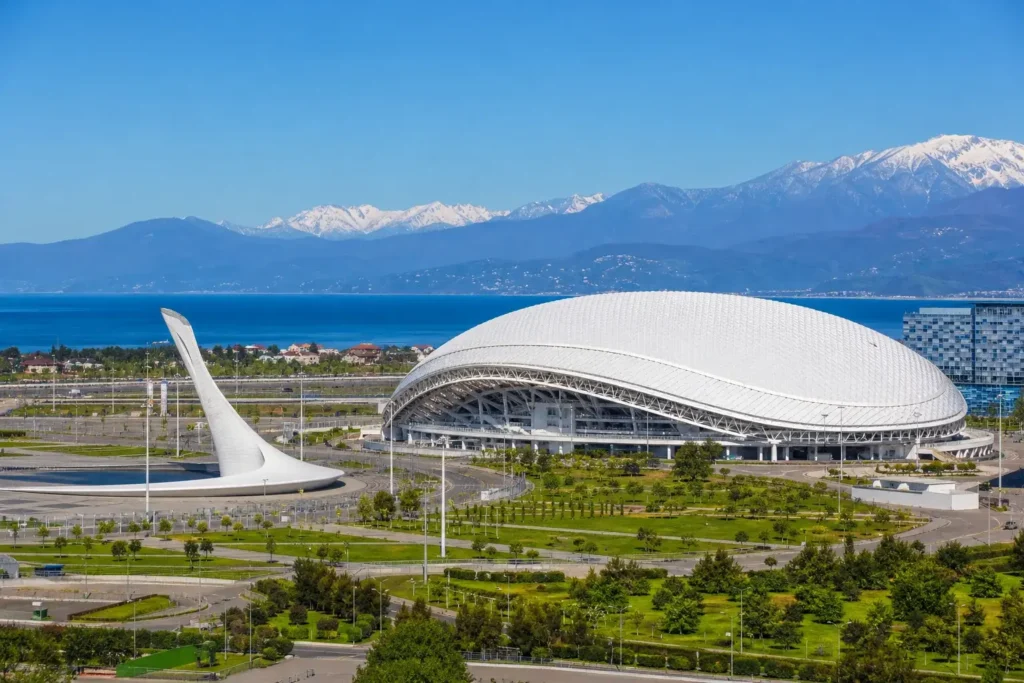
Spend the full day at Olympic Park, the 20.5-hectare complex built for the 2014 Winter Olympics. Entry is free and the park is open year-round. Walk past the ice arenas (Bolshoy Ice Dome, Iceberg Skating Palace, Shayba Arena) to the Fisht Stadium, which hosted opening and closing ceremonies. Visit the Singing Fountain at Medal Plaza, explore Sochi Park amusement park themed to Russian fairy tales, and see the Formula 1 circuit. Optional museum visits and evening fountain shows set to music are available.
- Sochi Olympic Park entrance – main entry point with directional signage (15 minutes orientation)
- Fisht Stadium – 40,000-capacity venue for opening and closing ceremonies; now home to FC Sochi football team (45 minutes including stands)
- Bolshoy Ice Dome – 12,000-seat arena with shell-shaped roof; hosts concerts and sports events (30 minutes exterior and grounds)
- Medal Plaza and Singing Fountain – central plaza with Olympic torch cauldron and nightly fountain shows (1 hour)
- Sochi Park – 20-hectare amusement park with Russian folk-tale themed sections and Bogatyr castle hotel (2–3 hours for major attractions)
- Formula 1 Circuit – 6 km international racetrack looping the park; viewable from public areas (1 hour walk or bike ride)
Tip: The park is large; allow 6–8 hours total. Renting a bicycle or scooter helps cover distance. Fountain shows run nightly; check start time on-site. Morning visits are less crowded than late afternoon. The park ground level is mostly accessible by foot, though distances are considerable.
Day 3: Soviet Legacy Sanatoriums and Mountain Views
Return to Soviet-era resort culture on day three. Visit remaining prominent sanatoriums of the Stalinist era that shaped Sochi's identity. Explore the Dendrarium (Arboretum) and botanical heritage that reflects Soviet planning for leisure and natural wellness. Optional excursion to Krasnaya Polyana in the mountains, where the mountain cluster of Olympic venues (Rosa Khutor Alpine Centre) sits alongside Alpine skiing infrastructure. This day connects Soviet ideology of mass leisure with modern sports legacy.
- Metallurg Sanatorium – Stalinist Empire-style complex built in the 1930s–1950s (45 minutes exterior viewing)
- Dendrarium (Sochi Arboretum) – Soviet-era botanical garden with Villa Nadezhda (1899) and over 1,700 plant species (1.5–2 hours)
- Sochi Central Embankment – promenade with views of Soviet beach culture infrastructure (1 hour walk)
- Krasnaya Polyana – mountain cluster 25 km from central Sochi; site of Alpine Olympics venues and year-round resort (3–4 hours including transport (optional))
- Museum of the History of the Resort City of Sochi – exhibits on Olympic construction and Soviet-era development (1 hour (if open; check hours))
Tip: The Dendrarium and sanatoriums are spread out; use local buses or taxis. Krasnaya Polyana is a full half-day trip by minibus or car from the coast. Soviet sanatoriums often have restricted areas; view from public paths and main gates. Combine day three with day one sites if time is limited.
Russia Vibes Tips
- Olympic Park is free and open 24/7, but most facilities and shows operate during daytime and evening hours. Check the official Sochi Olympic Park website or ask at your hotel for current museum hours and show schedules, which vary by season.
- The Ordzhonikidze Sanatorium is currently abandoned but visible from outside. Respect site boundaries and do not trespass. Its exterior in daylight offers compelling photography of Stalinist megastructure. Many other historic sanatoriums are still operating as resorts and are partially or fully closed to non-guests.
- Sochi spreads across 160 km of coast. Olympic Park is in Adler district, about 25 km south of central Sochi. Use local buses (маршрутка), the Lastochka commuter train, or ride-hailing services to move between sites. Distances can be deceptive; allow extra time.
- Soviet-era architecture is best photographed in morning or late afternoon light. The Seaport and Kurortny Prospekt shine during golden hour. Stalinist buildings photograph well from street level to emphasize their monumental scale.
- The Singing Fountain at Olympic Park is the highlight for many visitors but runs only during scheduled times. Confirm the show time when you arrive. It combines Russian classical music with colored water jets and is particularly striking after dark.
- Buy a transport card (Podorozhnik) or use ride-hailing apps (Yandex.Taxi, Uber where available) rather than hailing individual taxis. Soviet-era sites and sanatoriums lack clear public signage; a local map or GPS is essential.
Explore Nearby Soviet Sochi and Olympic Heritage
Browse more: All Itineraries · All Itineraries in Sochi · All Sochi · All Themed Routes
FAQ
Is entry to Olympic Park really free?
Yes. The park grounds, walking paths, and exterior views of venues are free to enter 24/7. However, guided tours inside specific stadiums (such as Fisht Stadium), museums (such as the Sports Museum), and rides in Sochi Park amusement area require separate paid tickets. Fountain shows are free to watch.
How long do I need to spend in Olympic Park?
A basic walk past the main venues takes 2–3 hours. To visit museums, watch shows, and ride attractions in Sochi Park, plan 6–8 hours or a full day. The park covers a large area, and distances between sites are significant.
Can I visit the Ordzhonikidze Sanatorium and other Soviet sanatoriums?
The Ordzhonikidze is abandoned and visible from the street but not open to tourists inside. Many other Soviet sanatoriums are still operational as hotels or resorts and are closed to non-guests. Viewing from outside and photographing the exteriors is permitted on public paths.
What is the Seaport and can I go inside?
The Sochi Seaport (Morskoi Vokzal) is a working port built in 1955 in Stalinist neoclassical style. The main building and promenade are viewable from public areas. Interior access is limited, but the façade and surrounding embankment are the main attractions for visitors.
How do I get from central Sochi to Olympic Park?
Olympic Park is in Adler, about 25 km south of central Sochi. Take the Lastochka commuter train (fast and frequent) from Sochi railway station to Adler, then a local bus or short taxi ride to the park. Journey time is 30–45 minutes total. Check current schedules at the station.
Is a guide necessary for Olympic Park?
No, but guided tours are available and recommended if you want detailed history and access inside stadiums. Self-guided walks are possible; the park is well-mapped with signs. Rent a bicycle to cover more ground efficiently. Audio tours may be available through the official website.
When should I visit Sochi for this itinerary?
Spring (April–May) and autumn (September–October) offer the best weather and fewer crowds. Summer is hot and crowded. Olympic Park venues operate year-round. Soviet architecture is best photographed in clear daylight; avoid heavy rain or fog.
What should I know about Krasnaya Polyana?
Krasnaya Polyana is a mountain resort 25 km inland from Sochi where the Alpine Olympic venues are located. It is a separate full-day trip requiring transport. In winter, skiing is available. In summer, the Rosa Khutor resort operates year-round with restaurants and mountain views. Budget 3–4 hours for the round trip including transport.
Russia Vibes is a one-person project. A coffee keeps it going
How we research and update our guides
About this guide: AI assistance and accuracy
This guide is created with the help of AI and is based on official sources where available. Mistakes can still happen. Opening hours, prices, rules and other details are given to the best of our knowledge as of the date shown and can change without notice. It offers general recommendations only, not professional, legal or travel advice. Please confirm important details with the official source before you travel; you are responsible for your own plans and decisions.

Take this guide with you
Get a free PDF of this guide to print or read offline: key facts, tips and a map link on a few clean pages.
Report an issue on this page
Paying for your trip: please read
International sanctions affect payments between Russia and many other countries. In practice, cards issued in the EU, the UK, the US and several other countries often do not work in Russia, Russian cards usually do not work abroad, and some booking platforms, airlines and payment providers limit or suspend their services for Russia. The situation changes frequently.
We do not give legal or financial advice, and this site does not encourage anyone to break or circumvent sanctions. Whatever you plan, you are responsible for following the laws and regulations that apply to you, including those of your country of residence and citizenship.
Many travelers still organise their stay lawfully. It is worth asking your bank or payment provider what is currently permitted, contacting hotels, tour operators and carriers directly about the payment methods they accept, and checking which services are open to customers from your country. Clarify payment, cancellation and refund terms before you commit to a booking, and keep your plans flexible.
Partner links on this site may not be available in every country, and prices, availability and rules in our guides can differ from what you see when you book.