
Updated
Rosa Khutor is Russia’s largest and most developed mountain resort, spread across the slopes of the Aibga Ridge near the village of Krasnaya Polyana. Built between 2003 and 2011, it hosted the alpine skiing events for the 2014 Winter Olympics and Paralympics. Today it functions as a year-round destination, though it remains best known for skiing from late November through April.
The resort straddles elevations from 940 m at the base to 2,320 m at Rosa Peak, with 102 km of marked runs and 27 ski lifts. In summer and autumn, the same mountain infrastructure serves hikers, mountain bikers, and those seeking high-altitude views. The village atmosphere, dining options, and accommodation make it a complete mountain resort rather than a day-trip ski field.
Quick Facts
| Russian name | Роза Хутор |
|---|---|
| Distance from the nearest major city | 1500 km (930 miles) |
| Travel time from the nearest major city | 6–7 hours by air and train; 24–25 hours by train |
| Built / opened | 2010 |
| Address | 35 Olimpiyskaya Street, Estosadok village, Sochi OpenStreetMap · Google Maps |
| Opening hours | Daily 08:45-20:00; ski season early December–early April; summer activities available year-round |
| Admission | ₽₽ (day pass); separate tickets for cable cars and specific attractions |
| Best time to visit | Winter (December–March): Peak skiing season with reliable snow cover (thanks to snowmaking), but also peak crowds, highest prices, and need for advance bookings. Late November and April have lighter crowds but less-certain snow conditions. Christmas/New Year holidays and Russian school holidays (late December–early January, spring break in March) see maximum crowding.Summer (June–September): Quieter than winter; best for hiking and sightseeing. July–August school holidays see increased family visitors. Early June and September offer ideal weather and fewer crowds. Weather can be unstable in the mountains; mornings typically clearer than afternoons for photography.Spring (April–May) and autumn (September–October): Transitional seasons with unpredictable conditions; some lifts may close for maintenance. Late April through May and early September–October offer pleasant weather and fewest visitors if you tolerate the risk of partial closures.Days of the week: Weekends and Russian public holidays (May 9, June 12, November 4) see increased traffic. Weekday visits mid-week offer smaller crowds and easier parking. |
| Recommended duration | Full day (6–8 hours on site) |
| Website | en.rosaski.com |
What Is (and Isn't) Part of a Visit to Rosa Khutor/Krasnaya Polyana, Sochi?
| Part | Status | Notes |
|---|---|---|
| Rosa Khutor Alpine Resort main area (slopes, lifts, Rosa Valley base) | Included in the standard ticket | All lifts and gondolas are covered by a single day pass; skiing/snowboarding and hiking access included. |
| Extreme Park (freestyle terrain park) | Separate ticket or institution | Separate venue requiring own entry fee; check current rates on official site. |
| Panda Park (rope/adventure park) | Separate ticket or institution | Year-round activity park; own ticket required; prices vary by activity and duration. |
| Ice Palace (indoor skating rink) | Separate ticket or institution | Winter season only; separate entry and rental fees apply. |
| Krasnaya Polyana village (town centre) | Outside / not part of it | Village centre lies 7–10 km downslope from Rosa Khutor resort; separate destination requiring transport; not part of a resort visit. |
| Gazprom and Krasnaya Polyana ski resorts | Outside / not part of it | Separate ski resorts operate nearby in the valley; Rosa Khutor pass does not cover these. |
| Restaurants and shops in Rosa Valley | Included in the standard ticket | Included in day-visit access to the resort; food and drink purchased separately. |
| Museums and exhibitions | Separate ticket or institution | Archaeological museum and art galleries in the valley require own admission; not included in lift pass. |
| Cable car rides for non-skiers (sightseeing only) | Included in the standard ticket | Round-trip or single ascents available; included in day pass or purchasable separately. |
| Olympic sites and trails marked as Olympic courses | Included in the standard ticket | Runs used in the 2014 Olympics are open runs on regular terrain; no separate access fee. |
How to Get from the nearest major city to Rosa Khutor/Krasnaya Polyana, Sochi
| Option | Duration | Price | Notes |
|---|---|---|---|
| Flight and express train from Sochi | 1.5–2 hours total from city centre to resort | ₽₽ | Fly into Sochi International Airport (Adler), then take the express train (Rosa Khutor Railway) that departs from Adler station. The train reaches the base station in approximately 25 minutes. Frequent daily service during peak seasons. Last return trains in early evening. |
| Taxi or private transfer from Sochi Airport | 40 minutes to 1 hour from airport | ₽₽ | Direct road distance is approximately 50 km. Readily available; book through hotel or airport desk. Fixed taxi ranks operate at the airport. |
| Scheduled bus from Adler or Sochi city | 1–1.5 hours depending on stops | ₽ | Regular minibus (marshrutka) and bus services run between Sochi, Adler and Rosa Khutor. Less frequent than train; useful for budget travelers but less predictable in timing. |
| Fly from Moscow to Sochi, then ground transfer | 7–8 hours total including connections | ₽₽₽ | Flight Moscow–Sochi takes approximately 4 hours. Then transfer to resort by train, taxi or bus (additional 1–1.5 hours). Multiple daily flights from Moscow airports (Sheremetyevo, Domodedovo, Vnukovo). |
₽ budget · ₽₽ moderate · ₽₽₽ upscale · ₽₽₽₽ splurge. Price levels are estimates compared with typical prices for visitors.
Why Visit Rosa Khutor/Krasnaya Polyana, Sochi?
For winter sports, Rosa Khutor offers more variety and reliably better snow conditions than any other ski area in Russia, with snowmaking extending the season and maintaining slopes even at lower elevations. The resort design separates terrain by difficulty and elevation, allowing skiers of all levels to find suitable runs.
In summer and autumn, visitors come for hiking through alpine meadows, panoramic views from the summit of Rosa Peak, rope parks and adventure courses, and the novel experience of alpine terrain so close to the subtropics of the Black Sea coast. The venue’s Olympic legacy means infrastructure and signage meet international standards.
Highlights of Rosa Khutor/Krasnaya Polyana, Sochi
Rosa Peak Summit
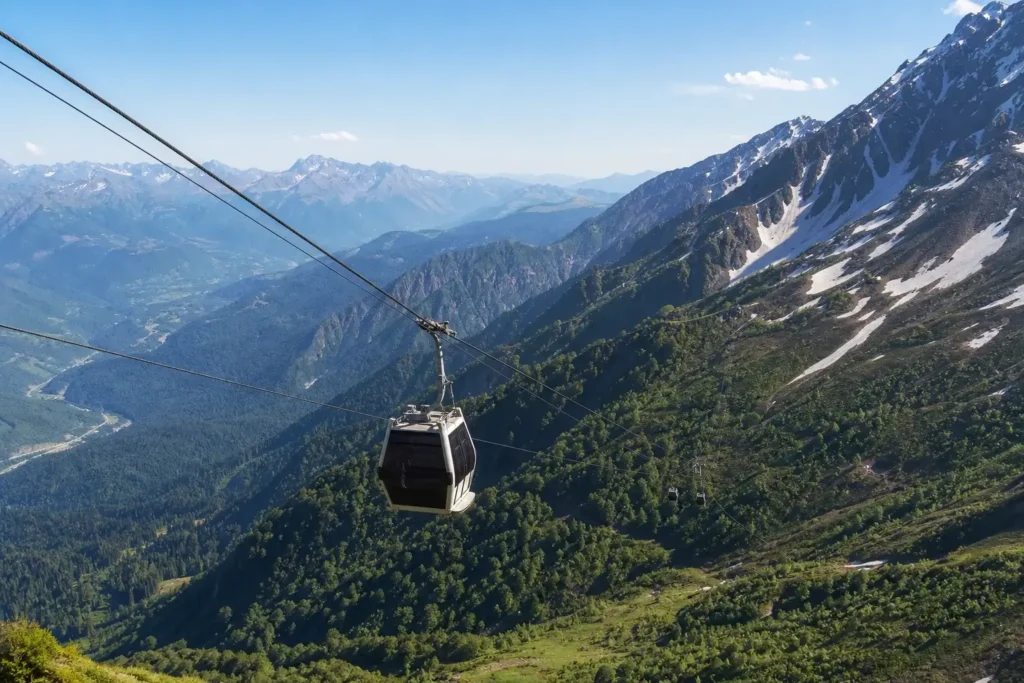
At 2,320 m, the top of the Aibga Ridge offers panoramic views across the Western Caucasus, and on clear days towards the Black Sea. The Caucasus Express cable car (holding 8 passengers) climbs from 940 m to this height. From the summit, visitors can descend via skiing runs or alternate lifts, or simply enjoy the view from a platform and café. In winter, conditions dictate visibility; summer skies are clearer.
Tip: Ride up in early morning for the best light and clearest views; bring windproof layers even in summer, as mountain winds are brisk.
Besedka Mid-Mountain Zone
At 1,350 m, this transition area sits in the treeline zone and houses restaurants, rest areas and the transfer stations between lift systems. It is accessible without skiing by cable car. The Besedka area is where most pedestrians and non-skiers spend time during winter, and offers views of the surrounding Caucasus peaks and glimpses of lower slopes.
Tip: Besedka gets crowded mid-day when families ride up for lunch; go early or late to find space and lighter crowds.
Extreme Park (Freestyle Terrain Park)
Opened in 2012 as part of the Olympics infrastructure, this dedicated freestyle skiing and snowboarding venue lies west of the main plateau. It features terrain parks, halfpipes, and progressive features for skiers and boarders of intermediate to advanced level. The park hosted the 2014 Winter Olympics freestyle skiing and snowboarding events.
Tip: This is a specialist area; visit only if interested in terrain park riding. A separate entry fee may apply; check the official website for current details.
Summer Alpine Hiking Trails
When snow melts (June–September), marked trails open through high-altitude meadows and forested slopes. The Lake Road, Panama route, Magical Forest and Forbidden Valley are scenic walking paths ranging from easy strolls to moderate day hikes. These reach viewpoints and alpine vegetation absent in winter.
Tip: Summer trails are most crowded on weekends in July–August; visit mid-week or early/late in the season for solitude.
Rosa Valley Base Village
The lower valley at 940 m concentrates hotels, restaurants, shops and the main ticket office. It is a self-contained resort village with a distinctly modern, planned appearance reflecting its 2000s construction. Architecture mixes contemporary ski resort style with hints of Caucasian vernacular. Summer or winter, the valley buzzes with visitors moving between accommodation and lifts.
Tip: The valley can feel crowded and commercial; for a quieter experience, stay on the mountain at mid-elevation hotels near Besedka if your schedule allows.
Olympia Hotel and Mountain Olympic Village
Built to house Olympic athletes, these facilities now serve as hotels and viewing points for the Olympic legacy. The Mountain Olympic Village at higher elevation offers views across the competition sites and shows how the 2014 Games transformed the area. These buildings are architectural landmarks visible across the resort.
Tip: You need not stay here to visit; the buildings and grounds are accessible to day visitors moving between lifts and runs.
Ice Palace (winter only)
An indoor ice rink operates at the base during the winter season, offering skating and hockey facilities. It serves as a non-skiing activity for families and guests seeking variety on snow-free days.
Tip: Book in advance or check availability; capacity is limited and it fills during school holidays.
Panda Park Rope Complex
A canopy and adventure park set in the forest, with zip-lines and obstacle courses designed for different age levels. It operates year-round (weather permitting) and provides activity options beyond skiing or hiking.
Tip: Best in dry weather; avoid rainy days when ropes become slippery. Children under 12 should be accompanied by adults. Check weight and height restrictions on the official site.
Olympic Skiing Competition Courses
The downhill and slalom courses used in the 2014 Winter Olympics remain visible on the northeast-facing slopes of Aibga Ridge. These are not separate attractions but part of the regular ski terrain. The Rosa Stadium (finish area) at 940 m is the base point for these Olympic runs, marked on trail maps.
Tip: If interested in Olympic history, ask at the ticket office or visit the official site for information about which runs hosted which events.
Atmosphere
Rosa Khutor feels like a purpose-built mountain destination transplanted to the Caucasus: orderly, modern, and international. The base valley is busy and commercial in peak seasons (late December–February and July–August), with families, groups and tourists moving between hotels, restaurants and lifts. The sound of ski patrols, lift machinery and casual multilingual conversation fills winter days.
At mid-mountain and summit elevations, the atmosphere thins out—fewer people, more wind, and expansive views. In summer, the resort becomes quieter and more nature-focused, with hikers replacing skiers. The architecture is contemporary rather than charming, reflecting the resort’s rapid construction for the Olympics. Weather dominates the feel: whiteout conditions in winter storms transform visibility and mood, while summer clear skies bring crowds to the peaks.
History of Rosa Khutor/Krasnaya Polyana, Sochi
Rosa Khutor was built from scratch between 2003 and 2011 in response to Russia winning the bid to host the 2014 Winter Olympics in Sochi. The resort’s creation was part of a broader transformation of the Krasnaya Polyana valley, converting a rural village into an Olympic sports hub. Construction required moving from the low base elevation (940 m) upslope to create terrain for all Olympic alpine disciplines: downhill, slalom, giant slalom and super G.
The planning and engineering drew on expertise from international resort designers and Olympic consultants. The first base village and infrastructure opened in 2010, in time for test events and Olympics preparations. The Extreme Park, hosting freestyle skiing and snowboarding events, was completed in 2012 and opened to the public after the Games.
In February 2014, Rosa Khutor hosted the alpine skiing and snowboarding events of the Sochi Winter Olympics, bringing international attention and certification to the facility. The resort was designed to remain open to the public after the Games, a legacy requirement. Post-Olympics, management transitioned from competition mode to full commercial resort operations, developing summer attractions and expanding accommodation to make use of the facilities year-round.
Today, Rosa Khutor operates as Russia’s flagship alpine resort, promoting itself as world-class and open to all visitors. The 2014 Olympic legacy shapes visitor expectations: the international standard of trails, lifts, signage and services reflects the Games infrastructure investment. Ongoing expansion continues, with new hotels, restaurants and attractions added to increase revenue from non-winter periods.
Tickets and Booking for Rosa Khutor/Krasnaya Polyana, Sochi
| Ticket | Price | Includes |
|---|---|---|
| Full day lift pass (6-hour access) | ₽₽ | Access to all cable cars, gondolas and ski lifts; hiking and sightseeing access; use of rope parks and marked trails. |
| Half-day pass (3–4 hours) | ₽ | Limited time access to lifts and gondolas; typically afternoon slots or morning slots depending on resort policy. |
| Multi-day pass (3–5 days) | ₽₽ | All lifts and gondolas across specified days; better value for longer stays; non-consecutive days usually allowed. |
| Season pass | ₽₽₽ | Unlimited lift access for the entire season (November–April); typically aimed at residents or frequent visitors. |
| Non-skier/sightseeing cable car ticket | ₽ | Single or round-trip cable car ascent to summit or mid-mountain without access to ski areas; hiking trails accessible. |
| Child ticket (7–14 years) | ₽ | Discounted day pass for children; rates typically 50–60% of adult rates; younger children often free with paying adult. |
₽ budget · ₽₽ moderate · ₽₽₽ upscale · ₽₽₽₽ splurge. Price levels are estimates compared with typical prices for visitors.
Tickets are sold at the main ticket office in Rosa Valley, at individual lift stations, and online via the official website en.rosaski.com. Online pre-purchase (available from the day before or several days ahead depending on season) is recommended during peak periods (late December–early February, school holidays, July–August) to ensure availability and sometimes gain discounts.
Walk-up same-day tickets are available when capacity permits; during holidays and weekends, ticket availability may sell out by late morning. The website shows real-time availability and allows booking in advance with payment by card. Cancelled or unused tickets cannot be refunded; some passes allow flexible date redemption within a season.
Russians citizens and certain concession categories (students, seniors, children under 7) receive discounted rates; these are listed on the official website but change seasonally. Non-Russian international visitors pay standard published rates. Entry vouchers (gift certificates) can be exchanged at the ticket office for a ticket on site. Children aged under 7 typically enter free with a paying supervising adult.
For the most current rates, categories and booking terms, visit the official ticket page on en.rosaski.com directly.
Plan and Book
Suggested itineraries Rosa Khutor/Krasnaya Polyana, Sochi
Half day (3–4 hours on site)
Arrive by mid-morning at the base. Buy a half-day ticket or ascend by cable car. Ride the Caucasus Express to Rosa Peak or Besedka (1.5 hours round-trip with time at the summit). Return to the valley, lunch at a base café. Depart in early afternoon. Suits visitors combining Rosa Khutor with other Sochi activities on the same day.
Full day (6–8 hours on site)
Arrive early (8:45 or 9:00 am). Buy a full-day pass. Ascend to Besedka or Rosa Peak by cable car. Explore marked hiking trails or spend 1–2 hours at mid-mountain. Descend to the valley, lunch 12:30–14:00. Afternoon: either re-ascend for more time at altitude, visit rope parks or Panda Park, or simply relax in the valley. Evening transport back to Sochi by train or taxi departing 17:00–19:00.
Winter day (skiing focus)
Early arrival (08:45 am opening). Buy full-day pass. Warm-up runs on lower slopes, then ascend via secondary lifts to Besedka or to Rosa Peak via Caucasus Express. Ski morning runs (2–3 hours, terrain varies by skill). Lunch at Besedka 12:30–13:30. Afternoon descents and more runs or rest. Depart by 17:00–18:00 to return to city by evening.
Summer/autumn day (hiking focus)
Arrive 09:00 am. Buy cable car sightseeing ticket or day pass. Ascend Caucasus Express to Rosa Peak (25 minutes each way plus 30–60 minutes at summit for views and photos). Descend and hike marked trails from Besedka or mid-mountain (allow 2–3 hours). Visit rope parks if interested (1 hour). Return to valley, lunch. Afternoon free for shopping or café time. Evening transport back to city.
How to Get to Rosa Khutor/Krasnaya Polyana, Sochi
From Sochi city centre (20 km): Take the express train (Rosa Khutor Railway) from Adler Railway Station (south of Sochi near the coast). The journey takes approximately 25 minutes and departs multiple times daily. Alternatively, hire a taxi or use ride-hailing apps (Yandex.Taxi, Uber); the drive via the Kurortny Prospekt mountain highway takes 40–60 minutes depending on traffic.
From Sochi International Airport (Adler): The airport is adjacent to Adler Railway Station. Express train to resort base departs frequently and takes 25 minutes. Taxi rank at the airport offers fixed-rate rides; journey time approximately 40 minutes. Regular buses (marshrutkas) run from the airport to Krasnaya Polyana village; from there, local transport or taxi to the resort (additional 10–15 minutes).
By scheduled bus: Minibus and bus services operate from Sochi city centre and Adler; journey time 1–1.5 hours. Less frequent and reliable than the express train; useful for budget-conscious travelers.
On site: Once at the base, walk to the main ticket office and lift stations (2–5 minutes from parking areas). Shuttle buses connect distant parking lots to the base during peak season. Most hotels are within 10 minutes’ walk of the lifts.
Accessibility
Rosa Khutor has invested in accessibility to meet Olympic standards. The base area has wheelchair-accessible pathways, ramps, and accessible restrooms. Accommodation includes accessible hotel rooms with roll-in showers and elevators. Lift stations have elevators and accessible ticket counters; cable cars can accommodate wheelchairs with assistant transport via alternative routes (check in advance).Accessible parking is available near the main base buildings. However, the mountain environment itself is inherently challenging for mobility-impaired visitors; accessing higher elevations by cable car is possible, but trails and off-piste areas are not suitable for wheelchairs.The official website does not yet publish a comprehensive accessibility guide. For specific questions about accessible routes, rooms or services, contact the resort directly before visiting; details on the official website or by telephone.
Food Nearby
Rosa Valley base and mid-mountain areas have numerous restaurants, cafés and casual eateries. Options range from fast-casual chains (McDonald's is present) to sit-down restaurants serving Russian and international cuisine. Lunch midweek at 13:00–14:00 is typically quieter than peak hours (12:00–13:00). Most venues have outdoor seating in summer and indoor heated areas in winter.Specific restaurant names and availability change; check the official website or ask at the ticket office for current options. Picnic supplies can be bought at small shops in the base village. Bring snacks and water if planning a long day on the trails or at higher elevations; high-altitude cafés have limited menus and high prices.
What to Bring
Winter (skiing/snowboarding): Ski or snowboard equipment (rentals available on site), thermal layers, waterproof jacket and pants, insulated gloves, hat, goggles, sunscreen (altitude increases UV exposure). Warm base layers are essential; cotton absorbs moisture and becomes cold.Summer (hiking/sightseeing): Sturdy hiking boots or trail shoes, layers (mountain weather changes rapidly), waterproof jacket, sun protection (hat, sunscreen SPF 50+), water bottle (1.5–2 liters), snacks. Altitude can trigger headaches; ascend gradually and stay hydrated.Year-round: Day pack (20–30 liters), identification, cash (some vendors accept cards, but not all) or credit card. Bags and backpacks are checked by security at entry; no restrictions on size for day visitors.Photography: Bring a charged camera or phone; battery life shortens in cold. Tripods are permitted on slopes provided they do not obstruct other users; drones are prohibited. Flash photography indoors (e.g., hotels, restaurants) is acceptable unless posted otherwise.
Best Views and Photo Spots of Rosa Khutor/Krasnaya Polyana, Sochi
Rosa Peak summit platform
At 2,320 m, the peak offers 360-degree views across the Western Caucasus. On clear days, forested slopes fall away in all directions, and the distant curve of the Sochi coastline is sometimes visible. The contrast of high-altitude bare rock against lower pine forest is dramatic.
Best time: Early morning (08:30–10:00 am) in any season offers the clearest light and fewest crowds; summer clarity is superior to winter.
Besedka mid-mountain zone looking upslope
From this transitional elevation (1,350 m), the upper skiing terrain rises above the treeline, while the valley spreads below. Ski runs cut through forest in clear diagonal lines. The layered landscape shows the resort's vertical geography.
Best time: Mid-day when lighting is neutral and snow-cover (in winter) shows maximum contrast; early autumn (September) reveals green meadows before snow.
Rosa Valley base from the lower station outlook
The planned village, hotels and cable car station clustered at the base with slopes rising behind create an architectural and landscape composition. In winter, snow highlights the modern structures; in summer, green surrounds them.
Best time: Late afternoon (16:00–17:30) for warm light on buildings; winter snow scenes are best after fresh snowfall.
Caucasus Express cable car station lower level
The cable car itself is striking engineering; from the base station looking upward, the cable rises steeply toward the distant summit, and the 8-person cabin hanging in space makes a bold compositional line against the mountain.
Best time: Early morning when light is directional; the cable and structures cast defined shadows.
Ski runs from mid-slope vantage (during winter)
Wide groomed slopes covered in white snow with dark forests on either side demonstrate the scale of the terrain and the density of runs. Groups of skiers provide scale and human activity.
Best time: Late morning (10:00–12:00) when the sun is higher and snow brightness peaks; avoid midday crowds by positioning away from main slope areas.
Summer alpine meadows near Rosa-1600
When snow melts, subalpine meadows with wildflowers and rock outcrops cover the mid-elevations. The contrast of low herbaceous plants against bare rock and forested lower slopes is visually distinctive.
Best time: Mid-summer (July) for peak flower bloom and green; early morning light best defines textures.
Photography Rules
Photography is permitted throughout the resort for personal use. No restrictions on still cameras or phones. Tripods are allowed but should not obstruct slopes or walkways. Drones are prohibited over the resort and surrounding mountain terrain. Flash photography indoors is acceptable unless signage indicates otherwise (e.g., in certain museums or performance spaces). Copyright and model-release rules apply to commercial or professional use; obtain permission from the resort management before publishing commercial images.
Family Suitability
Rosa Khutor is explicitly designed as family-friendly with activities for all ages. Young children (5–7 years) can ride cable cars with adults for sightseeing and light hiking; certified ski schools offer lessons from age 3 upwards. Rope parks and adventure courses have age and height-based categories, ensuring appropriate difficulty.Stroller access is limited; the mountain terrain is steep and pathways uneven. Hire carriers (backpacks) or plan to leave strollers at the base. Winter snow and uneven surface make stroller navigation difficult. Families with very young children should focus on lower elevations and cable car rides rather than hiking.Teenagers enjoy skiing, snowboarding, mountain biking and rope parks. The resort caters well to multi-generational groups with activities at different intensities. Accommodation includes family rooms and suites. Dining options accommodate children; menus often include basic choices and high chairs are available.In winter, cold temperatures (often −5 to −15°C) require proper gear for young children; short exposures or well-heated indoor time between outdoor activities is advisable. Summer weather is mild and pleasant for family hiking, though afternoon thunderstorms are possible.
Russia Vibes Tips
- Book cable car and lift tickets online the evening before or several days in advance during peak season (December–February, July–August). Walk-up tickets sell out mid-morning on busy days, especially weekends and holidays.
- If visiting in winter to ski and you're not experienced, arrange a lesson at arrival rather than attempting slopes independently; skill levels vary greatly and poor technique creates avalanche risk on steeper runs.
- The express train from Adler (25 minutes) is faster and more reliable than taxis during congested hours; book a return ticket at purchase to secure your return journey, especially during evening rush times.
- Bring twice the water and snacks you think you'll need; altitude (1,350+ m) increases thirst and energy expenditure, and mountain shops have limited stock and high prices. Dehydration at altitude causes headaches and ruins the day.
- Avoid the resort on Russian public holidays (May 9, June 12, November 4) and during school holidays (late December–early January, late March–early April) if you prefer smaller crowds; these periods triple the visitor count and lifts form long queues.
- Summer hiking trails are muddy and slippery after rain; check weather forecasts and plan morning hikes. Afternoon storms are common; descent by 14:00–15:00 to stay ahead of weather.
Explore Nearby Rosa Khutor/Krasnaya Polyana, Sochi
Browse more: All Day Trips · All Day Trips in Sochi · All Entertainment · All Sochi
FAQ: Rosa Khutor/Krasnaya Polyana, Sochi
Is Rosa Khutor only for skiers?
No. In winter, non-skiers can ride cable cars for sightseeing and access marked hiking trails. In summer and autumn, hiking, mountain biking, rope parks and sightseeing are the primary activities. Sightseeing cable car tickets and passes are available separately from skiing tickets.
How do I get to Rosa Khutor from Sochi city?
The fastest option is the express train from Adler Railway Station (25 minutes). Alternatively, hire a taxi (40–60 minutes by road) or take a scheduled bus (1–1.5 hours). Trains depart multiple times daily and are more reliable in heavy traffic.
Can I visit for just a few hours?
Yes. Half-day passes (3–4 hours) are available at discounted rates. However, add 1.5–2 hours travel time from Sochi. A realistic half-day visit is 4–5 hours on site. A full day (6–8 hours) is more rewarding if you want to ascend to higher elevations or ski multiple runs.
What is the best time of year to visit?
Winter (December–March) for skiing with reliable snow, though crowded and pricey. Summer (June–September) for hiking and sightseeing with fewer crowds. Avoid peak holiday periods (late December–early January, school breaks) and weekends if possible for smaller crowds.
Is there accommodation at the resort?
Yes. Over 20 hotels operate at Rosa Khutor, ranging from budget to luxury. Most visitors stay 1–3 nights. Booking in advance is essential in winter. Day visits from Sochi (1–2 hours away) are also common.
Do I need to be an experienced skier to visit in winter?
No, but you do if you want to ski. Beginners should book a lesson at the resort. Non-skiers can enjoy cable cars, sightseeing, and beginner-friendly activities. Approximately 60% of the terrain is categorized as easy; 23% intermediate; 17% advanced.
What language is spoken, and do I need Russian?
Russian is the main language; English is spoken at hotels, ticket offices and main attractions. Translation apps, basic English phrases and maps are helpful. International signage meets Olympic standards, making navigation easier than at smaller Russian resorts.
Are there any restrictions on what I can bring?
Day visitors can bring backpacks and day packs; standard security screening occurs at entry. Prohibited items include drones, weapons and explosives. Tripods are permitted if they do not obstruct slopes. Pets are not typically allowed in public areas.
Russia Vibes is a one-person project. A coffee keeps it going
How we research and update our guides
About this guide: AI assistance and accuracy
This guide is created with the help of AI and is based on official sources where available. Mistakes can still happen. Opening hours, prices, rules and other details are given to the best of our knowledge as of the date shown and can change without notice. It offers general recommendations only, not professional, legal or travel advice. Please confirm important details with the official source before you travel; you are responsible for your own plans and decisions.

Take this guide with you
Get a free PDF of this guide to print or read offline: key facts, tips and a map link on a few clean pages.
Report an issue on this page
Paying for your trip: please read
International sanctions affect payments between Russia and many other countries. In practice, cards issued in the EU, the UK, the US and several other countries often do not work in Russia, Russian cards usually do not work abroad, and some booking platforms, airlines and payment providers limit or suspend their services for Russia. The situation changes frequently.
We do not give legal or financial advice, and this site does not encourage anyone to break or circumvent sanctions. Whatever you plan, you are responsible for following the laws and regulations that apply to you, including those of your country of residence and citizenship.
Many travelers still organise their stay lawfully. It is worth asking your bank or payment provider what is currently permitted, contacting hotels, tour operators and carriers directly about the payment methods they accept, and checking which services are open to customers from your country. Clarify payment, cancellation and refund terms before you commit to a booking, and keep your plans flexible.
Partner links on this site may not be available in every country, and prices, availability and rules in our guides can differ from what you see when you book.