
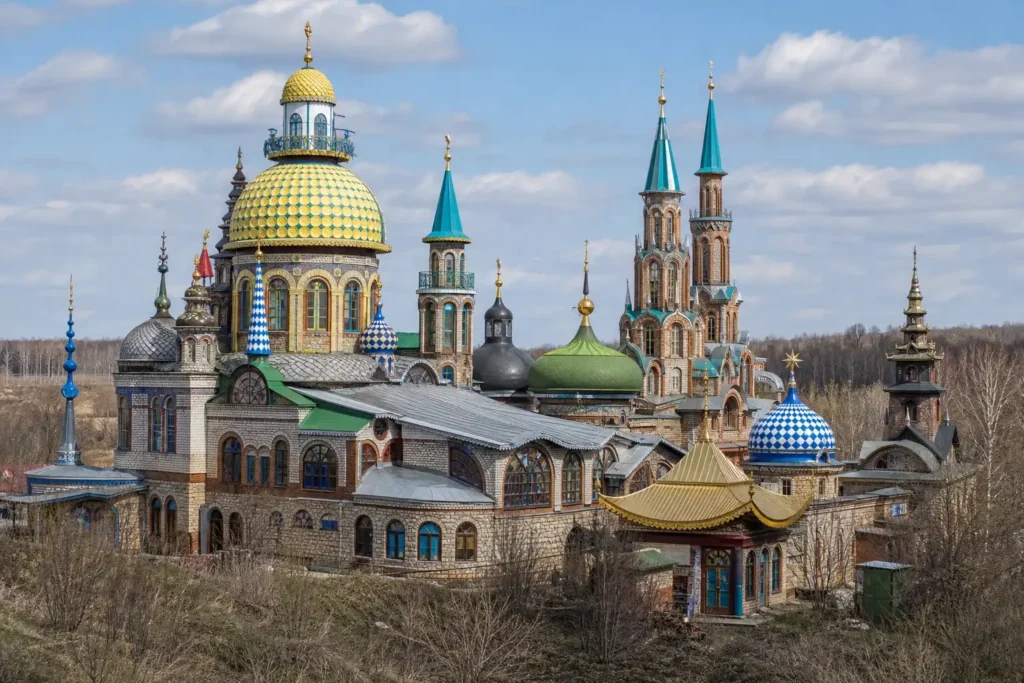
Privolzhsky District spans Kazan‘s southern reaches, making up a fifth of the city’s total area. Established in 1956, the district stretches from the Kremlin’s outlying influences to sprawling suburbs and parks, offering visitors a diverse glimpse beyond the compact historic center. Unlike downtown’s dense tourist corridors, Privolzhsky holds the city’s main zoo, several peaceful green spaces, and the famously colorful Temple of All Religions—a place that rewards the journey to Kazan’s periphery.
The district’s character varies dramatically. Central areas near the Kremlin retain some Soviet-era charm and historic quietness. Further south, modern developments rise alongside still-surviving microdistricts from the 1970s and 1980s, while the periphery dissolves into nature: forests, rivers, and the breathing space that makes Kazan feel less crowded than other Russian cities of its size.
Quick Facts
| Russian name | Приволжский район |
|---|---|
| District | Privolzhsky |
| Best time to visit | Late spring (May) through early autumn (September) is ideal. Summer (June-August) brings heat and occasional thunderstorms but long daylight for exploring. The zoo is pleasant in temperate weather. Winter is cold and gray, though quieter. Avoid peak tourist season (July-August) if seeking peaceful neighborhoods; autumn is best for both comfortable weather and lighter crowds. |
| Last updated | October 18, 2026 |
Why Visit Privolzhsky District, Kazan?
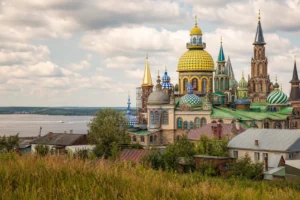
Privolzhsky offers respite from Kazan’s crowded central attractions. The Zoo Botanic Garden—one of Russia’s oldest zoos—sits here, making it essential for family visits or those seeking greenery. The Temple of All Religions, 15 kilometers south, is an unmissable sight: a colorful architectural fantasy blending Orthodox domes, mosque minarets, synagogue elements, and Chinese pagoda forms into one whimsical structure created by artist Ildar Khanov starting in 1992.
Beyond specific sights, the district reveals how ordinary Kazan lives. Tree-lined residential streets, local cafes, and peaceful parks offer authentic encounters absent from tourist zones. The Kaban Lakes lie partly here, and several smaller mosques and Orthodox chapels dot the landscape, reflecting Tatarstan’s religious diversity without the formality of major monuments.
How Privolzhsky District, Kazan Is Laid Out
Privolzhsky District occupies Kazan’s southern section, bordered by Vakhitovsky District to the north-west, Sovetsky District to the north-east, and surrounding rural areas and nature reserves to the south. The district is not a walking neighborhood but rather a sprawling area best understood by zones.
Central zone: The northern edge near the Kremlin retains historic streets and Soviet apartment blocks, with better public transit access via metro stations like Prospekt Pobedy (Red Line). Mid-district: Stretches of mixed housing from the 1970s-1990s, residential streets, and several smaller mosques. Southern zone: Increasingly green and suburban, with the Zoo Botanic Garden (12 kilometers south of the Kremlin) and residential microdistricts. Far south: The Temple of All Religions sits even further (15 kilometers), accessible by minibus or taxi from the city center.
Unlike compact historic Kazan, Privolzhsky requires transport between major sights; there is no central tourist corridor. Most visitors target one or two specific destinations rather than exploring the entire district.
Highlights of Privolzhsky District, Kazan
Kazan Zoo Botanic Garden
Kazan's main zoo occupies 112 hectares (not a small city park) on Khadi Taktasha Street in the district's mid-south area. Founded as one of Russia's early zoos, it combines traditional zoo animals with a botanical garden and aviary areas including a dedicated waterfowl zone. The grounds sprawl across natural terrain with ponds and wooded areas, making it feel less crowded than typical urban zoos. It opens daily into the evening, popular with families and those seeking a half-day nature outing. Note: it's a destination in itself, requiring a journey of 30-40 minutes from downtown Kazan.
Tip: Arrive early on weekends to avoid crowds; the waterfowl area (Waterfowl zone) and Cedar Park section are quieter than the main animal enclosures. Comfortable shoes essential—the grounds are large.
Temple of All Religions (Hram Vsekh Religiy)
Kazan's most visually striking unconventional building sits on Ulitsa Privolzhskaya 15 kilometers south of downtown. Artist and philanthropist Ildar Khanov began construction in 1992 to promote peaceful coexistence of faiths. The structure blends a white Orthodox church dome, turquoise Islamic minarets, a synagogue cupola, a Buddhist pagoda, a Confucian tower, and other religious symbols into one unified (and intentionally surreal) architectural fantasy. It is not an active place of worship but a cultural symbol and art installation. No admission fee to view the exterior; some interior areas require a donation.
Tip: Visit in afternoon light to capture the colors; early morning can be gray. It sits off the main road, so confirm minibus or taxi directions. A 15-minute stop for photos is typical; plan 30-45 minutes if exploring the small interior exhibition.
Kaban Lakes (Kaban Kölü)
Two connected lakes—Big Kaban and Little Kaban—sit near the district's northern border, partially visible from city-center heights but best explored from the southern shore in Privolzhsky. These are not scenic mountain lakes but urban water bodies ringed by apartments and parks, significant to Kazan for water management and local legend. Small mosques and cafes line the shores; locals swim in summer and walk the embankments year-round. The lakes are free to access and offer a quiet, off-tourist-radar perspective on Kazan life.
Tip: The southern embankment (Privolzhsky side) is less crowded than the central tourist-facing north shore. Visit on a weekday for authentic local atmosphere.
Gorki Microdistrict and Soviet Architecture
A large residential area in central Privolzhsky preserves well-maintained Soviet-era apartment blocks and parks from the 1970s-1980s, with little altered. The Gorki metro station and surrounding streets show how middle-class Soviet city life actually looked—not glamorous, but solid and livable. Small shops, cafes, and green courtyards create a time-capsule quality. Architecture enthusiasts and those interested in Soviet urbanism find it more honest than restored historic centers.
Tip: Walk the streets around Gorki metro station early morning for the quietest, most atmospheric experience. No specific sights to 'tick off'—the whole neighborhood is the attraction.
Medina Mosque (Diniyah Madrasah Mosque)
A working neighborhood mosque in central Privolzhsky, less famous than the Kremlin's Kul Sharif but important to local Muslim community life. Built in 19th-century style with green dome and modest but clean interior, it welcomes respectful visitors outside prayer times. Its presence reflects Kazan's Islamic heritage away from state monuments. Visitors should dress modestly and remove shoes.
Tip: Call ahead or visit during posted visiting hours (typically afternoons). Friday is busiest; weekday mornings are quietest.
Kazanskaya Fair (Kazanskaya Yarmarka)
An exhibition center on Orenburgskii Tract Street operating as a trade and event venue rather than a tourist market. It hosts seasonal fairs, craft markets, and cultural events. While not a guaranteed daily attraction, it occasionally opens craft fairs and local markets where Tatar handicrafts and regional products appear. Check the official Kazan tourism site or call ahead to see if events align with your visit.
Tip: This is active primarily during announced fairs and events, not a permanent market to stumble upon. Verify opening dates before planning a visit.
Atmosphere
Privolzhsky feels less like a tourism zone and more like where Kazan’s residents actually live and spend weekends. The district has two distinct moods. Northern areas near the Kremlin preserve a quieter, older Kazan—tree-lined streets with pre-Soviet and Soviet buildings, occasional church bells, modest cafes, and small parks where elderly locals sit on benches. Middle zones are busier with younger families, bike lanes, playgrounds, and small shops. Southern areas open into parks, green spaces, and the zoo precinct, where the air literally feels fresher.
Unlike crowded Bauman Street downtown, Privolzhsky’s streets are relaxed, even sleepy on weekday afternoons. Weekends bring families to the zoo and parks. The Temple of All Religions area, while a pilgrimage destination for some, remains oddly peaceful—not a major tourist crush, but steady foot traffic. Morning walks here feel authentically Russian, without the performative atmosphere of restored historic centers.
History of Privolzhsky District, Kazan
Privolzhsky District was formally established on 7 December 1956, though the southern parts of Kazan have been inhabited and developed much longer. The name literally means ‘near the Volga’ (Privolzhsky from ‘Privolga’), reflecting the district’s position in Kazan’s southern reaches toward the Volga River and its tributaries.
Soviet-era development dramatically transformed the district from the 1950s onward. Large apartment complexes rose in the 1960s-1980s, creating the microdistricts (Gorki, Vostochny, Teplokontrol) that still dominate the landscape. These were designed as self-contained communities with schools, clinics, shops, and parks—utopian Soviet urbanism in practice. Many buildings remain, some well-maintained, others aging but functional.
The Kazan Zoo Botanic Garden predates the district’s formal establishment, tracing its origins to earlier 20th-century efforts to create natural spaces within the expanding city. It became one of Russia’s important zoological institutions, continually modernized though retaining its sprawling parkland character.
Modern Privolzhsky reflects broader post-Soviet Kazan. The Temple of All Religions (begun 1992) was an early post-Soviet art project, unconventional and locally debated—now accepted as an iconic quirk. New residential developments, improved roads, and the metro extension have gradually increased accessibility. However, the district remains primarily residential and suburban rather than tourist-oriented, preserving the lived-in character of an ordinary Russian city quarter.
Suggested itineraries Privolzhsky District, Kazan
Half day (4-5 hours)
Start at Prospekt Pobedy metro station (Red Line). Walk to nearby Kaban Lakes' southern shore for 30 minutes of peaceful water views and local atmosphere. Return to metro and travel to Khadi Taktasha Street for the Kazan Zoo Botanic Garden (2-3 hours). Browse the zoo's main animal areas and botanical gardens at a relaxed pace. End with late lunch at a zoo-area cafe or return to downtown for dinner.
Full day (7-8 hours)
Combine the zoo morning (arrive by 10:00 AM) with an afternoon trip south to the Temple of All Religions (minibus from zoo area or downtown, 30-minute journey). Spend 45 minutes photographing and exploring the temple's exterior and small interior. Return via the same route. If time allows, detour through central Privolzhsky's Gorki microdistrict to see Soviet architecture and local life, or explore the Medina Mosque if visiting during posted hours.
Extended visit (2-3 days exploring Privolzhsky + downtown Kazan)
Day 1: Zoo and Kaban Lakes morning/afternoon, evening stroll through Gorki or nearby residential areas. Day 2: Dedicated trip to Temple of All Religions, with lunch at a local cafe en route. Day 3: Smaller mosques (Medina Mosque), parks, and casual neighborhood walks to experience how non-tourist Kazan functions. Mix in visits to downtown Kremlin area (Vakhitovsky/downtown neighborhoods) to compare historic center energy with suburban quietness.
How to Get to Privolzhsky District, Kazan
By metro and walking: Privolzhsky’s northern edge is served by Prospekt Pobedy station (Red Line 1). Exit and walk south to reach Kaban Lakes’ southern shore (10-15 minutes) or continue for central neighborhood exploration. Gorki station (Green Line 2) also serves the district’s central area.
To the Zoo Botanic Garden: From Kremlin or downtown, take any metro or marshrutka (minibus) south along Khadi Taktasha Street toward the zoo (look for signs). Journey: 25-40 minutes depending on traffic. Alternatively, ask your hotel to call a taxi—cost is moderate for this distance. The zoo sits well-signed; drivers know it.
To the Temple of All Religions: From downtown, take a marshrutka heading south toward the Temple of All Religions (ask your hotel—they run frequently but routes vary). Journey: 40-50 minutes. Alternatively, hire a taxi for a fixed rate (moderate cost for suburban distance). The temple is on a main road; drivers will recognize the colorful building from a distance.
Taxis and ride-hailing: Yandex.Taxi and Uber (where available) operate throughout Privolzhsky. Fares are lower than downtown trips due to shorter distances between sites.
Accessibility
Privolzhsky is less wheelchair-accessible than central Kazan. Metro stations at Prospekt Pobedy and Gorki have elevators, but older Soviet-era streets may have uneven sidewalks and curbs. The Zoo Botanic Garden has some paved paths but also uneven terrain; electric scooters or wheelchairs with good traction are recommended. The Temple of All Religions has level ground around the exterior but uneven interior access. Taxis and ride-hailing are the most practical transport for those with mobility issues.
Food Nearby
Privolzhsky has local cafes and informal restaurants rather than tourist-focused establishments. Near the zoo, basic cafes serve soups, pelmeni (dumplings), and simple grilled meats. The Temple of All Religions area has a small cafe on-site. Central Privolzhsky (Gorki, Prospekt Pobedy areas) has small shops and cafes serving Tatar and Russian food at budget prices. For variety, return to downtown Kazan for restaurants; Privolzhsky's food is functional, not a destination.
What to Bring
Comfortable walking shoes for the zoo's 112-hectare terrain and uneven paths. Sunscreen and hat for sunny days. A light jacket even in summer—the zoo's wooded sections stay cool. In winter, warm coat, hat, and gloves are essential; wind from Kaban Lakes can be sharp. A small bag acceptable for most venues; the zoo and temple have no bag restrictions.
Best Views and Photo Spots of Privolzhsky District, Kazan
Temple of All Religions, exterior south façade
The full architectural fantasy: white Orthodox dome, turquoise minarets, pagoda, and synagogue elements converge in a surreal composition. The south-facing exterior catches afternoon light, making colors pop. The building appears like a fever dream—utterly unique in Russia and impossible to photograph poorly.
Best time: Afternoon (2:00-5:00 PM) when sunlight illuminates the colored domes from the south. Overcast days flatten the colors; sunny weather is essential. Visit on a weekday to avoid crowds in the frame.
Kaban Lakes' southern shore, looking north at water and apartment backdrop
The water body stretches wide with Soviet-era apartment buildings rising behind, creating a distinctly Russian urban-nature composition. Ducks and waterfowl add life. The shoreline is quiet and atmospheric—far from Kazan's tourist bustle.
Best time: Early morning (6:00-8:00 AM) when local walkers are few and mist may hover over water. Golden hour (sunset) also works but draws more people.
Gorki microdistrict central square, looking at symmetrical Soviet apartment blocks
A quintessential Soviet residential scene: identical 5-6 story apartment blocks arranged symmetrically around a park with benches, children's playground, and small shops. Authentic Soviet urbanism, neither restored nor neglected—honest time-capsule architecture.
Best time: Weekday morning (7:00-9:00 AM) when the area is quiet and light is soft. Captures the everyday reality of Soviet city living without tourist intrusion.
Zoo Botanic Garden main avenue, looking into tree-lined paths
The zoo's interior pathways thread through woods and parkland, softening the 'zoo' feeling into something closer to a nature reserve. Trees frame views of distant animal enclosures and water features, creating forest atmosphere within the city.
Best time: May-June when trees are fully green and flowering plants bloom. Early morning avoids crowds and captures peaceful light.
Photography Rules
The Temple of All Religions is photogenic from all angles; no drone restrictions mentioned, but check with staff on-site. The zoo allows personal photography for non-commercial use. The Kaban Lakes shoreline and Gorki microdistrict's Soviet architecture offer interesting documentary photography. Indoor temple spaces may have dim lighting—bring a camera capable of higher ISO if photographing interiors. Tripods are generally acceptable in public areas but ask permission for extended use.
Family Suitability
Privolzhsky is highly family-friendly. The Zoo Botanic Garden is the district's main family destination, with diverse animals, botanical sections, and playgrounds appealing to children ages 3-12. Summer crowds can be thick, so arrive early. The Temple of All Religions intrigues older children (ages 8+) as a unique visual experience; younger children may find it less engaging. Kaban Lakes' shorelines are safe for supervised children to explore. Gorki and other residential areas are very safe for family walks. Stroller accessibility varies: zoo paths are mostly paved but uneven; residential areas have adequate sidewalks. The district is car-friendly if renting; public transport requires patience with minibus waits.
Russia Vibes Tips
- The minibus ('marshrutka') to the Temple of All Religions can be confusing for first-time visitors. Ask your hotel concierge to write down the route name or destination in Russian; show it to the driver. Journey time varies with traffic (40-50 minutes); allow extra time and confirm the return route before departure.
- The Zoo Botanic Garden is one of Russia's oldest zoos but not newly renovated. Some enclosures reflect older standards; animal welfare varies. If you're sensitive to this, research current conditions or consider skipping it in favor of other Privolzhsky attractions.
- Few Privolzhsky restaurants cater to international tastes or dietary restrictions. If you have specific needs, eat in downtown Kazan and visit Privolzhsky only for sightseeing.
- The district is very quiet on weekday mornings and evenings—perfect for authentic locals-only atmosphere but fewer services open. Visit early in the day or coordinate with locals for restaurant/cafe hours.
- Some central Privolzhsky streets are still being rebuilt post-Soviet. Sidewalk conditions vary; wear sturdy shoes and watch for uneven surfaces, especially after rain.
- The Temple of All Religions is occasionally closed for maintenance or events; the visitor site sometimes lacks posted updates. Call Kazan tourism or the temple directly before making a long trip from downtown.
Explore Nearby Privolzhsky District, Kazan
Sights near Privolzhsky District, Kazan
 Kazan Kremlin · typical visit: 2–4 hours2 min on foot from Kremlyovskaya, Kazan metro, Open 24 hours
Main image: AI-generated illustration. It may not show the place exactly as it looks.
 Bauman Street, Kazan · typical visit: 1.5–3 hours7 min on foot from Kremlyovskaya, Kazan metro, Open 24 hours
Main image: AI-generated illustration. It may not show the place exactly as it looks.
 Kul Sharif Mosque, Kazan · typical visit: 1–2 hours6 min on foot from Kremlyovskaya, Kazan metro, Open daily 08:00–20:00
Main image: AI-generated illustration. It may not show the place exactly as it looks.
 Temple of All Religions, Kazan · typical visit: 1–2 hoursOpen daily 09:00–18:00
Main image: AI-generated illustration. It may not show the place exactly as it looks.
Related guides
 Vakhitovsky District, Kazan: What to See and How to Walk It
Main image: AI-generated illustration. It may not show the place exactly as it looks.
 Sabantuy, Kazan: Grounds, Kurash, Food and Getting There
Main image: AI-generated illustration. It may not show the place exactly as it looks.
Browse more: More in Privolzhsky · All Kazan · All Neighborhoods · All Neighborhoods · All Neighborhoods in Kazan
FAQ: Privolzhsky District, Kazan
Is Privolzhsky District worth visiting if I only have one day in Kazan?
Probably not as a primary destination. The must-see Kazan Kremlin, Bauman Street, and Kul Sharif Mosque are in the Kremlin or downtown (Vakhitovsky District), not Privolzhsky. If you have 2-3 days, dedicate a half-day to the Temple of All Religions or zoo. For one day, stay in the city center.
Is the Temple of All Religions a real religious building?
No. It is an art installation and cultural symbol created by artist Ildar Khanov to promote religious tolerance, not an active place of worship. You can view the exterior freely and explore the small interior exhibition. It is spiritual in intent but not a functional mosque, church, or synagogue.
How far is the Zoo Botanic Garden from downtown Kazan?
Approximately 12 kilometers south of the Kremlin. Travel time: 25-40 minutes by minibus or taxi depending on traffic. It's accessible by public transport but not within comfortable walking distance from central Kazan.
Are there metro stations in Privolzhsky District?
Yes. Prospekt Pobedy (Red Line 1) and Gorki (Green Line 2) both serve the district. However, metro coverage is limited; much of southern Privolzhsky (zoo, Temple of All Religions) requires minibus or taxi from metro stations.
What is the best time of day to visit the Temple of All Religions?
Afternoon (2:00-5:00 PM) when sunlight brings out the colors of the domes and minarets. Overcast or very early morning light flattens the visual impact. An afternoon visit is most worth the 30-minute journey from downtown.
Can I visit the Medina Mosque if I'm not Muslim?
Yes, if you are respectful. Remove shoes, dress modestly (cover shoulders and knees), and avoid prayer times (typically dawn, midday, afternoon, evening, night). Visiting during posted hours outside prayer times is welcomed. Call ahead to confirm visitor hours.
Is Privolzhsky safe for solo travelers?
Yes. The district is quiet and local, with low crime. Neighborhoods are well-lit and populated during the day. Evening walks in central areas (Gorki, Prospekt Pobedy) are safe. The Temple of All Religions is isolated but on a main road with regular minibus traffic—daytime visits are safe; evening visits are not recommended.
Do I need a guide to explore Privolzhsky District?
No, unless you want deep historical context or cultural interpretation. The zoo and Temple of All Religions are self-explanatory. A Russian speaker is helpful for asking directions or confirming minibus routes, but English speakers can navigate with maps apps and hotel staff assistance.
Russia Vibes is a one-person project. A coffee keeps it going
Last updated: October 18, 2026.
How we research and update our guides
About this guide: AI assistance and accuracy
This guide is created with the help of AI and is based on official sources where available. Mistakes can still happen. Opening hours, prices, rules and other details are given to the best of our knowledge as of the date shown and can change without notice. It offers general recommendations only, not professional, legal or travel advice. Please confirm important details with the official source before you travel; you are responsible for your own plans and decisions.
International sanctions affect payments between Russia and many other countries. In practice, cards issued in the EU, the UK, the US and several other countries often do not work in Russia, Russian cards usually do not work abroad, and some booking platforms, airlines and payment providers limit or suspend their services for Russia. The situation changes frequently. We do not give legal or financial advice, and this site does not encourage anyone to break or circumvent sanctions. Whatever you plan, you are responsible for following the laws and regulations that apply to you, including those of your country of residence and citizenship. Many travelers still organise their stay lawfully. It is worth asking your bank or payment provider what is currently permitted, contacting hotels, tour operators and carriers directly about the payment methods they accept, and checking which services are open to customers from your country. Clarify payment, cancellation and refund terms before you commit to a booking, and keep your plans flexible. Partner links on this site may not be available in every country, and prices, availability and rules in our guides can differ from what you see when you book.Paying for your trip: please read
Report an issue on this page

Take this guide with you
Get a free PDF of this guide to print or read offline: key facts, tips and a map link on a few clean pages.