
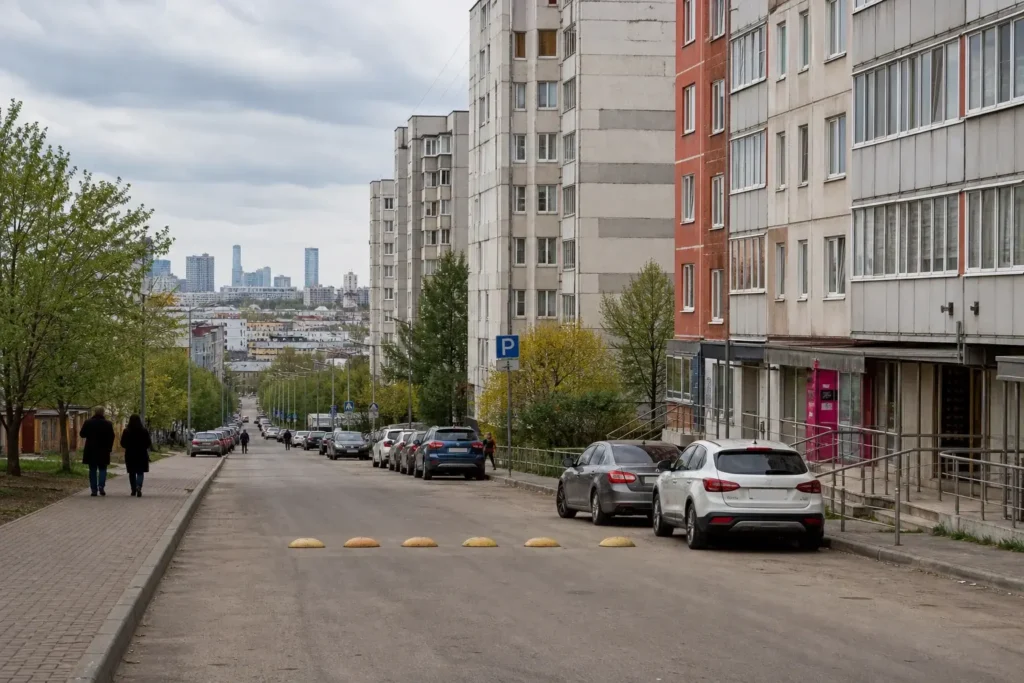
Sovetsky District is the most populous administrative district of Kazan, covering the northeastern and eastern portions of the city. Spanning 167 square kilometers, it is the largest of Kazan’s seven districts. The area encompasses residential neighborhoods ranging from Soviet-era apartment blocks to newer developments, green spaces along the Volga River, and local markets that serve the community.
Unlike the historic Kremlin or cultural center of the city, Sovetsky District offers visitors a chance to see how contemporary Kazan functions away from the main tourist routes—a glimpse of residential life, local parks, and the broader urban landscape that defines modern Russia’s third capital.
Quick Facts
| Russian name | Советский район |
|---|---|
| Address | OpenStreetMap · Google Maps |
| District | Sovetsky |
| Best time to visit | Spring (April–May) and autumn (September–October) offer pleasant weather for walking neighborhood streets and along the Volga embankment. Summers are warm and humid, while winters are cold with significant snow. Visit on weekdays to experience authentic residential life; weekends bring more families to parks and markets. |
| Last updated | October 18, 2026 |
Why Visit Sovetsky District, Kazan?
Sovetsky District appeals to travelers interested in experiencing everyday urban life in a Russian city rather than just major monuments. The district includes parks along the Volga embankment offering river views, residential neighborhoods with local cafés and shops, and access to authentic local food markets. It also contains several residential areas recently incorporated into the city, offering insights into contemporary Russian urban expansion and suburban living. Visitors seeking to understand Kazan beyond its tourist center will find genuine, less-crowded neighborhoods here.
How Sovetsky District, Kazan Is Laid Out
Sovetsky District extends across the northeastern and eastern portions of Kazan. The district is subdivided into multiple residential neighborhoods and microdistricts, with major areas including Azino in the southeastern part, residential zones along the Siberian tract, and settlements such as Tankodrom, Adel Kutuy (locally called Adelka), and Derbyshki. The Volga River forms a natural boundary to the west and southwest. Public transport connections link these areas to the city center, though the district remains primarily residential rather than a cohesive visitor destination. The district’s sprawl reflects its growth from the 1990s onward as Kazan expanded eastward.
Atmosphere
Sovetsky District feels like a working city—lined with Soviet-era apartment blocks, local shops, and the rhythms of everyday Russian life. Weekday mornings bring commuters heading toward the center, while weekends see families in local parks and markets. The area lacks the architectural grandeur of central Kazan but compensates with genuine neighborhood character: small cafés, street vendors, and residents going about their routines. Along the Volga embankment, the riverside is quieter and more serene than city streets, with a mix of locals exercising and families relaxing by the water.
History of Sovetsky District, Kazan
Sovetsky District, in its present form, developed as Kazan expanded in the Soviet era and beyond. The district takes its name from the Soviet administrative system established after the 1917 revolution. As Kazan’s population grew throughout the 20th century, Sovetsky District became the designated area for large-scale residential development.
In the 1990s and early 2000s, the district experienced rapid suburban expansion. Major residential neighborhoods and microdistricts were constructed to accommodate population growth, and territories such as Azino, Tankodrom, Adel Kutuy, and Derbyshki were either newly developed or incorporated into the city of Kazan in 1998 and 2004. This expansion made Sovetsky the largest district by area and population, reflecting post-Soviet urbanization patterns common across Russia’s major cities.
Today, Sovetsky District remains primarily residential and industrial, with several large industrial enterprises in designated zones. It represents the contemporary face of Kazan rather than its historical heritage, embodying the city’s transformation into a modern metropolitan center.
Plan and Book
Advertisement: these are partner links. If you book or buy through them, we may earn a commission at no extra cost to you.
How to Get to Sovetsky District, Kazan
Sovetsky District is accessible by public transport from central Kazan. Metro stations on the city’s lines serve connections to the district, and local buses and marshrutkas (minibuses) connect various neighborhoods within it to other parts of Kazan. The district is large and spread out, so specific directions depend on which neighborhood within Sovetsky you plan to visit. Ask locals or use a maps application for directions to particular streets or areas.
Food Nearby
Sovetsky District contains local cafés, small restaurants, and markets serving the residential community. Prices are lower than central Kazan. Street food vendors and market stalls appear regularly in neighborhood areas. Specific venues change frequently, so ask hotel staff or locals for current recommendations in the neighborhood you are visiting.
What to Bring
Comfortable walking shoes are essential; the district is spread out and sidewalks vary. Bring sun protection in summer and warm layers in cooler seasons. Carry a charged phone with offline maps as English signage is limited in residential areas.
Photography Rules
Photography is generally unrestricted in public spaces. Be respectful when photographing residential areas and local people. No special permits or drones are typically required for casual photography.
Family Suitability
Sovetsky District is residential and family-friendly, with parks and open spaces suitable for children. Strollers are manageable on main streets but sidewalks in some neighborhoods are uneven. The area lacks major attractions designed specifically for tourists, but families seeking an authentic local experience will find parks, playgrounds, and neighborhood cafés. Limited English means planning ahead is helpful.
Russia Vibes Tips
- Use offline maps or a phone app before entering the district, as street signs are primarily in Cyrillic and English is rarely spoken in residential areas.
- Visit Azino or neighborhoods along the Siberian tract on weekends to see local markets where residents shop for produce and everyday goods—a genuine window into daily life.
- The Volga embankment on the district's western edge offers quieter riverside walks and views; access points vary by neighborhood.
- Most small cafés and local shops accept cash; not all take credit cards or mobile payments, so carry rubles if you plan to eat or shop.
- Do not expect English speakers in local establishments; bring a translation app or basic Russian phrases to ease communication.
Explore Nearby Sovetsky District, Kazan
Sights near Sovetsky District, Kazan
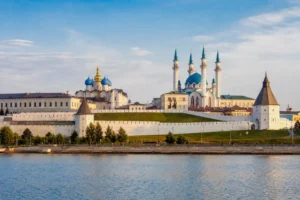 Kazan Kremlin – about 7.6 km away · typical visit: 2–4 hours2 min on foot from Kremlyovskaya, Kazan metro, Open 24 hours
Main image: AI-generated illustration. It may not show the place exactly as it looks.
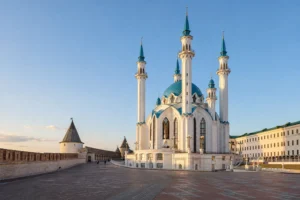 Kul Sharif Mosque, Kazan – about 7.8 km away · typical visit: 1–2 hours6 min on foot from Kremlyovskaya, Kazan metro, Open daily 08:00–20:00
Main image: AI-generated illustration. It may not show the place exactly as it looks.
Browse more: More in Sovetsky · All Kazan · All Neighborhoods · All Neighborhoods · All Neighborhoods in Kazan
FAQ: Sovetsky District, Kazan
Is Sovetsky District a tourist destination?
No. Sovetsky is primarily a residential and industrial district with limited traditional attractions. It appeals mainly to travelers interested in observing everyday life in a modern Russian city rather than sightseeing. Tourists typically stay in central Kazan near the Kremlin and Bauman Street.
How do I get to Sovetsky District from the city center?
Public transport (metro, buses, or marshrutkas) connects central Kazan to various neighborhoods in Sovetsky. Journey times vary from 15 to 40 minutes depending on your destination within the district. Use a maps app for specific directions.
What is there to see in Sovetsky District?
The district offers residential neighborhoods, local parks, the Volga embankment, and markets serving residents. It lacks major monuments or museums. Its appeal lies in experiencing authentic, everyday urban Russian life away from tourist attractions.
Is the area safe?
Sovetsky is generally safe in main residential and commercial areas during daytime. Standard urban precautions apply: avoid isolated areas after dark and keep valuables secure. The district is less touristy than central Kazan, so fewer English speakers and less tourist infrastructure exist.
Where can I eat in Sovetsky District?
Local cafés and small restaurants serve the residential community at moderate prices. Street food vendors and market stalls appear in neighborhood areas. Cuisine is typical Russian and Tatar food. Ask hotel staff for current recommendations, as venues change frequently.
Should I visit Sovetsky District or stay in central Kazan?
Most first-time visitors to Kazan focus on the historic center (Kremlin, Bauman Street, Kul Sharif Mosque) where major attractions and English-speaking services cluster. Visit Sovetsky only if you have time and are interested in observing everyday life or have a specific destination in mind.
Do I need a guide to visit Sovetsky District?
A guide is not necessary for safe movement through residential areas, but a translation app and offline maps are highly recommended. English is rarely spoken, and navigating by street names helps. Consider a guide if you want local insights into neighborhood history and culture.
What is the population of Sovetsky District?
Sovetsky is Kazan's most populous district, with over 300,000 residents, making it larger than many Russian cities. This reflects its size and the concentration of residential neighborhoods.
Russia Vibes is a one-person project. A coffee keeps it going
Last updated: October 18, 2026.
How we research and update our guides
About this guide: AI assistance and accuracy
This guide is created with the help of AI and is based on official sources where available. Mistakes can still happen. Opening hours, prices, rules and other details are given to the best of our knowledge as of the date shown and can change without notice. It offers general recommendations only, not professional, legal or travel advice. Please confirm important details with the official source before you travel; you are responsible for your own plans and decisions.
International sanctions affect payments between Russia and many other countries. In practice, cards issued in the EU, the UK, the US and several other countries often do not work in Russia, Russian cards usually do not work abroad, and some booking platforms, airlines and payment providers limit or suspend their services for Russia. The situation changes frequently. We do not give legal or financial advice, and this site does not encourage anyone to break or circumvent sanctions. Whatever you plan, you are responsible for following the laws and regulations that apply to you, including those of your country of residence and citizenship. Many travelers still organise their stay lawfully. It is worth asking your bank or payment provider what is currently permitted, contacting hotels, tour operators and carriers directly about the payment methods they accept, and checking which services are open to customers from your country. Clarify payment, cancellation and refund terms before you commit to a booking, and keep your plans flexible. Partner links on this site may not be available in every country, and prices, availability and rules in our guides can differ from what you see when you book.Paying for your trip: please read
Report an issue on this page

Take this guide with you
Get a free PDF of this guide to print or read offline: key facts, tips and a map link on a few clean pages.