
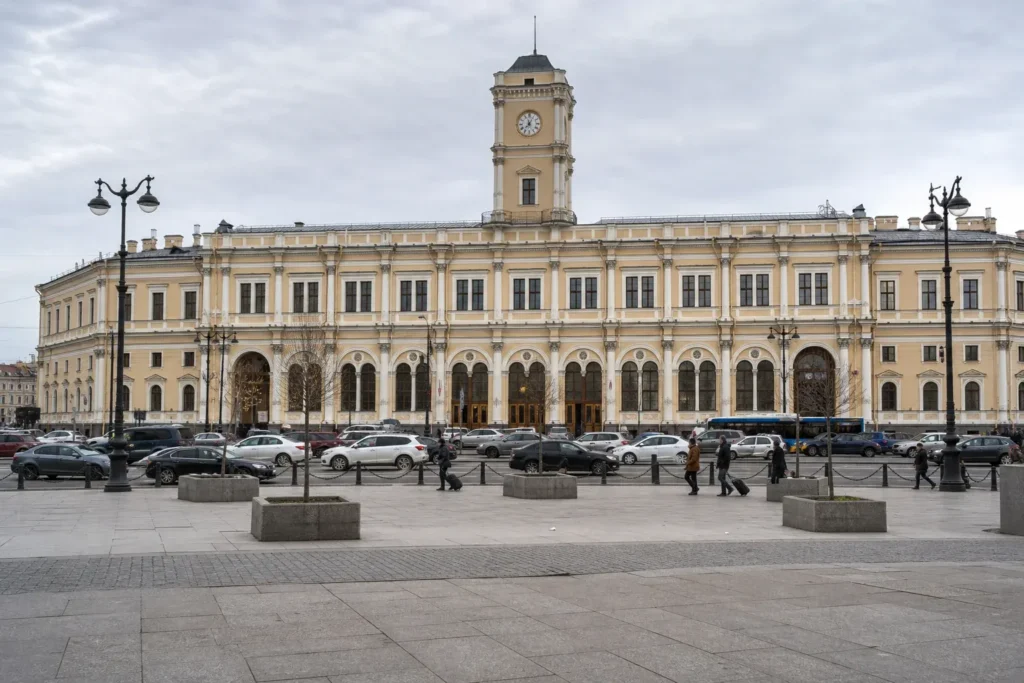
How to Find the Right Railway Station, Saint Petersburg begins with an important distinction: the city has five major railway terminals, not one central station serving every train. Moskovsky, Ladozhsky, Vitebsky, Baltiysky and Finlyandsky are located in different neighbourhoods, sometimes several kilometres apart. Choosing the wrong one can mean missing a departure even when you arrive at a railway station with plenty of time.
The safest method is to check the departure station printed on your train ticket, identify its corresponding metro stop and plan the journey before leaving your accommodation. Moskovsky Railway Station stands on Nevsky Prospekt in the Tsentralny District, but it is not automatically the departure point for every long-distance service. This guide explains the differences, practical routes from central Saint Petersburg and how to find the correct platform.
Current access notice: As of October 2026, important railway access and departure changes affect Saint Petersburg.
Since 25 August 2026, suburban services previously departing from or arriving at Moskovsky Railway Station on the Moscow and Volkhovstroy directions have been redirected to Rybatskoye and Ladozhsky Railway Station during construction associated with the new high-speed railway and suburban infrastructure. Moskovsky continues to serve long-distance trains. Check the North-Western Suburban Passenger Company's current departure information rather than following an older station guide.
At Ladozhsky Railway Station, some suburban trains depart from a new platform on Track 3, accessible from Granitnaya Street. The station operator also reports a closed car park and restrictions on pedestrian access from Zolnaya Street and Zanevsky Prospekt. Follow the currently marked routes and allow additional time.
These works have no confirmed overall completion date in the checked official notices. The access review date below is an editorial verification deadline, not a promised reopening date.
Quick answer: Check the exact departure station on your train ticket, match it to one of Saint Petersburg's five main terminals and take the metro to its nearest station. Allow approximately 25–50 minutes from the centre, plus a boarding buffer. Metro cost: ₽.
At a Glance
| Total time | 25–50 minutes from central Saint Petersburg, plus time before departure |
|---|---|
| Typical cost | ₽ |
| Last updated | October 17, 2026 |
What You Need Before You Start
- Your train booking showing the exact departure station
- The train number, departure date and scheduled time
- An up-to-date Saint Petersburg Metro map
- An offline map with your railway terminal marked
- A suitable local transport payment method
- The travel document associated with your train booking
- Enough time for walking, station screening and boarding
- A current departure timetable checked shortly before travelling
Compare Your Options
| Option | Duration | Price | Notes |
|---|---|---|---|
| Moskovsky Railway Station — Nevsky Prospekt | Approximately 10–25 minutes from the central Nevsky Prospekt area | ₽ | The most centrally located major railway terminal and a common departure point for long-distance trains, including Sapsan services towards Moscow. The station is at Nevsky Prospekt 85 in the Tsentralny District. Use Ploshchad Vosstaniya on Metro Line 1 or Mayakovskaya on Line 3. The building opened in 1851 and retains its distinctive historic facade. It operates around the clock. The station is not the departure point for every train towards Moscow or for every service using the city's railway network. |
| Ladozhsky Railway Station — eastern Saint Petersburg | Approximately 25–45 minutes from the central Nevsky Prospekt area | ₽ | Ladozhsky stands at Zanevsky Prospekt 73 in the Krasnogvardeysky District and connects with Ladozhskaya Metro Station on Line 4. Opened in 2003, it is Saint Petersburg's newest principal railway terminal. It handles long-distance and suburban services, including routes associated with northern and northeastern destinations such as Petrozavodsk and Murmansk. Its combination of glass, metal and broad concourses differs considerably from the city's nineteenth-century stations. Consult the access notice for current changes to approaches and suburban platforms. |
| Vitebsky Railway Station — Zagorodny Prospekt | Approximately 15–30 minutes from central Saint Petersburg | ₽ | Vitebsky is located at Zagorodny Prospekt 52 in the Admiralteysky District. The nearest metro stations are Pushkinskaya on Line 1 and Zvenigorodskaya on Line 5. The station is particularly useful for suburban journeys towards Tsarskoye Selo and Pavlovsk. Russia's first public railway opened here in 1837, while the current Art Nouveau station building dates from 1904. Its spacious hall, grand staircase and decorative metalwork make the building recognisable even before reaching the platforms. |
| Baltiysky Railway Station — Obvodny Canal | Approximately 20–35 minutes from the central Nevsky Prospekt area | ₽ | Baltiysky stands at Obvodny Canal Embankment 120 and connects directly with Baltiyskaya Metro Station on Line 1. It primarily serves suburban rail routes southwest of Saint Petersburg, including services towards New Peterhof, Oranienbaum and Krasnoye Selo. The station opened in 1857 as the Peterhof railway terminal. Its long classical facade and broad forecourt make it relatively easy to identify. It is useful for independent visitors travelling to the southern coast of the Gulf of Finland. |
| Finlyandsky Railway Station — Lenin Square | Approximately 20–35 minutes from central Saint Petersburg | ₽ | Finlyandsky Railway Station stands at Lenin Square 6 and connects with Ploshchad Lenina on Metro Line 1. It serves northern suburban routes, including connections towards Vyborg, Zelenogorsk and Sestroretsk. The original railway opened in 1870, although the present main building largely reflects twentieth-century reconstruction. The station has separate suburban passenger areas and a long-distance boarding entrance. Despite its name, visitors should not assume that a regular passenger train to Finland currently operates. |
| Direct taxi to the railway terminal | Approximately 15–50 minutes from central Saint Petersburg, depending on the station and traffic | ₽₽₽ | A practical alternative for families, travellers with heavy luggage and passengers leaving before the metro begins operating. Enter the full railway terminal name and official address into the booking service. At larger stations, ask to be taken to the appropriate passenger entrance rather than merely the nearest point on the surrounding road. The drive may be slower during rush hours, and a taxi does not eliminate the need to check the train's actual departure station. |
₽ budget · ₽₽ moderate · ₽₽₽ upscale · ₽₽₽₽ splurge. Price levels are estimates compared with typical prices for visitors.
Step-by-Step Instructions
Step 1: 1. Find the departure station on your ticket
Open your railway booking and locate the departure station, not simply the destination city or train operator. Saint Petersburg's main terminals are Moskovsky, Ladozhsky, Vitebsky, Baltiysky and Finlyandsky. The exact station matters because trains serving similar regions can depart from different terminals. Moskovsky Railway Station may also appear under the railway name Saint Petersburg-Glavny. Match the name on your booking to a specific station before opening a navigation app.
Tip: Save a screenshot of the complete booking with the station name and train number visible.
Step 2: 2. Identify the corresponding railway terminal
Match the station on your ticket to its location. Moskovsky is on Nevsky Prospekt near Ploshchad Vosstaniya. Ladozhsky is east of the historic centre on Zanevsky Prospekt. Vitebsky stands on Zagorodny Prospekt, Baltiysky is beside the Obvodny Canal, and Finlyandsky faces Lenin Square on the northern side of the Neva. These are separate railway stations with different entrances and platforms. The station's location is more reliable than guessing from the destination.
Tip: Do not confuse Moskovsky Railway Station with Moskovskaya Metro Station. They are different places.
Step 3: 3. Choose the nearest metro station
Use the metro station associated with your railway terminal. For Moskovsky, choose Ploshchad Vosstaniya on Line 1 or nearby Mayakovskaya on Line 3. Ladozhsky connects with Ladozhskaya on Line 4. Vitebsky is served by Pushkinskaya on Line 1 and Zvenigorodskaya on Line 5. Baltiysky uses Baltiyskaya on Line 1, while Finlyandsky connects with Ploshchad Lenina on Line 1. These connections provide a practical starting point from central Saint Petersburg.
Tip: Search for the railway station first and use its nearest metro stop, rather than choosing a station with a similar-sounding name.
Step 4: 4. Plan the route from central Saint Petersburg
From Nevsky Prospekt, several terminals are accessible by metro. To reach Moskovsky, use the connected Gostiny Dvor station and travel one stop on Line 3 towards Begovaya to Mayakovskaya. For Ladozhsky, travel to Sennaya Ploshchad, transfer to Spasskaya and take Line 4 towards Ulitsa Dybenko. For Vitebsky or Baltiysky, travel towards Tekhnologichesky Institut and change to the appropriate direction on Line 1. Finlyandsky is reached through Ploshchad Lenina.
Tip: Check the complete journey, including the station exit and walk to the railway entrance.
Step 5: 5. Locate the correct building entrance
When you reach the railway station, follow the signs towards the entrance for your type of train. Large terminals may separate suburban platforms from long-distance departure areas. At Moskovsky, the main station building faces Nevsky Prospekt and Vosstaniya Square. At Vitebsky, the main entrance on Zagorodny Prospekt provides access towards the suburban railway area. At Finlyandsky, long-distance passengers use a separate approach from Botkinskaya Street through the Express Hall. Do not assume every doorway serves every train.
Tip: Look for signs indicating long-distance trains or suburban trains before choosing an entrance.
Step 6: 6. Allow time for station security
Russian railway stations have entrance screening arrangements. According to the official Russian Railways station directorate guidance, visitors and passengers undergo checks using security equipment, and luggage may need to be examined. The operator recommends arriving at least 30 minutes before train departure to allow for these procedures. Follow staff instructions and keep bags accessible for inspection. Travellers with mobility needs can request assistance through the Russian Railways Mobility Assistance Centre.
Tip: For an unfamiliar station, large luggage or a complicated transfer, allow more than the operator's minimum recommended arrival buffer.
Step 7: 7. Check the electronic departure board
Inside the station, find the electronic departures display. Locate your train using its number and departure time, then confirm the destination and assigned track or platform. Some trains make several intermediate stops, so the displayed final destination may not be the town where you plan to leave. Platform assignments can change. Do not rely exclusively on a platform number noted earlier in the day. If no platform is displayed yet, remain near the departure information area and check again.
Tip: Your train number is often the most useful identifier when several departures have similar destinations.
Step 8: 8. Walk to the correct platform and carriage
Follow the signs to the assigned departure track. At some terminals, reaching a distant platform requires walking along the station concourse or through a separate passage. Long-distance trains can be lengthy, so finding your assigned carriage may involve walking along much of the platform. Confirm the carriage number displayed on the train or near its door. Keep enough time to reach your carriage before boarding closes and follow instructions from the train staff.
Tip: Check both the train number and carriage number before joining a boarding queue.
Step 9: 9. Confirm the train before boarding
Make a final comparison between the train displayed at the platform and your booking details. Check the departure time, train number and route. If the information does not match, ask a railway employee rather than boarding on the assumption that every train at the platform is yours. Once you have confirmed the correct service, follow the boarding instructions and move into your assigned carriage. Keep your booking accessible until you have reached your seat.
Tip: If the departure board changes unexpectedly, follow the updated station information rather than the original route saved on your phone.
Common Mistakes to Avoid
- Assuming that Saint Petersburg has a single central railway station. The city has five principal terminals, and booking information must be checked before travelling.
- Confusing Moskovsky Railway Station with Moskovskaya Metro Station. Moskovsky is beside Ploshchad Vosstaniya, while Moskovskaya is farther south on the blue metro line.
- Choosing a terminal from the train's destination alone. Different operators and routes can use different Saint Petersburg departure stations, even when trains travel towards the same region.
- Using an old journey plan for a suburban train formerly departing from Moskovsky. Railway construction has changed important suburban departure arrangements, so check the current timetable rather than relying on historical routes.
- Confusing the station names Ladozhsky and Ladozhskaya. Ladozhsky is the railway terminal, while Ladozhskaya is the connected metro station; these names are related but do not describe different railway terminals.
- Ignoring separate suburban and long-distance passenger entrances. At Finlyandsky and other large terminals, choosing the correct part of the station can save a considerable walk.
- Relying on an earlier platform assignment rather than the latest departure board. Track and platform arrangements may change, especially during infrastructure works.
Tickets, Payment and Booking
Long-distance tickets: As of October 2026, Russian Railways provides official train searches and bookings through its passenger services and ticket offices. Check the precise departure station, train number and departure time before purchasing. For reserved long-distance services, the traveller’s identity details must match the booking. Follow the carrier’s electronic registration and boarding instructions and carry the required original identity document.
Suburban tickets: The North-Western Suburban Passenger Company offers tickets through staffed counters, supported self-service terminals and participating mobile applications, including RZD Passengers. Some electronic tickets use a scannable code for station barriers and onboard inspection. Check the product’s conditions before travelling.
Payment: Foreign-issued Visa and Mastercard cards generally do not work in Russia. Arrange an available payment method in advance. Sanctions rules in your own country may also restrict Russian railway or payment-service transactions. Check the relevant official government guidance before purchasing. Avoid unofficial ticket resellers.
Helpful Links
Compare hotel pricesSearch flights
Advertisement: these are partner links. If you book or buy through them, we may earn a commission at no extra cost to you.
Russia Vibes Tips
- For Moskovsky Railway Station, remember that its facade faces Nevsky Prospekt, but the long-distance train platforms extend behind the building. Allow walking time from the main entrance to the assigned carriage.
- At Vitebsky Railway Station, the elegant upper hall and broad historical staircase are worth noticing. The building was designed in the early twentieth century, and its unusual interior makes it easy to distinguish from an ordinary suburban railway station.
- If travelling from Saint Petersburg to Peterhof independently, distinguish the railway station New Peterhof from the palace and park entrances. The train does not deposit passengers directly at the fountains.
- For journeys from Finlyandsky, check whether you are using a suburban train or a longer-distance service. The station has different access arrangements, and a correct railway terminal does not necessarily mean you have found the correct boarding area.
- If changing between two railway terminals, plan the complete transfer using the metro map rather than searching for a direct train between them. Saint Petersburg's major terminals are separate starting points, not platforms within one central complex.
- In winter, allow additional walking time between the metro and railway entrances. Snow and icy pavements can slow passengers with rolling luggage, especially around large station forecourts.
Explore Nearby How to Find the Right Railway Station, Saint Petersburg
Train stations and river piers near How to Find the Right Railway Station, Saint Petersburg
 Moskovsky Railway Station, Saint Petersburg
Main image: AI-generated illustration. It may not show the place exactly as it looks.
 Ladozhsky Railway Station, Saint Petersburg
Main image: AI-generated illustration. It may not show the place exactly as it looks.
 Vitebsky Railway Station, Saint Petersburg
Main image: AI-generated illustration. It may not show the place exactly as it looks.
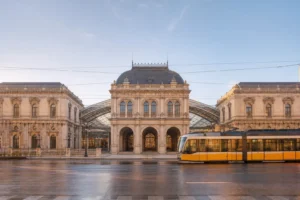 Baltiysky Railway Station, Saint Petersburg
Main image: AI-generated illustration. It may not show the place exactly as it looks.
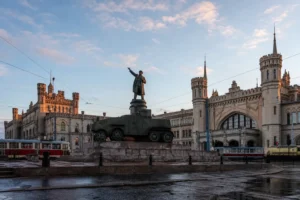 Finlyandsky Railway Station, Saint Petersburg
Main image: AI-generated illustration. It may not show the place exactly as it looks.
Related guides
 How to Use the Metro, Saint Petersburg: Lines, Transfers and Tickets
Main image: AI-generated illustration. It may not show the place exactly as it looks.
Browse more: All How-To · All How-To in Saint Petersburg · All Metro and Trains · All Saint Petersburg
FAQ
Which railway station is the main station in Saint Petersburg?
Moskovsky Railway Station is often treated as the city's principal long-distance terminal because of its central location on Nevsky Prospekt and its major intercity services. However, Saint Petersburg officially has five main railway terminals, and none should be treated as the universal departure point. The correct station is always the one named in your specific booking.
Which Saint Petersburg railway station do trains to Moscow use?
Many prominent services towards Moscow, including Sapsan trains, use Moskovsky Railway Station. However, not every train travelling towards Moscow necessarily follows the same station arrangement. Some long-distance services can operate through Ladozhsky. Use the exact departure station in the official train search or booking confirmation rather than assuming that the Moscow destination automatically means Moskovsky.
Which station should I use for a train to Peterhof?
Baltiysky Railway Station is the usual starting point for suburban trains towards New Peterhof. It is served by Baltiyskaya Metro Station on the red Line 1. The railway journey reaches the town's station rather than the entrance to the palace gardens. Plan the additional local journey or walk separately and confirm the correct train stop for the part of Peterhof you intend to visit.
Which railway station serves Tsarskoye Selo and Pavlovsk?
Vitebsky Railway Station is the usual departure point for suburban services towards Tsarskoye Selo and Pavlovsk. Its metro connections are Pushkinskaya and Zvenigorodskaya. The train station serving Tsarskoye Selo is not located directly at the Catherine Palace entrance, so a further local transfer or walk may be needed. Check the suburban train's destination and intermediate stops before boarding.
Which Saint Petersburg station has trains to Vyborg?
Finlyandsky Railway Station serves the principal suburban railway route towards Vyborg. The station stands beside Ploshchad Lenina Metro Station, north of the historic city centre. Both ordinary suburban services and faster regional trains may appear in timetables. Compare the stopping pattern and travel duration rather than selecting the first departure. The name Finlyandsky does not itself guarantee an international passenger connection to Finland.
Is Saint Petersburg Central Bus Station the same as a railway station?
No. Saint Petersburg Central Bus Station is a separate transport terminal on Obvodny Canal Embankment. It is not one of the five principal railway terminals. Although it is also near an important transport corridor, it should not be confused with Baltiysky Railway Station. Bus and train bookings use different departure locations, so confirm the transport mode and terminal address before setting out.
How do I travel between two railway stations in Saint Petersburg?
The metro is usually the most predictable way during operating hours. For example, Moskovsky and Finlyandsky are both served by stations on Metro Line 1, while Ladozhsky is connected through Line 4. Other transfers may require an interchange. The correct route depends on the pair of terminals. Allow time for escalators, walking between station buildings and any changes to platform access.
Can I travel directly from Pulkovo Airport to a railway station?
A taxi or arranged road transfer can take you directly to the railway terminal named in your booking. Public transport normally involves an airport bus followed by the metro. The most convenient route depends on whether your train departs from Moskovsky, Ladozhsky, Vitebsky, Baltiysky or Finlyandsky. Check the final station before leaving the airport and allow for the time needed to reach the train platform.
Russia Vibes is a one-person project. A coffee keeps it going
Not legal advice. This is general information for visitors. Rules on visas, entry, registration, customs and similar matters change often and can depend on your nationality. Check the official source and, if in doubt, ask your embassy or a qualified adviser.
Last updated: October 17, 2026.
How we research and update our guides
About this guide: AI assistance and accuracy
This guide is created with the help of AI and is based on official sources where available. Mistakes can still happen. Opening hours, prices, rules and other details are given to the best of our knowledge as of the date shown and can change without notice. It offers general recommendations only, not professional, legal or travel advice. Please confirm important details with the official source before you travel; you are responsible for your own plans and decisions.
International sanctions affect payments between Russia and many other countries. In practice, cards issued in the EU, the UK, the US and several other countries often do not work in Russia, Russian cards usually do not work abroad, and some booking platforms, airlines and payment providers limit or suspend their services for Russia. The situation changes frequently. We do not give legal or financial advice, and this site does not encourage anyone to break or circumvent sanctions. Whatever you plan, you are responsible for following the laws and regulations that apply to you, including those of your country of residence and citizenship. Many travelers still organise their stay lawfully. It is worth asking your bank or payment provider what is currently permitted, contacting hotels, tour operators and carriers directly about the payment methods they accept, and checking which services are open to customers from your country. Clarify payment, cancellation and refund terms before you commit to a booking, and keep your plans flexible. Partner links on this site may not be available in every country, and prices, availability and rules in our guides can differ from what you see when you book.Paying for your trip: please read
Report an issue on this page

Take this guide with you
Get a free PDF of this guide to print or read offline: key facts, tips and a map link on a few clean pages.