
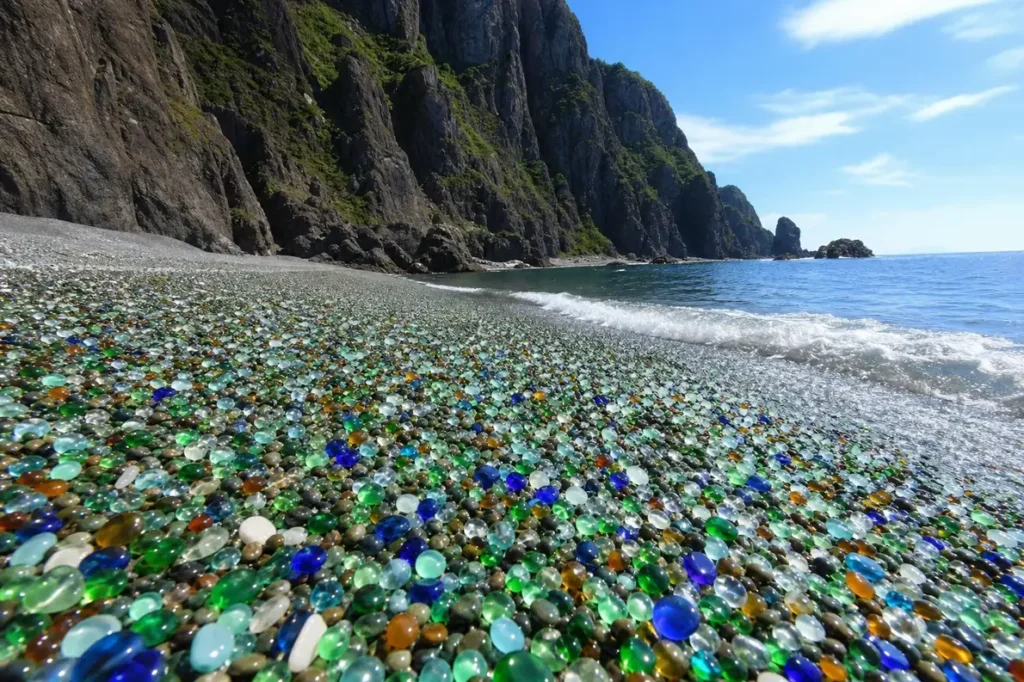
About 30 minutes’ drive south of Vladivostok, a bay lined with towering cliffs reveals an unexpected sight: a beach entirely carpeted with smooth, colorful glass pebbles instead of sand. During the Soviet era, a local porcelain factory discarded unwanted glass here, or waste glass was washed away by river and swept into the sea.
Today the beach is layered in millions of rounded glass pebbles in every shade of green, blue, brown and white—bright emerald, deep amber, frosty cobalt and pale aqua that crunch underfoot. The transformation took decades as Pacific waves methodically polished sharp shards into jewel-like stones.
Quick Facts
| Russian name | Бухта Стеклянная |
|---|---|
| Distance from the nearest major city | 6,400 km |
| Travel time from the nearest major city | 6 days by Trans-Siberian Railway; 8.5 hours by air |
| Address | Vladivostok, Primorsky Krai, Russia OpenStreetMap · Google Maps |
| Opening hours | Open 24/7 |
| Admission | free |
| Best time to visit | Summer months are warmest, though even in May temperatures can be cold and winter clothes are advisable. Visit on clear, sunny days when glass sparkles most dramatically. Mid-morning and late afternoon light provide the best photography. Tides affect glass concentration—check tide tables and plan around low tide for maximum glass visibility. Peak tourist season (summer) means more crowds; early morning or off-season visits offer solitude. Winter snow and ice can obscure the glass; spring through early autumn is optimal. |
| Recommended duration | 1–2 hours |
What Is (and Isn't) Part of a Visit to Glass Beach in the New Ussuri Bay, Vladivostok?
| Part | Status | Notes |
|---|---|---|
| Glass Beach itself (shore covered with sea-glass pebbles) | Included in the standard ticket | This is the main attraction. Entirely free and accessible 24/7. |
| Beach access path and parking area | Included in the standard ticket | Rough dirt track leads down to beach; manageable in dry conditions. No formal entrance gate or fee. |
| High cliffs above the beach | Outside / not part of it | Backdrop to the beach; not part of the accessible beach area. Do not attempt to climb. |
| Glass collection | Included in the standard ticket | Visitors commonly collect glass pieces as souvenirs. Technically discouraged, but enforcement is minimal. |
| Facilities (restrooms, food, water) | Not open to visitors | No facilities on-site. Bring water and snacks; nearest services are in Vladivostok or nearby villages. |
| Guided interpretive tours on-site | Not open to visitors | No official guides or interpretation at the beach itself. Information boards are minimal. Pre-arranged tours from Vladivostok include guide services. |
| Nearby landfill site | Outside / not part of it | The original 1967 landfill location, reclaimed in 2012, is not accessible to tourists and is separate from the Glass Beach itself. |
How to Get from the nearest major city to Glass Beach in the New Ussuri Bay, Vladivostok
| Option | Duration | Price | Notes |
|---|---|---|---|
| Taxi or ride-hailing app | 30–40 minutes from city center | ₽₽ | Most practical option. Book via Yandex Go or Maxim app. The road is paved most of the way, with rough dirt track for the final stretch. Regular cars can manage it in dry conditions; vehicles with clearance recommended. Drop-off is typically at the top of the beach access path. |
| Rental car | 30–40 minutes from city center | ₽₽ | Allows unlimited time at the beach. Roads are wide and well-maintained. Navigation in Russian required or download offline maps beforehand. Follow Vladivostok-Artem highway along Ussuri Bay, pass village of Rybachy; look for Steklyannaya Bay sign after 2 km. Parking available at beach entrance. |
| Guided tour | 4–6 hours including return | ₽₽–₽₽₽ | Tour operators in Vladivostok offer half-day trips, often combined with other Ussuri Bay stops. Easiest option for visitors without a car; eliminates navigation and driving concerns. |
| Public bus (limited option) | 45 min–1.5 hours depending on connection | ₽ | Buses run to nearby villages but not directly to beach. Bus 26 goes toward the area but stops are infrequent and dwell time is short. Bus 72 departs from Lugovaya stop (accessible via buses 31, 54, 55 from city center). Requires walking final stretch. Schedule verification recommended before travel. |
₽ budget · ₽₽ moderate · ₽₽₽ upscale · ₽₽₽₽ splurge. Price levels are estimates compared with typical prices for visitors.
Why Visit Glass Beach in the New Ussuri Bay, Vladivostok?
It is one of the most visually striking sea glass sites in the world, attracting collectors and photographers from across Asia and Europe. The glass pebbles sparkle in sunlight and offer an unusual photographic subject unlike traditional beaches. The beach is shaded by high cliffs, creating a stunning year-round setting with a kaleidoscope of vibrant colors emanating from the sand. For visitors to Russia’s Far East, it represents a tangible story of environmental reclamation—industrial waste transformed by nature into something beautiful and harmless.
Highlights of Glass Beach in the New Ussuri Bay, Vladivostok
The Glass-Covered Shore
The beach is layered with millions of smooth, rounded glass pebbles in shades of green, blue, brown and white—emerald, amber, cobalt and pale aqua mixed in thick layers that crunch underfoot. Walk at low tide for the densest concentration of glass. The pebbles are completely smooth with no sharp edges, safe to touch and photograph.
Tip: Wear sturdy shoes with good grip; the glass pebbles can be slippery on wet patches.
The Cliff Backdrop
High cliffs shade the beach, creating a dramatic frame for the glass pebbles. The towering rockface rises directly behind the shoreline, providing shelter from wind and creating a natural amphitheater for photos. The contrast between stone cliffs and glimmering glass creates striking compositions.
Tip: Arrive in mid-morning or late afternoon when sunlight rakes across the glass at an angle, making it sparkle most dramatically.
Soviet Industrial Heritage
The bay was used during Soviet times as a dumping ground for a local porcelain factory's waste, with truckloads of empty vodka, beer and wine bottles, broken jars and miscellaneous glass fragments discarded and left to fester. The landfill was reclaimed during preparation for the APEC-2012 summit. This is a living example of unintended environmental reclamation.
Tip: Bring binoculars to examine the cliff base closely—you may spot fragments that show the original industrial waste: thick bottle bases, ceramic shards.
The Bay's Geology
The beach is part of the larger Muravyov-Amursky Peninsula, surrounded by the Sea of Japan. The rocky shoreline sits at the intersection of cliff, ocean and bay. Rocky outcroppings extend into the water, and the substrate beneath the glass is uneven stone rather than sand.
Tip: The uneven terrain requires careful footing. Explore closer to the cliff base where glass accumulates most densely.
Collecting and Photography
Most visitors collect at least a handful of glass pieces as souvenirs; enforcement of collection restrictions is minimal, though tour operators bring busloads daily during peak season. The beach is highly photogenic for both close-up detail shots and wide panoramic compositions.
Tip: Ask your taxi driver or hotel if collection rules have changed. Bring a small drawstring bag for glass pieces—pockets fill quickly. Take photos early in your visit while light is fresh.
The Impermanence
Academics predict that the 10 centimetres or so of coloured glass won't survive another 20 more years. Continued foot traffic, wave action and natural erosion mean the beach is slowly changing. This adds to its appeal as a time-limited phenomenon.
Tip: Visit sooner rather than later if Glass Beach is on your list. Take several photographs to document the current state.
Atmosphere
The beach feels otherworldly on arrival—a shimmering mosaic of color where sand should be. The constant crunch of glass underfoot creates an unusual soundscape, and bright reflections dance across the water. On sunny days, the effect is almost hallucinatory: intense emerald and cobalt light glinting everywhere. The air carries the mineral smell of salt water and wet stone.
Visitors cluster in small groups, pointing cameras downward and bending to pick up specimens. The cliff wall creates an intimate enclosure despite the open sea view. Crowds build during mid-day and peak season (summer months), with tour groups staying 15–30 minutes. Early morning brings solitude; late afternoon offers golden light. The place feels part archaeology, part natural museum, part surreal dream landscape—neither quite beach nor quite museum.
History of Glass Beach in the New Ussuri Bay, Vladivostok
Vladivostok was a closed military city during the Soviet era, home to the Pacific Fleet and off-limits to foreigners until 1992. Industrial activity was heavy, and waste disposal followed the standard Soviet approach of finding a convenient cliff and throwing everything over it; the area around Ussuri Bay received enormous quantities of glass waste.
A city landfill was built in 1967 directly on the beach. For decades during the Soviet period, trucks loaded with industrial waste dumped glass bottles, broken porcelain and other fragments on the shore of Ussuri Bay, an area facing the Sea of Japan, which became a large repository of industrial waste from glass and porcelain factories in the region.
The continuous action of Pacific waves, combined with friction of sand and stones, began to wear down fragments of glass and porcelain; over time these pieces were smoothed and polished, acquiring rounded shapes and bright colors.
For 15–20 years, vacationers avoided Glass Bay because of the nearby smoking landfill, but during preparation for the APEC-2012 summit, the landfill was reclaimed. Once cleanup occurred, the transformed beach became accessible and widely promoted. Today it is one of Vladivostok’s most visited natural attractions, drawing international photographers and collectors.
Tickets and Booking for Glass Beach in the New Ussuri Bay, Vladivostok
Entry is free and accessible 24/7. No tickets are required. There are no official gates or hours; the beach is an open public area.
To reach Glass Beach, arrange transportation independently (taxi, rental car, ride-hailing app, public bus, or guided tour). If using a tour operator, book a day or more in advance through your hotel concierge or directly with Vladivostok tourism companies. No advance booking is required for the beach itself.
Bring water, snacks and sun protection; no facilities exist on-site. The access road is rough dirt in places; standard cars work in dry conditions but high-clearance vehicles are safer. Verify bus schedules before relying on public transport, as routes and frequencies change.
Plan and Book
Suggested itineraries Glass Beach in the New Ussuri Bay, Vladivostok
1–1.5 hours on-site
Short visit: Arrive, spend 45–60 minutes walking the shoreline, photographing and collecting glass, examining different color concentrations near the cliff base. Best for visitors combining the beach with other Vladivostok sights on the same day.
2–3 hours on-site
Half-day: Depart Vladivostok mid-morning, spend 2 hours exploring different sections of the beach at various tide levels, photograph in changing light, collect specimens. Return to city for late afternoon. Suits photographers and collectors seeking thorough coverage.
4–5 hours total (1.5–2 hours on-site)
Guided tour option: Join a half-day tour departing Vladivostok morning or early afternoon, visit Glass Beach with guide commentary, possibly stop at another Ussuri Bay location (Tokarevsky Lighthouse, viewpoints), return to city by late afternoon. Recommended for first-time visitors.
Full day
Day-long expedition: Rent a car or hire a taxi by the hour. Start at Vladivostok, drive to Glass Beach, spend 2–3 hours exploring thoroughly in different light. Lunch in nearby village or pack food. Explore neighboring Ussuri Bay viewpoints (lighthouse, cliff vistas). Return to Vladivostok for dinner. Suits travelers with flexibility and photography ambitions.
How to Get to Glass Beach in the New Ussuri Bay, Vladivostok
From Vladivostok city center: The easiest way is by car; the beach is about 10 kilometers from the city. Travel along the Vladivostok-Artem highway along Ussuri Bay, bypass the village of Rybachy and after 2 kilometers on the right side you will see a poster “Steklyannaya Bay”.
By taxi or ride-hailing app: The bay is 20 km from the city center; in normal traffic the journey takes 30 minutes. Book Yandex Go or Maxim from your hotel. The driver will take you to the top of the beach access road.
By public bus: City bus No. 26 runs toward the area, but there is no bus stop near the glass and stop dwell time is short. Alternatively, bus 72 departs from Lugovaya stop. From the city center, you can reach Lugovaya by buses 31, 54, or 55. Verify current schedules before traveling; final stretch requires walking.
By rental car: Rent from Vladivostok airport or city center. Roads are paved and well-maintained. Bring offline maps; navigation in Russian is challenging for non-speakers. The final access road is rough dirt; all-wheel drive is helpful but not essential in dry conditions.
Accessibility
The beach terrain is rocky and uneven; walking requires careful footing. Some areas may require careful walking due to uneven terrain. No paved walkways or formal paths exist. The access road down to the beach is rough dirt, not wheelchair-accessible. No benches, shade structures or accessible restrooms are available on-site. Visitors with mobility issues should evaluate their comfort with uneven rocky ground before visiting. The beach is fully exposed to sun and weather—bring hats, sunscreen and layers. No accessible parking or drop-off directly at the beach; taxi/car stops at the top of the access path.
Food Nearby
No facilities exist on-site. The nearest options are in Vladivostok or small nearby villages, which are 30–40 minutes away by car. Pack water and snacks before leaving the city. Restaurants and shops are concentrated in Vladivostok's city center; convenience stores may exist in villages along the route (such as Rybachy) but are not guaranteed. Plan meals before or after your beach visit, not during.
What to Bring
Sturdy closed-toe shoes with good grip (glass pebbles are slippery when wet). Bring plenty of water—no drinking water is available on-site. Sun protection (hat, sunscreen, sunglasses) is essential even on overcast days due to bright reflections from glass. A small drawstring bag or backpack for collecting glass pieces if desired. Layers or jacket, especially spring and autumn when temperatures drop. If visiting in early morning or evening, bring a torch or headlamp. Trash bag to carry out any litter you find. Binoculars enhance observation of cliff details and distant views.
Best Views and Photo Spots of Glass Beach in the New Ussuri Bay, Vladivostok
Low-tide beach center
Densest concentration of multi-colored glass pebbles stretches from water's edge inland. Bright sunlight reflects off emerald, cobalt and amber pieces. The effect is most dramatic and saturated at midday when sun is high and overhead.
Best time: Noon to mid-afternoon on clear days; 1–2 hours before high tide when maximum glass is exposed.
Cliff base junction
Where high stone cliffs meet the glass-covered shore, creating a dramatic vertical-horizontal composition. Glass accumulates densely here in a concentrated band that frames foreground interest against the cliff face. Strong color contrast between dark stone and bright glass.
Best time: Morning or late afternoon when side-lighting accentuates texture and color saturation is highest.
Water's edge
Glass pebbles meet shallow water and sea foam, creating a textured transitional zone. Wave action washes glass and creates movement. Foreground glass, middle-ground water and distant bay create depth layers.
Best time: Late afternoon golden hour when sun grazes the water surface and illuminates glass edges from behind.
Elevated viewpoint from upper access path
Bird's-eye perspective of the entire glass beach from above, showing the full pebble-to-cliff composition and bay context. Allows wide-angle panoramic shots capturing the beach's full scale relative to surroundings.
Best time: Early morning when light is clean and shadows define texture, or before sunset when golden light washes the entire scene.
Detail macro views of glass pieces
Close-up photography of individual pebbles showing color gradation, translucency, worn edges and light refraction through colored glass. Reveals the intricate, jewel-like quality of individual pieces.
Best time: Overcast or shaded conditions reduce harsh glare; alternatively use manual exposure to control highlights on bright glass.
Photography Rules
Photography is unrestricted and strongly encouraged. No drones are visible in reports; assume they require special permission (check with local authorities). Tripods are permitted but can catch on uneven glass and rock; test placement carefully. Flash is not needed outdoors. The beach is exceptionally photogenic for both detail shots (glass close-ups) and wide landscape composition (beach and cliffs). Early morning and late afternoon light creates best colors and sparkle effects.
Family Suitability
Glass Beach is suitable for families with older children and capable walkers. Uneven rocky terrain requires careful walking; toddlers and very young children may struggle. Strollers are not practical on rough, rocky ground. The 30–40 minute car journey from Vladivostok is manageable for families but requires patience from young travelers. The activity itself (walking, looking, collecting glass) is engaging for school-age children; the glass pebbles are safe to touch and collect as souvenirs, which appeals to kids. No shade, facilities or water make extended stays challenging with small children in summer. Plan as a 1–2 hour visit rather than a full day with young kids. Bring snacks, water and sunscreen. Older teens and adults will enjoy photography and geology-related interest.
Russia Vibes Tips
- Arrive 30–45 minutes before sunset or 2–3 hours after sunrise if you want solitude. Mid-day (10 AM–4 PM) brings the heaviest foot traffic and tour groups.
- Bring offline maps on your phone and screenshot the exact location before leaving Vladivostok. GPS signal can be weak in the bay area, and street signs are in Russian only.
- Check tide tables before visiting. Low tide exposes the maximum area of glass pebbles; high tide submerges much of the colorful material.
- Wear polarized sunglasses to reduce glare and see glass colors more clearly. The bright reflections can strain eyes after 30 minutes of concentrated viewing.
- If collecting glass, focus on unique colors (rare clear pieces, unusual blues) rather than filling a bag with common green and brown. Brings back better souvenirs with less weight.
- Visit in spring or autumn for best balance of weather and crowds. Summer is busiest; winter snow may obscure the beach.
Explore Nearby Glass Beach in the New Ussuri Bay, Vladivostok
Browse more: All Day Trips · All Day Trips in Vladivostok · All Landmarks · All Vladivostok
FAQ: Glass Beach in the New Ussuri Bay, Vladivostok
Is entry to Glass Beach free?
Yes, entry is entirely free and the beach is open 24/7. No tickets, gates or fees exist. You pay only for transportation to reach it.
Can I take glass pieces home as souvenirs?
The beach is technically a protected natural area and collecting glass is discouraged, but enforcement is minimal and most visitors take at least a handful of pieces home. Taking small amounts is widely accepted practice, though rules may change.
How long should I spend at Glass Beach?
1–2 hours is typical. This allows time to walk different sections, photograph and collect without rushing. 30 minutes is adequate for a quick visit; 3+ hours suits dedicated photographers.
What's the best time of day to visit?
Early morning or late afternoon offer the best light for photography and smallest crowds. Midday is brightest and most crowded. Late afternoon (1–2 hours before sunset) provides warm golden light.
Is Glass Beach safe to visit alone?
Yes. It is a popular public beach with regular visitors and tour groups. Use standard travel precautions (don't leave valuables unattended, stay aware of surroundings). The terrain itself is safe; rocky ground requires careful footing but poses no unusual hazards.
Can I visit Glass Beach by public bus?
Public transport is limited; buses run to nearby villages, but the final stretch to the beach requires walking. Taxi or rental car is more practical.
What should I bring to Glass Beach?
Bring water (no on-site supplies), sturdy shoes (glass is slippery when wet), sun protection, layers (temperatures drop even in summer), and a bag for collecting glass if desired. No facilities exist on-site.
Is the glass sharp or dangerous?
Over the years, waves smoothed the sharp edges of the shards, transforming trash into smooth glass pebbles; the glass is now completely safe with no sharp edges.
Russia Vibes is a one-person project. A coffee keeps it going
How we research and update our guides
About this guide: AI assistance and accuracy
This guide is created with the help of AI and is based on official sources where available. Mistakes can still happen. Opening hours, prices, rules and other details are given to the best of our knowledge as of the date shown and can change without notice. It offers general recommendations only, not professional, legal or travel advice. Please confirm important details with the official source before you travel; you are responsible for your own plans and decisions.

Take this guide with you
Get a free PDF of this guide to print or read offline: key facts, tips and a map link on a few clean pages.
Report an issue on this page
Paying for your trip: please read
International sanctions affect payments between Russia and many other countries. In practice, cards issued in the EU, the UK, the US and several other countries often do not work in Russia, Russian cards usually do not work abroad, and some booking platforms, airlines and payment providers limit or suspend their services for Russia. The situation changes frequently.
We do not give legal or financial advice, and this site does not encourage anyone to break or circumvent sanctions. Whatever you plan, you are responsible for following the laws and regulations that apply to you, including those of your country of residence and citizenship.
Many travelers still organise their stay lawfully. It is worth asking your bank or payment provider what is currently permitted, contacting hotels, tour operators and carriers directly about the payment methods they accept, and checking which services are open to customers from your country. Clarify payment, cancellation and refund terms before you commit to a booking, and keep your plans flexible.
Partner links on this site may not be available in every country, and prices, availability and rules in our guides can differ from what you see when you book.