
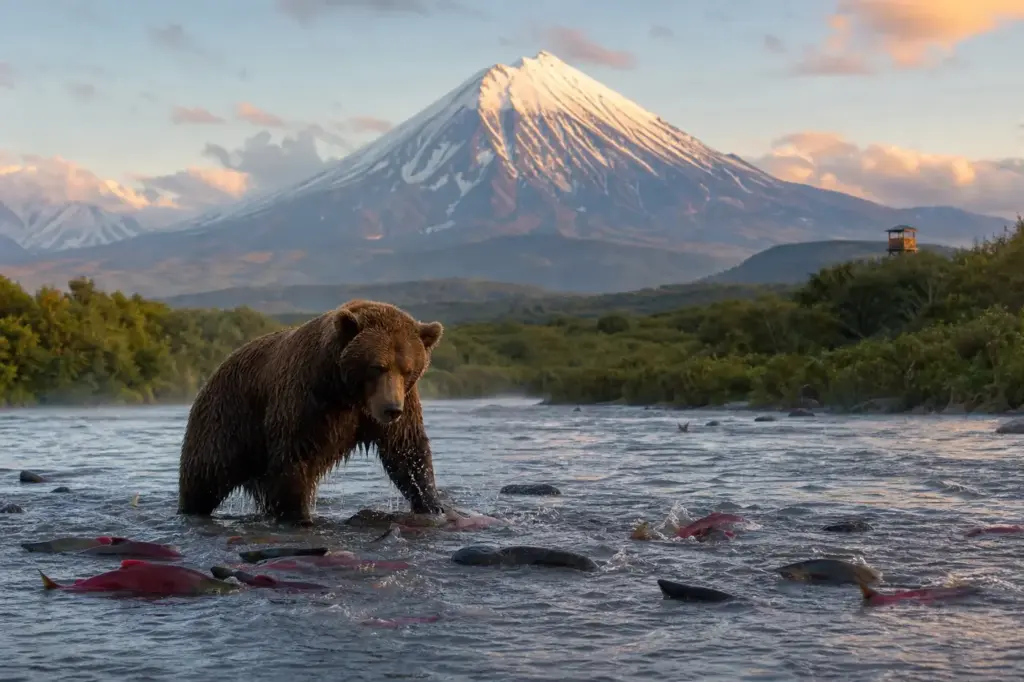
The best wildlife watching experiences in Kamchatka center on brown bears, salmon runs, whales, seabirds and fur seals. This list covers eight of them, from bear watching at Kurile Lake and in Kronotsky to boat trips on Avacha Bay, seabird colonies, sea eagles and the Commander Islands.
It is written for visitors who want to see animals in the wild without taking risks. Most sightings happen on organised trips with rangers or guides, and timing depends on the salmon runs and the weather. Each entry gives the area, the usual season and the main condition. Confirm schedules, permits and safety rules with an operator before you book. Weather and light change quickly in every month, so keep a spare day in your plan.
At a Glance
| # | Place | Best for | Good to know |
|---|---|---|---|
| 1 | Kurile Lake Brown Bears | Bears and salmon | Southern Kamchatka; operator-led; ₽₽₽₽; access arranged by the operator. |
| 2 | Kronotsky Reserve Bears | Bears in the Valley of Geysers | East coast; helicopter with an operator; ₽₽₽₽; permits required. |
| 3 | Salmon Runs on Kamchatka Rivers | Seasonal spectacle | Rivers across the peninsula; operator-led; paid. |
| 4 | Avacha Bay Whales and Seals | Boat trips | From the Petropavlovsk-Kamchatsky waterfront; paid; weather-dependent. |
| 5 | Starichkov Island Seabirds | Cliffs and colonies | Off the coast near the city; boat with an operator; paid. |
| 6 | Steller's Sea Eagles | Big raptors | Coast and river areas; guided trips; paid. |
| 7 | Commander Islands Fur Seals and Sea Otters | Remote marine wildlife | Bering Island; access by air or sea; permits required. |
| 8 | Kamchatka Marmots and Mountain Wildlife | Trail sightings | Mountain trails near Petropavlovsk-Kamchatsky; free to paid depending on the route. |
How We Chose
Entries were chosen from official and operator information, and they are meant to be realistic for visitors who arrive without a private expedition.
- Fit: an animal or habitat that visitors can see on an organised trip.
- Access: reachable with an operator, ranger-led route, boat or helicopter.
- Variety: easy city-edge options sit alongside remote trips that need an operator and a spare day.
- Caution: we did not test these in person. Access rules, permits and conditions change, so confirm with the operator or the park before you go.
1. Kurile Lake Brown Bears – Bears and salmon
Kurile Lake, in the Southern Kamchatka Nature Reserve, is known for brown bears that feed on salmon when the fish run in the rivers, usually from mid-summer into early autumn. Visitors watch from a platform or on a ranger-led route, with a safe distance and strict rules. The trip is long and works best as a planned excursion with an operator.
Good to know: Southern Kamchatka; operator-led; ₽₽₽₽; access arranged by the operator.
Tip: Follow the ranger exactly; bears are used to people but are wild.
2. Kronotsky Reserve Bears – Bears in the Valley of Geysers
Kronotsky Nature Reserve is home to a large population of brown bears, and sightings happen along rivers and in valleys during the salmon run. Access is mainly by helicopter with an organised group. Bears are wild and visitors stay on marked routes with a guide. The Valley of Geysers is the most common stop on the same trip.
Good to know: East coast; helicopter with an operator; ₽₽₽₽; permits required.
Tip: Bring a zoom lens; distance is kept for safety.
3. Salmon Runs on Kamchatka Rivers – Seasonal spectacle
Salmon runs fill Kamchatka's rivers from mid-summer into autumn, and they draw bears, eagles and gulls. Visitors can see the runs on guided trips and in some park areas. The timing varies by river and year, so ask the operator when the run is expected before you book. Do not walk on riverbanks alone in bear country.
Good to know: Rivers across the peninsula; operator-led; paid.
Tip: Ask about the timing of the run; it differs by river.
4. Avacha Bay Whales and Seals – Boat trips
Boat trips on Avacha Bay may spot seals, seabirds and, on some trips, whales. The bay is a large natural harbour, and the Three Brothers rocks are a regular stop. Sightings are not guaranteed, and the sea can be rough. Choose a licensed operator and dress for cold wind. Conditions change by season, so confirm details locally before you go.
Good to know: From the Petropavlovsk-Kamchatsky waterfront; paid; weather-dependent.
Tip: Take a windproof jacket and binoculars.
5. Starichkov Island Seabirds – Cliffs and colonies
Starichkov Island lies off the coast near Avacha Bay and is known for seabird colonies on its cliffs. Boat trips pass the island, and in the nesting season the rock fills with guillemots, puffins and gulls. Landing is restricted, so most visitors watch from the boat. The trip depends on sea conditions.
Good to know: Off the coast near the city; boat with an operator; paid.
Tip: Bring binoculars and a hat; the cliffs are noisy and windy.
6. Steller's Sea Eagles – Big raptors
Steller's sea eagle is one of the largest eagles in the world and breeds on the northern Pacific coasts. In Kamchatka it is seen along rivers and coasts, especially during the salmon run, and in protected areas such as Kronotsky and Kurile Lake. Sightings are best on guided trips with experienced local guides.
Good to know: Coast and river areas; guided trips; paid.
Tip: Ask the guide about nesting sites and keep your distance.
7. Commander Islands Fur Seals and Sea Otters – Remote marine wildlife
The Commander Islands, in the Bering Sea, protect fur seal rookeries, sea otters and sea lions. Visitors reach them by air or sea to Nikolskoye on Bering Island, and guided visits are the norm. Flights and boats are limited and weather-dependent, so plan extra days. Conditions change by season, so confirm details locally before you go.
Good to know: Bering Island; access by air or sea; permits required.
Tip: Book early and allow spare days.
8. Kamchatka Marmots and Mountain Wildlife – Trail sightings
On volcano trails and in mountain valleys, hikers may see marmots, ground squirrels and mountain birds, and occasionally larger mammals. These sightings are chance encounters rather than organised viewing, and they happen on routes such as Avachinsky and the southern volcanoes. Keep a safe distance and never feed animals. Conditions change by season, so confirm details locally before you go.
Good to know: Mountain trails near Petropavlovsk-Kamchatsky; free to paid depending on the route.
Tip: Walk quietly and keep food sealed.
Russia Vibes Tips
- Go in July to September for bears and salmon; timing varies by river and year.
- Choose small groups and licensed operators; they follow ranger rules and keep a safe distance.
- Bring binoculars and a zoom lens; you will rarely get close.
- Never feed or approach animals, and keep food sealed on trails.
- Carry cash for guides and taxis; cards issued outside Russia do not work in shops, at ATMs or with Apple Pay and Google Pay.
- Dress in layers; wind and rain can arrive quickly on the water.
Explore Nearby Best Wildlife Watching Experiences, Kamchatka Peninsula
Browse more: All Guides · All Guides in Kamchatka Peninsula · All Kamchatka Peninsula · All Other
FAQ
When is the best time to see bears in Kamchatka?
Summer into early autumn, during the salmon runs, is the main window. Timing varies by river and year, so ask the operator when bears are expected before you book. Early summer can be quieter, and late season can bring snow.
Is bear watching safe?
It is organised with rangers and strict rules about distance and behaviour. Do not approach bears on your own, keep food away from camps and follow the guide's instructions. Ask the operator how groups are managed before you book. Ask the operator for current details before you book, since rules and conditions change.
Can I see whales from Petropavlovsk-Kamchatsky?
Sightings are possible on boat trips in Avacha Bay and offshore, but not guaranteed. Ask the operator what species are seen and in which months. The sea can be rough, so dress for cold wind and have spare time. Ask the operator for current details before you book, since rules and conditions change.
Do I need a permit for wildlife areas?
For strict reserves such as Kronotsky, Kurile Lake and the Commander Islands, yes, and operators usually arrange it. Ask what is included and how much lead time is needed. Ask the operator for current details before you book, since rules and conditions change.
What is the best way to see seabirds?
A boat trip is the best way, because landing on the rocks is restricted. Starichkov Island is a common stop. Bring binoculars, a hat and a windproof layer, and confirm the schedule with the operator. Ask the operator for current details before you book, since rules and conditions change.
Can I see sea eagles?
Yes, with a guide. Steller's sea eagle is seen along rivers and coasts, especially during the salmon run, and in protected areas. Sightings are not guaranteed, so ask the guide about nesting sites and viewing distance. Ask the operator for current details before you book, since rules and conditions change.
Is it possible to see wildlife in winter?
Some species can be seen year-round, such as sea eagles, but most organised wildlife trips run in summer and early autumn. Winter trips depend on access and weather. Ask the operator what is possible in the month you plan to travel.
Can I take photos or use a drone?
Photography is welcome, but drones are often restricted or banned in protected areas. Ask the park or operator before you fly one. Use a zoom lens and keep a respectful distance from animals. Ask the operator for current details before you book, since rules and conditions change.
Russia Vibes is a one-person project. A coffee keeps it going

Take this guide with you
Get a free PDF of this guide to print or read offline: key facts, tips and a map link on a few clean pages.
Report an issue on this page
Paying for your trip: please read
Payments and bookings between Russia and many other countries are currently restricted. In practice, cards issued in the EU, the UK, the US and several other countries often cannot be used in Russia, Russian cards usually cannot be used abroad, and some booking platforms, airlines and payment providers limit or pause their services for Russia. The situation changes frequently.
We do not give legal or financial advice, and this site does not encourage anyone to break any rule that applies to them. Whatever you plan, you are responsible for following the laws and regulations that apply to you, including those of your country of residence and citizenship.
Many travelers still organise their stay without problems. It is worth asking your bank or payment provider what is currently possible, contacting hotels, tour operators and carriers directly about the payment methods they accept, and checking which services are open to customers from your country. Clarify payment, cancellation and refund terms before you commit to a booking, and keep your plans flexible.
Partner links on this site may not be available in every country, and prices, availability and rules in our guides can differ from what you see when you book.
How we research and update our guides
About this guide: AI assistance and accuracy
This guide is created with the help of AI and is based on official sources where available. Mistakes can still happen. Opening hours, prices, rules and other details are given to the best of our knowledge as of the date shown and can change without notice. It offers general recommendations only, not professional, legal or travel advice. Please confirm important details with the official source before you travel; you are responsible for your own plans and decisions.
* Affiliate link: as an Amazon Associate we earn from qualifying purchases at no extra cost to you.