
This guide shows how to pack for Kamchatka in summer and winter, from hiking gear for volcano days to warm layers for snow and hot springs. It is for visitors who want a practical checklist without overpacking.
The recommended approach is to pack in layers, choose waterproof boots, add season-specific extras and keep a small soft bag for helicopter and boat trips. The steps below build the list in order, and the options compare what changes by season. Check what your operator supplies before you buy anything new, and keep luggage light, because small aircraft and boats limit the weight you can bring. A short, tested list beats a full suitcase.
Quick answer: Pack in layers with a waterproof shell and waterproof boots, add insect and sun protection in summer or insulation in winter, and carry documents, cash and an eSIM. Use soft bags for helicopter trips.
At a Glance
| Total time | About an hour to plan and pack |
|---|---|
| Typical cost | ₽₽ |
What You Need Before You Start
- Layered clothing and a waterproof shell
- Waterproof hiking boots
- Passport and travel documents
- Cash and an eSIM-compatible phone
- A soft bag for helicopter and boat trips
Compare Your Options
| Option | Duration | Price | Notes |
|---|---|---|---|
| Summer packing list | Packing time: an hour | ₽₽ | Layers, rain shell, waterproof boots, repellent and sun protection. Best for June to September. |
| Winter packing list | Packing time: an hour | ₽₽₽ | Insulated layers, boots, goggles and warm accessories. Best for December to March. |
| Shoulder-season list | Packing time: an hour | ₽₽ | A mix of both, with warm layers and waterproofs. Best for spring and autumn. |
| Rent or buy locally | Same day | ₽₽₽ | Some gear can be hired or bought in Petropavlovsk-Kamchatsky. Best if you want to travel light. |
| Operator-provided gear | Included in some tours | ₽₽₽ | Some tours supply poles, helmets or snowmobile suits. Ask what is included. |
₽ budget · ₽₽ moderate · ₽₽₽ upscale · ₽₽₽₽ splurge. Price levels are estimates compared with typical prices for visitors.
Step-by-Step Instructions
Step 1: Start with the season
Summer is mild with cool nights, rain and mosquitoes, while winter is cold, snowy and windy. Spring and autumn are changeable and need a mix of both lists. Decide your main activities first, such as volcano hikes, helicopter trips, skiing or hot springs, then pack for the harshest conditions you expect.
Tip: Pack for the hills, not the city.
Step 2: Pack the core layers
Bring a quick-drying base layer, a warm fleece or light down jacket and a waterproof, windproof shell. Add hat, gloves and a buff in every season. Avoid cotton, which stays wet and cold. Two pairs of trousers help: a hiking pair and a spare for evenings. Merino or synthetic socks make a big difference.
Tip: Pack spare socks; wet feet ruin a day.
Step 3: Choose boots and footwear
Waterproof hiking boots with good grip are essential for volcanic gravel, mud and snow. Break them in before the trip. Add light shoes for the city and hot springs, and sandals or slippers for pools. In winter, choose insulated boots rated for low temperatures and bring gaiters for deep snow.
Tip: Gaiters keep volcanic gravel out of your boots.
Step 4: Add summer extras
Pack insect repellent, a head net for valleys, sunglasses, sun cream and a light rain jacket. Swimwear and a towel are useful for hot springs. A refillable water bottle and snacks help on long days. A small first-aid kit with blister plasters is more useful than most gadgets.
Tip: Bring a dry bag for your camera and phone.
Step 5: Add winter extras
Pack thermal underlayers, an insulated jacket and trousers, warm gloves with liners, a thick hat and ski goggles for wind and snow. A thermos and hand warmers help on long outdoor days. Keep batteries warm in an inner pocket, because cold drains them quickly. Sun protection still matters on snow.
Tip: Bring a spare pair of dry gloves.
Step 6: Pack documents, cash and connectivity
Carry your passport and a printed copy of key bookings. Cards issued outside Russia do not work, so bring cash and ask operators which payment methods they accept for visitors. A physical SIM needs registration, so an eSIM is the practical option; a newly activated eSIM can be restricted for about 24 hours, so set it up before you travel.
Tip: Keep documents in a waterproof pouch.
Step 7: Choose the right bags
Use a soft duffel or backpack for the main luggage and a small day bag for trips. Helicopters and small boats have strict weight and space limits, so leave large suitcases at the hotel. Pack electronics, a power bank and a rain cover in the day bag, and label every bag.
Tip: Ask the operator for the baggage weight limit.
Common Mistakes to Avoid
- Packing cotton clothes that stay wet and cold.
- Bringing new boots and breaking them in on the trail.
- Leaving gloves and a hat at the hotel in summer.
- Arriving with a large suitcase for helicopter or boat trips.
- Forgetting to set up an eSIM before the trip.
Tickets, Payment and Booking
Most packing items are bought at home, but some gear can be rented or bought in Petropavlovsk-Kamchatsky. Ask your operator what is provided on tours before you buy anything new.
- Where: your home outdoor shop, local shops in the city or your operator.
- Payment: cards issued outside Russia do not work, so bring cash and ask local shops and operators which payment methods they accept for visitors.
- Warnings: avoid buying heavy gear you will not use, and check baggage limits with your airline.
Prices vary, so confirm what is included before you pay.
Russia Vibes Tips
- Roll clothes in dry bags; they protect against rain and save space.
- Pack a second pair of insoles; they dry faster than boots.
- Bring a small towel and quick-dry clothes for hot springs.
- Keep a power bank warm in an inner pocket on winter days.
- Pack snacks you like; local shops thin out away from towns.
- Take a lightweight daypack that fits under a helicopter seat.
Explore Nearby How to Pack for Kamchatka in Summer and Winter, Kamchatka Peninsula
Related guides
 Kamchatka Peninsula: Volcanoes, Wildlife and Travel Guide
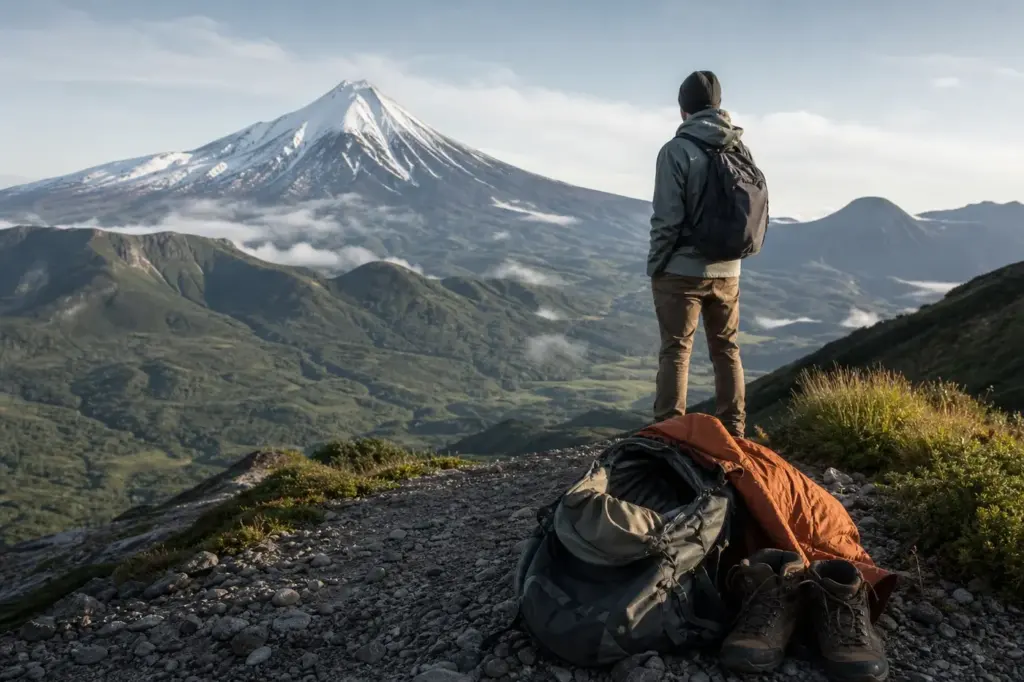
Main image: AI-generated illustration. It may not show the place exactly as it looks.
Browse more: All How-To · All How-To in Kamchatka Peninsula · All Kamchatka Peninsula · All Other
FAQ
What should I wear in Kamchatka in summer?
Quick-drying layers, a waterproof, windproof shell, hat, gloves and waterproof boots. Add insect repellent and sun protection. Nights and ridges are cold even in July, so carry a warm layer for every outdoor day. Test boots and layers at home before the trip.
How cold is winter in Kamchatka?
Winter is cold, snowy and windy, so you need insulated layers, warm boots, a hat and gloves. Wind chill matters more than the number on the thermometer. Ask your operator what the day is expected to be like. Check what your operator provides before buying anything new.
Do I need hiking boots?
Yes for volcano and trail days, because gravel, mud and snow wear out light shoes. Choose waterproof boots with good grip and break them in. Bring light shoes for the city and slippers for hot springs. Never wear brand-new boots on a long first hike.
Can I rent gear locally?
Some gear can be rented or bought in Petropavlovsk-Kamchatsky, and some tours supply poles or suits. Availability varies, so ask your operator before you travel. Bring your own boots and base layers. Check what your operator provides before buying anything new.
What bag should I use for helicopter trips?
A soft, small daypack, because cabins and boats have strict weight and space limits. Leave large suitcases at the hotel. Ask the operator for the exact baggage limit when you book. Pack the bag the night before and weigh it.
Do I need insect repellent?
In summer, yes. Mosquitoes and midges are common in valleys and near water. Bring repellent, long sleeves and, if you are sensitive, a head net. Winter is mostly insect-free. Keep the repellent in your day bag, not in the luggage you leave behind.
What about electronics and batteries?
Cold drains batteries quickly, so keep phones and cameras in an inner pocket and carry a power bank. Use dry bags for rain and river spray. Download offline maps and set up an eSIM before you travel. Packing light makes helicopter and boat days much easier.
How do I pay for gear and tours?
Plan for cash, and ask shops and operators which payment methods they accept for visitors. Cards issued outside Russia do not work. Confirm what is included in a tour price before you buy extra equipment. Check what your operator provides before buying anything new.
Russia Vibes is a one-person project. A coffee keeps it going

Take this guide with you
Get a free PDF of this guide to print or read offline: key facts, tips and a map link on a few clean pages.
Report an issue on this page
Paying for your trip: please read
Payments and bookings between Russia and many other countries are currently restricted. In practice, cards issued in the EU, the UK, the US and several other countries often cannot be used in Russia, Russian cards usually cannot be used abroad, and some booking platforms, airlines and payment providers limit or pause their services for Russia. The situation changes frequently.
We do not give legal or financial advice, and this site does not encourage anyone to break any rule that applies to them. Whatever you plan, you are responsible for following the laws and regulations that apply to you, including those of your country of residence and citizenship.
Many travelers still organise their stay without problems. It is worth asking your bank or payment provider what is currently possible, contacting hotels, tour operators and carriers directly about the payment methods they accept, and checking which services are open to customers from your country. Clarify payment, cancellation and refund terms before you commit to a booking, and keep your plans flexible.
Partner links on this site may not be available in every country, and prices, availability and rules in our guides can differ from what you see when you book.
How we research and update our guides
About this guide: AI assistance and accuracy
This guide is created with the help of AI and is based on official sources where available. Mistakes can still happen. Opening hours, prices, rules and other details are given to the best of our knowledge as of the date shown and can change without notice. It offers general recommendations only, not professional, legal or travel advice. Please confirm important details with the official source before you travel; you are responsible for your own plans and decisions.
* Affiliate link: as an Amazon Associate we earn from qualifying purchases at no extra cost to you.