
Updated
This itinerary is for hikers seeking varied terrain: forest waterfalls, mountain ridges, and views from the Caucasus to the sea. The pace assumes moderate fitness—mostly day hikes on marked trails ranging from easy to challenging, with rest days or easier walks possible. Over three days you’ll experience the park’s geography: subtropical valleys with cascading water, ancient yew and boxwood groves, and alpine meadows at elevation.
Sochi National Park is Russia’s oldest, covering nearly 2,000 square kilometers of Western Caucasus landscape. Its 28 marked trails connect waterfalls, gorges, mountain peaks and historic sites. The park is a UNESCO World Heritage site and home to reintroduced Persian leopards, though hikers rarely encounter wildlife on main trails.
At a glance: Day 1: Explore lowland gorges and waterfalls around central Sochi (Agura Waterfalls, Eagle Rocks). Day 2: Trek through old-growth forest to alpine zone via cable car access (Yew and Boxwood Grove, Mount Akhun). Day 3: Mountain trails in Krasnaya Polyana with high-altitude views and optional cable-car descents.
Day 1: Agura Gorge and Eagle Rocks
Start with the park's most accessible and popular walk—a moderate 3–4 hour hike through a river gorge with three distinct waterfalls, mossy rock formations, and a dramatic clifftop viewpoint. This route sits near sea level and stays in the subtropical forest zone. Expect well-trodden paths, some steep sections near the falls, and crowds at Eagle Rocks especially on weekends.
- Agura River trailhead, central Sochi – Starting point for the gorge hike; clear signage and parking; local tour operators depart from here (arrival)
- First Agura Waterfall – First of three cascades along the river; shallow pool at base; 45 min from start (45 min)
- Second Agura Waterfall – Taller cascade with cave behind the flow; popular photo spot (1 hr 15 min)
- Third Agura Waterfall – Highest of the series; continue upriver past rocks and forest path (1 hr 45 min)
- Eagle Rocks (Orlinnye Skaly) – Clifftop viewpoint overlooking river gorge and Black Sea coast; small café with drinks and pastries; watch for steep drop edges (2 hr 30 min)
Tip: Start early to avoid crowds at Eagle Rocks. The path can be slippery after rain; wear proper hiking shoes, not trainers. The café at Eagle Rocks accepts cash only and prices are moderate.
Day 2: Yew and Boxwood Grove and Mount Akhun Summit
Combine two distinct walks: first, a short forest trail through ancient relict woodland (one of Europe's oldest yew and boxwood groves, with ferns and cool microclimate even in summer), then a climb to Mount Akhun's stone observation tower for 360-degree views from sea level to mountain ridges. Morning in the grove, afternoon ascent with sunset potential.
- Hosta Bridge (Hosta Most) bus stop, Khosta area – Trailhead for Yew and Boxwood Grove; served by local buses (arrival)
- Yew and Boxwood Grove (short loop) – Ancient relict forest with moss-covered trees, ferns, natural stone formations; concrete path on short loop (1.6 km); longer route option (5 km on rough terrain) (1 hr)
- Mount Akhun parking area, Sochi center – Drive or taxi to foot of Akhun; small café and facilities (transfer (30 min by car))
- Mount Akhun observation tower – Stone tower built in 1911; panoramic views of Black Sea, Caucasus ridges, Sochi city; moderate climb through mixed forest (2 hr round trip)
Tip: Combine these in one day only if fit and starting early. The Yew and Boxwood Grove path is short and easy on the main loop; choose the longer rough trail only if confident on uneven ground. Mount Akhun is best at late afternoon for sunset views. Bring water; the café at the base sells drinks and snacks but limited meals.
Day 3: Krasnaya Polyana High-Mountain Trails
Day in the alpine zone above the Krasnaya Polyana valley resort cluster. Use cable cars to reach trailheads quickly, then hike ridge paths with views of multiple peaks and the distant sea. Routes range from easy meadow walks to challenging alpine rock scrambles. Evening descent via cable car.
- Rosa Khutor or Alpika-Service cable car base – Starting points for uphill access to trails; restaurants and facilities at base (arrival)
- Bzerpi Peak via Alpika-Service A3 cable car – Cable car to mid-station (Esto-Sadok), then marked trail to summit (2,483 m); challenging day hike; rocky scramble near top (cable + 2–3 hr hike)
- Alpine Meadows trail (Gorki Gorod resort) – Easier option: cable car to K3 station, then walk through flower-filled meadows (July–August peak bloom); short distance with big views (cable + 1–1.5 hr walk)
- Medvezhiy Waterfall (Bear Waterfall) – Can combine with Alpine Meadows trail; glacier-fed cascade; rewarding after initial climb (add 1–2 hr)
Tip: Check cable car operating times before starting; some close at 5 p.m. Weather changes rapidly at altitude; bring a jacket even in summer. High-elevation trails require acclimatization if arriving from sea level same day; consider Day 2 rest before challenging Bzerpi. The Caucasian Biosphere Reserve fee may apply to some routes; check at the cable car ticket office.
Russia Vibes Tips
- Buy a map or download an offline trail app before arriving. While trails are marked, the official park website offers limited information in English. Many Russian trail names differ on different maps, so having a visual reference prevents wrong turns.
- Most accessible routes (Agura, Eagle Rocks, Yew-Boxwood Grove) are crowded on weekends and public holidays. Visit mid-week or early morning for solitude. High-altitude trails near Krasnaya Polyana are less crowded and offer better sunrise/sunset light for photography.
- Bring sufficient water (2+ liters). Streams are visible but not always drinkable due to upstream use. The only reliably placed cafés are at Eagle Rocks and cable car stations. Prepare snacks in town before heading uphill.
- Waterfalls are most spectacular in spring (snowmelt) and early summer. By late August they can reduce to trickles. Winter brings snow to higher elevations above 1,200 m; lower routes remain passable but muddy. Autumn (September–October) offers clear skies and fewer crowds.
- Trails are generally safe but rocky sections and river crossings require attention. Do not hike alone on remote routes. Some challenging routes (Bzerpi, Polikarya Waterfall) pass through areas with wildlife; make noise while hiking and avoid dawn/dusk. Do not leave the marked trails or approach animals.
- Taxi and car rides in Sochi can be unpredictable. Pre-book transport via hotel or Yandex Taxi app to reach trailheads. Local bus system (marshrutkas) connects main areas but is infrequent and unreliable for timing. Allow extra time for transport; expect 30–50 minutes between city center and mountain areas.
Explore Nearby Sochi National Park Hiking
Related guides
 Rosa Khutor, Sochi: Cable Cars, Skiing and Mountain Scenery
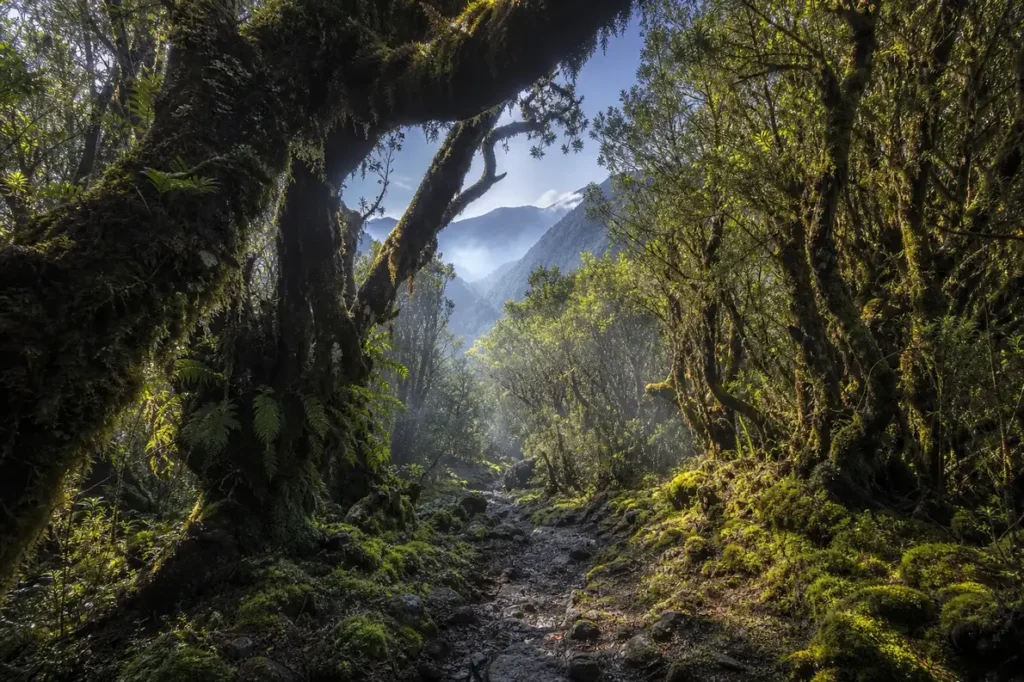
Main image: AI-generated illustration. It may not show the place exactly as it looks.
Browse more: All Itineraries · All Itineraries in Sochi · All Sochi · All Themed Routes
FAQ
Do I need a permit to hike in Sochi National Park?
Most marked day trails in the lower park are freely accessible without special permits. However, some high-altitude routes (such as Bzerpi Peak via Alpika-Service) fall within the adjacent Caucasian Biosphere Reserve, which requires a visitor fee. Check at cable car ticket offices or the park information center in Sochi.
Can I hike alone or do I need a guide?
Main trails (Agura, Eagle Rocks, Akhun, Yew-Boxwood Grove) are well marked and safe to hike independently with a map. More remote or challenging routes benefit from a local guide, especially if you lack mountain experience. Tours can be arranged through hotels or tourism offices.
What is the best time of year to hike?
Spring (April–May) and autumn (September–October) are ideal: cool temperatures, clear skies, and moderate crowds. Summer (June–August) is hot and crowded on popular trails, though high-altitude meadows bloom July–August. Winter (December–February) brings snow to elevations above 1,200 m; lower trails remain passable.
Are the trails suitable for children or beginners?
Yes, with caveats. Easy trails like Yew-Boxwood Grove (short loop), Eagle Rocks loop, and Alpine Meadows are family-friendly. Challenging routes like Bzerpi Peak require fitness and surefootedness. Always bring extra water and snacks; children tire on rocky sections.
Is it safe to hike? Are there dangerous animals?
Marked trails are generally safe. The park is home to bears, wolves, and boars, but they avoid populated trails. Attacks are extremely rare. Make noise while hiking, stay on marked paths, and avoid hiking alone at dawn or dusk on remote routes.
How do I get to the park from Sochi city?
Sochi city is adjacent to the park. Central trailheads (Agura, Eagle Rocks) are 15–20 minutes by car or marshrutka from the seafront. Krasnaya Polyana (cable car access) is 1 hour uphill. Use Yandex Taxi, hotel shuttle, or local marshrutka buses; allow extra travel time.
What should I pack for hiking?
Bring: sturdy hiking boots or shoes (trails are rocky), 2+ liters of water, sun protection (hat, sunscreen), a jacket (weather changes at altitude), a map or offline trail app, snacks, and a basic first-aid kit. Waterproof bag recommended during wet season. Swimsuit optional for pools at waterfall bases.
Are cable cars available to reach high trails?
Yes. Rosa Khutor and Alpika-Service (both near Krasnaya Polyana) have cable car systems that take you to mid- and high-altitude trailheads, saving 1–2 hours of climbing. Gorki Gorod also operates cable cars. This makes high-altitude trails accessible to less experienced hikers.
Russia Vibes is a one-person project. A coffee keeps it going
How we research and update our guides
About this guide: AI assistance and accuracy
This guide is created with the help of AI and is based on official sources where available. Mistakes can still happen. Opening hours, prices, rules and other details are given to the best of our knowledge as of the date shown and can change without notice. It offers general recommendations only, not professional, legal or travel advice. Please confirm important details with the official source before you travel; you are responsible for your own plans and decisions.

Take this guide with you
Get a free PDF of this guide to print or read offline: key facts, tips and a map link on a few clean pages.
Report an issue on this page
Paying for your trip: please read
International sanctions affect payments between Russia and many other countries. In practice, cards issued in the EU, the UK, the US and several other countries often do not work in Russia, Russian cards usually do not work abroad, and some booking platforms, airlines and payment providers limit or suspend their services for Russia. The situation changes frequently.
We do not give legal or financial advice, and this site does not encourage anyone to break or circumvent sanctions. Whatever you plan, you are responsible for following the laws and regulations that apply to you, including those of your country of residence and citizenship.
Many travelers still organise their stay lawfully. It is worth asking your bank or payment provider what is currently permitted, contacting hotels, tour operators and carriers directly about the payment methods they accept, and checking which services are open to customers from your country. Clarify payment, cancellation and refund terms before you commit to a booking, and keep your plans flexible.
Partner links on this site may not be available in every country, and prices, availability and rules in our guides can differ from what you see when you book.