
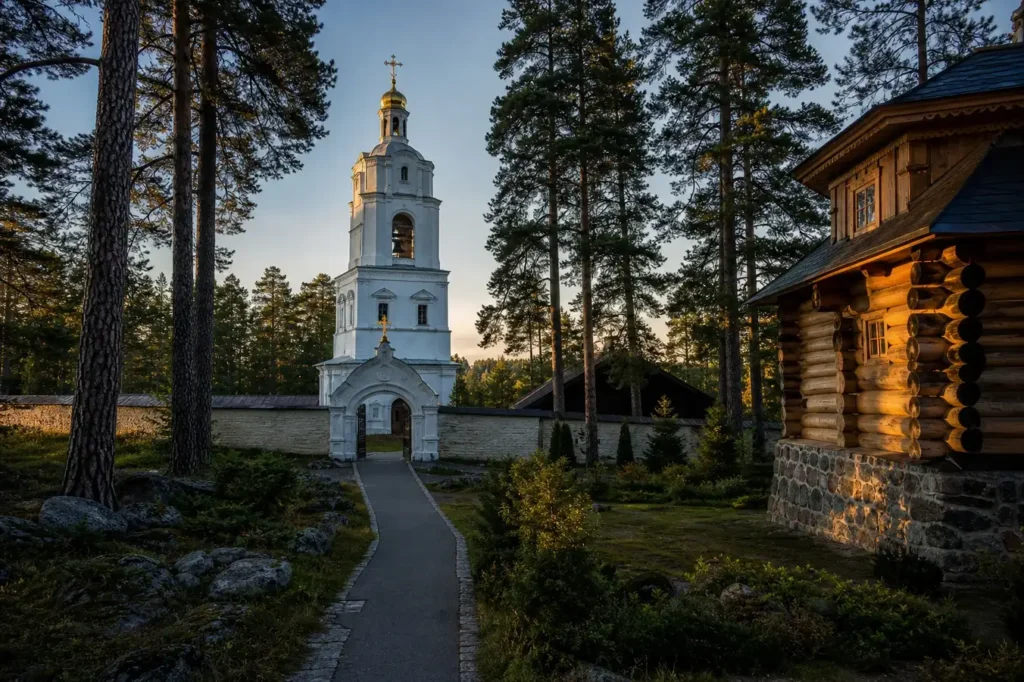
Raifa Monastery, located 30 kilometres north of Kazan in the Zelenodolsk district, is the largest active monastery in the Diocese of Kazan. Founded in 1613 by monk Filaret during the Time of Troubles, the monastery sits in a protected forest on the shore of Lake Sumy as part of the Volga-Kama nature reserve.
The monastery remained closed during the Soviet era—first as a prison camp and then as part of the Gulag system—but became the first monastery in the Kazan diocese to be returned to the Russian Orthodox Church in early 1991. Today it serves both pilgrims and visitors exploring its historic churches and natural surroundings.
Quick Facts
| Russian name | Раифский Богородицкий монастырь |
|---|---|
| Distance from the nearest major city | approximately 600 km |
| Travel time from the nearest major city | 10–12 hours by train or 8–10 hours by car |
| Built / opened | 1613 |
| Address | Zelenodolsk district, settlement Raifa, Republic of Tatarstan 422530 OpenStreetMap · Google Maps |
| Opening hours | Daily 07:00-20:45 |
| Admission | free |
| Best time to visit | Spring (May to early June) and autumn (September to mid-October) offer mild weather and fewer summer crowds. Weekdays attract fewer pilgrims than weekends and Orthodox holidays (many celebrated dates throughout the year, particularly major feast days in January, April and September). Early morning (7–9 a.m.) and late afternoon (4–6 p.m.) provide the best light for photography and the most peaceful atmosphere. Summer brings more visitors but offers longer daylight hours. Winter is possible but roads may be icy and paths slippery. |
| Recommended duration | 2–3 hours |
| Last updated | October 18, 2026 |
What Is (and Isn't) Part of a Visit to Raifa Monastery, Kazan?
| Part | Status | Notes |
|---|---|---|
| Monastery compound and churches | Included in the standard ticket | All churches, bell tower, courtyards and walls are accessible during open hours. No separate ticket. |
| Holy Spring (Raif Spring) | Included in the standard ticket | Located on monastery grounds. Free to visit and collect water. |
| Lake Sumy shoreline walk | Included in the standard ticket | Forest and lake trails accessible from the monastery grounds. Part of the Volga-Kama Reserve. |
| Dendrological garden | Included in the standard ticket | Exotic plants from North America, Asia and Europe are cultivated on monastery grounds. |
| Guided tour services | Separate ticket or institution | Professional guides can be arranged through tour operators in Kazan. Monasteries sometimes offer informal guidance from monks if requested respectfully. |
| Religious services (liturgy, prayer services) | Included in the standard ticket | Services follow Orthodox calendar. Visitors may attend services in cathedral if respectfully dressed; tourists typically stand in back. |
How to Get from the nearest major city to Raifa Monastery, Kazan
| Option | Duration | Price | Notes |
|---|---|---|---|
| Guided tour by bus from Kazan | 4 hours total, including travel | ₽₽ | Tour operators in Kazan offer half-day and full-day excursions departing from city hotels or the Kremlin area. Includes transport and guide. Typically departs 8–10 a.m. and returns by early afternoon. |
| Private taxi or car from Kazan | approximately 1 hour each way | ₽₽ | Hire a taxi in central Kazan and request the driver to wait or arrange return pickup. Most convenient for small groups. Distance is approximately 30 kilometres by road. |
| Commuter bus from Kazan | approximately 1.5 hours each way | ₽ | Buses run from Kazan bus stations to Raifa village at regular intervals throughout the day. Schedules and stops vary; ask at the central bus station. Return buses run until early evening. |
| Rental car from Kazan | approximately 1 hour each way | ₽₽ | Rent a car at Kazan airport or city center and drive northwest toward Zelenodolsk district. Road conditions are generally good. Parking is available near the monastery entrance. |
₽ budget · ₽₽ moderate · ₽₽₽ upscale · ₽₽₽₽ splurge. Price levels are estimates compared with typical prices for visitors.
Why Visit Raifa Monastery, Kazan?
The most treasured relic, an ancient Georgian Icon of the Mother of God reputed for its healing powers, is housed in the Cathedral of the Georgian Icon of the Mother of God. The water in the spring is considered to have healing powers, confirmed by research in 1997 that found it contains useful mineral properties, including silver.
The monastery is surrounded by a picturesque pine forest on the shore of Lake Sumy, offering a peaceful forest setting far from the city. The Church of St Sophia is one of the smallest Orthodox churches in Europe, accommodating only seven people at a time.
Highlights of Raifa Monastery, Kazan
Cathedral of the Georgian Icon of the Mother of God
The second biggest cathedral of the monastery was sanctified in the name of the miraculous icon of the Virgin of Georgia, which is the main shrine of the Raifa monastery. It is a wonderful example of ancient Russian architecture viewed from a modern perspective, resembling Moscow churches of the 17th century. The icon is venerated by pilgrims seeking healing.
Tip: Visit early morning or late afternoon for softer light on the cathedral's façade and fewer crowds of pilgrims.
Holy Trinity Cathedral
The Holy Trinity Cathedral was built by design of architect F.N. Malinovsky and was famous for its remarkable acoustics, so that the singing of four monks on the church gallery could be heard two versts (7,000 feet) from the monastery. The cathedral is set centrally in the compound.
Tip: If monks are singing services inside during your visit, stand outside to appreciate the cathedral's legendary acoustics.
Church of the Holy Fathers Slain in Sinai and Raithu
Immediately inside the monastery gates is a necropolis followed by the Holy Fathers Slain in Sinai and Raithu Church, dating from 1708 and replacing an earlier wooden version. The monastery itself gets its name from the Holy Fathers Slain in Raithu, known as Raifa in Russian.
Tip: This is the first significant church you'll encounter after entry; read the gateway church's dedication to understand the monastery's name.
St Sophia's Church
The late 18th-century Church of St Sophia is one of the smallest Orthodox churches in Europe, accommodating only seven people at a time. Built onto the northern walls as part of the monks' quarters (Alekseevskie Chambers), it stands as a unique miniature sanctuary.
Tip: Step inside carefully; its tiny interior is a intimate, meditative space unlike full-sized cathedrals.
Holy Spring (Raif Spring)
People from all parts of Russia come here to try the curative properties of the Raif spring, consecrated by the Patriarch of All Russia Alexis II. Visitors can collect water from the spring on the monastery grounds.
Tip: Bring a bottle if you wish to take holy water back to your accommodation; locals and pilgrims fill bottles here daily.
Lake Sumy and Forest Shoreline
The monastery stands on the shore of a large freshwater lake surrounded by protected pine forest. The church in the monastery is beautiful with a stunning metal iconostasis, and it's well worth walking by the lake's shores for a bit before or after visiting the monastery itself.
Tip: Descend to the lake shore after touring the churches to see the monastery silhouetted across the water—a photographer's key perspective.
Bell Tower (Belfry) with Archangel Michael's Church
The main entrance to the monastery is served by the Bell Tower, built between 1889 and 1903 over the Holy Gates and housing Archangel Michael's Church. The tower is the first architectural statement visitors encounter.
Tip: The tower's interior is often accessible; climbing to the belfry offers elevated views of the monastery and lake beyond.
Atmosphere
The monastery occupies a serene forest clearing. Tall pines surround the walled compound; the air is quiet except for occasional bells and chanting from within the churches. On weekdays, few visitors are present, creating an atmosphere of contemplation. Pilgrims move slowly between churches; some kneel before icons or light candles.
The sound of water lapping the lake shore and birdsong mingles with Orthodox chanting during services. Early morning and late afternoon bring low light through the trees, warming the stone and wooden building facades. The site feels suspended in time—the restored Soviet-era gardens and paths blend with 17th-century stone structures.
History of Raifa Monastery, Kazan
The Raifa Monastery is traditionally believed to have been founded by Hieromonk Filaret, who in 1613 wandered into the dense forests northwest of Kazan and discovered the beautiful, serene shores of an unknown lake. Enchanted by the location, he built a small hut and lived as a hermit. Over time, followers gathered and a monastic community formed; after Filaret’s death in 1659, his followers sought and received permission from Metropolitan Lavrenty of Kazan and Sviyazhsk to establish a full-fledged monastery, and its construction began in 1662.
In 1662 the earliest wooden church was built and consecrated in honor of St Evfimy, the archbishop of Novgorod. At the same time a wall was built around the monastery that included two gateway churches, one of which was consecrated in honor of the sainted fathers who were tortured in Sinai and Raithu. A fire in 1689 destroyed all the buildings and utensils, leaving the monastery in extreme poverty, though it recovered gradually only due to the care of Archbishop Adrian of Kazan and hierarchs Markell and Tikhon III.
According to the Kazan Eparchial Register of 1739, on the territory of the monastery there were 15 temples including side-chapels, nearly each church provided with contributions made by Metropolitan Tikhon and wealthy citizens of Kazan. After the Bolsheviks assumed power, the monastery ceased functioning in 1918 and was closed by the government in 1928. During the Soviet years, the monastery became a part of the Gulag from 1930 to 1954.
In early 1991, as the Soviet government began collapsing, Raifa Monastery became the first monastery in the Kazan diocese to be returned to the Russian Orthodox Church. After the return of the church functions in 1989 the monastery’s new history began: the churches were repainted and consecrated, the monastery buildings were renovated and repaired, and all the glorious traditions that the monastery used to have in the pre-revolutionary period were restored.
Tickets and Booking for Raifa Monastery, Kazan
| Ticket | Price | Includes |
|---|---|---|
| General admission | Free | Access to all monastery churches, grounds, holy spring and lake shore during posted hours. |
₽ budget · ₽₽ moderate · ₽₽₽ upscale · ₽₽₽₽ splurge. Price levels are estimates compared with typical prices for visitors.
Entry to Raifa Monastery is free for all visitors. No advance booking is required. The monastery grounds and churches are open daily from 7:00 a.m. to 8:45 p.m. (verify current hours upon arrival, as times may vary seasonally or for religious celebrations).
Visitors may enter through the main bell tower gate during open hours. Modest dress is recommended: women should cover shoulders and knees; head coverings are traditional but not mandatory for tourists. During religious services, visitors may watch from designated visitor areas.
The most practical ways to reach the monastery are by joining a guided tour from Kazan (operators depart from city hotels and the Kremlin area) or hiring a taxi for independent travel. Commuter buses run from central Kazan to Raifa village multiple times daily. Information on current tour operators and schedules is available from Kazan tourism offices.
Plan and Book
Suggested itineraries Raifa Monastery, Kazan
Half day (4 hours on site including travel)
Depart Kazan by 8–9 a.m. by tour bus or taxi (1 hour travel). Enter monastery through bell tower gate. Spend 20 minutes at the Cathedral of the Georgian Icon; 20 minutes at Trinity Cathedral; 20 minutes viewing St Sophia's Church and monks' quarters; 30 minutes collecting water from the holy spring. Walk down to the lake shore for 30 minutes (best light in late afternoon). Depart monastery by 3–4 p.m. for return journey to Kazan.
Full day (6–8 hours)
Depart Kazan early (7–8 a.m.). Spend 1–1.5 hours touring all churches and religious structures methodically. Explore the dendrological garden and forest trails along the lake for 1.5 hours. Collect holy water and rest by the lake shore. Lunch in Raifa village (basic cafes available). Combine return journey with a stop at nearby Sviyazhsk Island for afternoon visit before returning to Kazan by early evening.
Half day (2–3 hours on site, no travel time)
If staying nearby or including monastery in a multi-stop day trip, visit the Cathedral of the Georgian Icon and Trinity Cathedral (most important shrines). Collect water from the holy spring. Brief walk to lake shore. Ideal for travelers with limited time who wish to experience the main highlights without lengthy travel.
How to Get to Raifa Monastery, Kazan
By taxi or private car: From central Kazan, hire a taxi and request the Raifa Monastery (Raifskiy Bogoroditskiy Monastyr) in Raifa village, Zelenodolsk district. Journey time is approximately 1 hour (30 kilometres northwest). Parking is available near the main entrance gate (bell tower).
By guided tour: Join a half-day or full-day excursion departing from Kazan hotels or the Kremlin area. Tours include round-trip transport, guide and entry. Departure times are typically 8–10 a.m., returning by early afternoon for half-day tours.
By commuter bus: Buses depart from Kazan’s central bus station (Tsentralny Vokzal) toward Zelenodolsk and Raifa village at regular intervals (typical schedule: 8:15 a.m., 10:05 a.m., 12:00 p.m., 2:10 p.m., 4:00 p.m., 5:30 p.m.). Journey time approximately 1.5 hours. Tell the driver your destination; buses stop near the village. Walk to the monastery entrance (ask directions locally). Return buses depart village in late afternoon/early evening.
Accessibility
The monastery compound has stone and gravel surfaces; wheelchair accessibility is limited. Steps lead to church entrances and some areas require crossing uneven ground. The lake shore has grassy paths and is accessible on foot. No designated accessible facilities or parking for visitors with mobility restrictions are noted. Visitors with limited mobility may request assistance from monastery staff. Photography rules do not restrict those with mobility aids. There are benches in some courtyard areas for rest.
Food Nearby
Raifa village contains a few basic cafes and shops selling snacks, tea and simple meals, located near the bus stop and main access road. Options are limited; many visitors pack food or eat in Kazan before traveling. No restaurants on monastery grounds, though pilgrims are sometimes offered tea by monks. For substantial meals, return to Kazan after the visit.
What to Bring
Comfortable walking shoes for forest and gravel paths. A water bottle or small containers to collect holy water from the spring if desired. Sun protection (hat, sunscreen) in summer; warm layers in spring and autumn, as the forest site remains cool even on sunny days. A small gift or donation for the monastery (candles, oil lamps or monetary donation) is appropriate if you wish to support ongoing restoration. Modest clothing: women should have a shawl or scarf to cover shoulders during services; men should wear long trousers and shirts with sleeves.
Best Views and Photo Spots of Raifa Monastery, Kazan
Lake shore looking back toward the monastery
The full monastery silhouette reflected in calm lake water, with the bell tower and cathedral domes prominent against the sky or forest backdrop. Accessible by descending forest paths from the main compound. Works best in early morning or late afternoon light.
Best time: Golden hour (late afternoon), particularly May to August when water is calm and trees are green. Aim for 6–8 p.m. for warm, low light.
Bell tower and Holy Gates entrance
The ornate bell tower and gateway, framed by monastery walls and forest. Detailed stonework and Archangel Michael's Church spire are clearly visible. This is the first photo most visitors take upon arrival.
Best time: Mid-morning (9–11 a.m.) when sunlight is clear but not harsh. Spring and autumn light is softer than summer.
Trinity Cathedral from the courtyard
The white Trinity Cathedral dome and cross silhouetted against sky, surrounded by stone walls and courtyards. Multiple angles possible from within the compound.
Best time: Midday offers bright, even light on the white façade. Overcast days reduce harsh shadows.
St Sophia's Church miniature façade (close-up)
The tiny church is unique and photogenic at close range, showing Orthodox details and stonework. The building is charming due to its diminutive scale.
Best time: Any time of day; the small structure does not depend on light angle. Morning light is warm and soft.
Forest paths lined with pines
Tree-lined gravel paths descending toward the lake, creating depth and natural framing. Dappled light through pine branches creates texture.
Best time: Late afternoon when sunlight filters through trees at a low angle, creating strong contrast and mood.
Photography Rules
Photography is generally permitted outdoors and in church interiors during non-service times. Tripods and professional equipment may require permission from monastery staff; ask at the main gate. Flash photography inside churches is discouraged to respect worshippers and preserve artifacts. Drones are not permitted. Respect any notices restricting photography in specific areas.
Family Suitability
The monastery is suitable for families with school-age children and teenagers interested in history and Orthodox culture. The site is peaceful and safe for children to explore under supervision. Forest paths are accessible to children comfortable with walking on uneven terrain. Very young children (toddlers) may find long visits tiring; strollers are difficult on gravel and stone surfaces. Teenagers will appreciate the history and lake views. Modest dress rules apply to all family members. Services are lengthy (can exceed 1 hour); families with young children may prefer visiting outside service times. The quiet atmosphere makes this less ideal for children seeking active recreation.
Russia Vibes Tips
- Visit on a weekday in spring or autumn for the most peaceful experience. Weekends and summer attract more pilgrims and tour groups; weekdays in May or September are quietest.
- Allow time to walk down to Lake Sumy after touring the churches. The view of the monastery across the water is the best perspective for photography and offers a meditative moment away from crowds.
- Bring a small container to collect holy water from the Raif Spring if you wish. Many pilgrims carry bottles; it is an accepted practice.
- Do not photograph individual worshippers during services without permission. Focus on architecture and landscape instead.
- If attending a service, arrive early and stand quietly in designated visitor areas. Services follow the Orthodox calendar and occur daily; schedules vary. Avoid sitting; standing is customary for visitors.
- Combine the monastery with a same-day visit to nearby Sviyazhsk Island (also a day trip from Kazan). Both are roughly 30 kilometres from the city in the same direction, making a two-site itinerary efficient.
Explore Nearby Raifa Monastery, Kazan
Sights near Raifa Monastery, Kazan
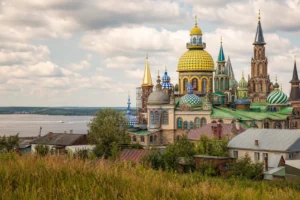 Temple of All Religions, Kazan – about 38.1 km away · typical visit: 1–2 hoursOpen daily 09:00–18:00
Main image: AI-generated illustration. It may not show the place exactly as it looks.
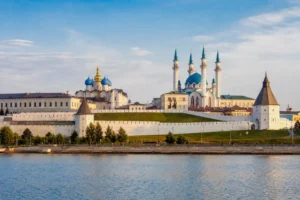 Kazan Kremlin – about 29.8 km away · typical visit: 2–4 hours2 min on foot from Kremlyovskaya, Kazan metro, Open 24 hours
Main image: AI-generated illustration. It may not show the place exactly as it looks.
Related guides
 Sviyazhsk Island, Kazan: Boats, Tickets and What to See
Main image: AI-generated illustration. It may not show the place exactly as it looks.
Browse more: All Churches · All Day Trips · All Day Trips in Kazan · All Kazan
FAQ: Raifa Monastery, Kazan
Is there an entrance fee for Raifa Monastery?
No, entry is free. The monastery grounds, churches, holy spring and lake shore are open to all visitors during posted hours (daily 7:00 a.m. to 8:45 p.m.). No advance booking is required for general visits.
Can I visit during Orthodox services?
Yes, but respectfully. Visitors may stand in the back or designated areas during services. Services are held throughout the day following the Orthodox calendar; major services occur in early morning and evening. Modest dress is required.
What should I wear to visit the monastery?
Modest dress is recommended. Women should cover shoulders and knees; a headscarf for women is traditional and appreciated during services but not mandatory for tourists. Men should wear long trousers and sleeved shirts. These practices show respect for the active monastic community.
How far is Raifa Monastery from Kazan, and how do I get there?
The monastery is approximately 30 kilometres northwest of Kazan, roughly 1 hour by car or taxi. Guided tours from Kazan take 4 hours total (including travel and visit). Commuter buses run several times daily from the central bus station (approximately 1.5 hours). Private car rental is also available.
Can I collect holy water from the spring?
Yes, the Raif Spring is located on monastery grounds and is free and open to visitors. The water is traditionally considered to have healing properties and has been consecrated by the Patriarch. Bring a small container if you wish to take water with you.
Is Raifa Monastery part of the Kazan Kremlin or another institution?
No, it is a separate, independent monastery located outside Kazan in Raifa village. It operates as a functioning men's monastery of the Russian Orthodox Church and is not part of the Kremlin, museums or other Kazan attractions.
What is the best time of day to visit?
Weekday early mornings (7–10 a.m.) and late afternoons (4–6 p.m.) offer the best light, fewest crowds and most peaceful atmosphere. Weekends and summer attract more pilgrims and tour groups. Avoid visiting during major services (typically early morning and evening) unless you wish to observe them.
Can I visit Raifa Monastery and Sviyazhsk Island on the same day?
Yes, both are approximately 30 kilometres from Kazan in similar directions. Many tours and visitors combine the two sites. Plan 2–3 hours at each location plus 1–2 hours travel time. Departing Kazan early (7–8 a.m.) allows time for both.
Russia Vibes is a one-person project. A coffee keeps it going
Last updated: October 18, 2026.
How we research and update our guides
About this guide: AI assistance and accuracy
This guide is created with the help of AI and is based on official sources where available. Mistakes can still happen. Opening hours, prices, rules and other details are given to the best of our knowledge as of the date shown and can change without notice. It offers general recommendations only, not professional, legal or travel advice. Please confirm important details with the official source before you travel; you are responsible for your own plans and decisions.
International sanctions affect payments between Russia and many other countries. In practice, cards issued in the EU, the UK, the US and several other countries often do not work in Russia, Russian cards usually do not work abroad, and some booking platforms, airlines and payment providers limit or suspend their services for Russia. The situation changes frequently. We do not give legal or financial advice, and this site does not encourage anyone to break or circumvent sanctions. Whatever you plan, you are responsible for following the laws and regulations that apply to you, including those of your country of residence and citizenship. Many travelers still organise their stay lawfully. It is worth asking your bank or payment provider what is currently permitted, contacting hotels, tour operators and carriers directly about the payment methods they accept, and checking which services are open to customers from your country. Clarify payment, cancellation and refund terms before you commit to a booking, and keep your plans flexible. Partner links on this site may not be available in every country, and prices, availability and rules in our guides can differ from what you see when you book.Paying for your trip: please read
Report an issue on this page

Take this guide with you
Get a free PDF of this guide to print or read offline: key facts, tips and a map link on a few clean pages.