
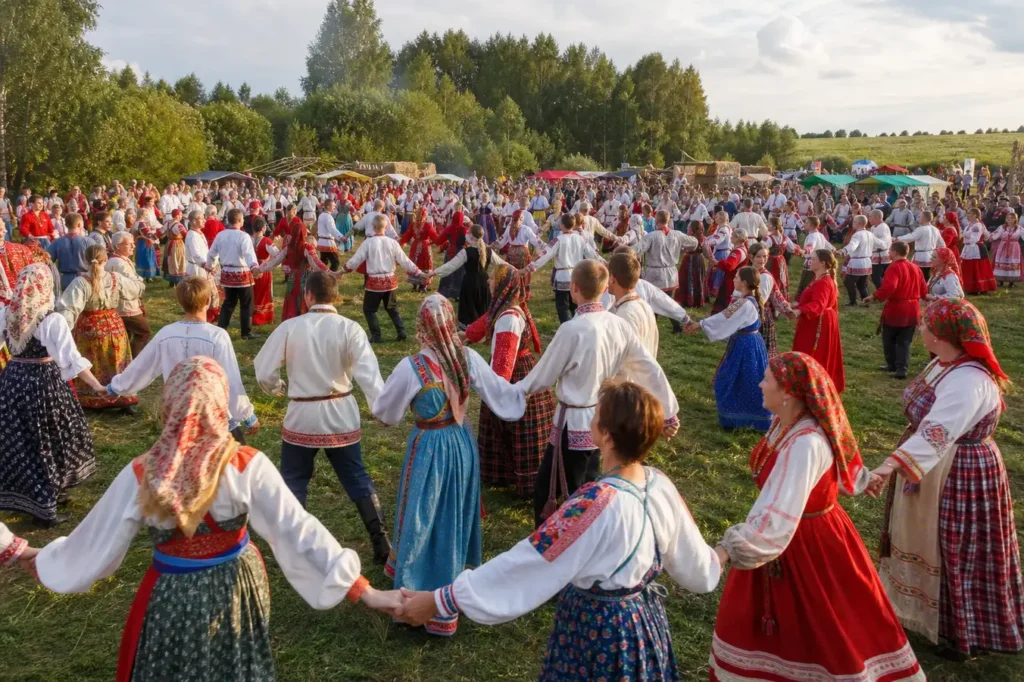
The Karavon Russian Folklore Festival is a celebration of traditional Russian village life and customs held every May in Nikolskoye, a small village in the Laishevsky District near Kazan. The festival’s centerpiece is the karavon, a large communal circle dance performed to traditional music, a tradition thought to be over 300 years old and originally performed in celebration of Saint Nicholas.
What began as a local custom was revived by the village’s House of Culture in the 1980s. Today, the Karavon Russian Folklore Festival draws more than 150 folklore ensembles and vocal groups from across Tatarstan and many other regions of Russia, along with thousands of spectators. The event showcases the regional diversity of Russian rural culture—different villages have their own songs, costumes, and traditions.
Quick Facts
| Russian name | Фестиваль русского фольклора «Каравон» |
|---|---|
| Type | Recurring event |
| When | Every year in May |
| Typical duration | 1 day |
| Public holiday | No, an observance (regular working day) |
| Address | Nikolskoye village, Laishevsky District, Tatarstan |
| District | Laishevsky District |
| Admission | free |
| Best time to visit | The festival occurs annually in late May, typically around the last weekend or week of May. If you wish to attend, plan a trip for this month. Attendance is consistently high, so expect crowds throughout the day. Early morning or mid-morning arrival offers somewhat smaller crowds than late afternoon, though the main performances and the final karavon circle dance draw the largest crowds. The weather in May is generally mild to warm in the Kazan region, though rain is possible—bring an umbrella or rain jacket as the festival is held outdoors rain or shine. The festival operates from morning into evening, culminating in the karavon circle dance. |
| Last updated | October 18, 2026 |
Dates, programs and prices change from year to year. Always check the official website for the current edition.
Why Visit Karavon Russian Folklore Festival, Kazan?
The festival offers a rare chance to experience authentic Russian folk traditions in their original village setting. Visitors witness live performances of traditional songs and dances by ensembles wearing regional costumes, participate in folk games such as archery, crossbow shooting, and hatchet throwing, and explore the crafts market where local artisans sell handmade goods. The festival celebrates not just music and dance, but the full texture of rural Russian life: cuisine, crafts, and the seasonal rhythms that shaped traditional culture. For many visitors, it is a window into how Russians in different regions express their heritage through distinct local customs.
What to Expect at Karavon Russian Folklore Festival, Kazan
The festival unfolds over one day with a schedule of performances and interactive activities. The morning and early afternoon feature concert performances on the main stage, where folklore groups sing traditional songs and perform dances in their regional costumes. Between performances, visitors can move between themed areas: the crafts market where artisans display and sell handmade items; interactive stations where visitors can try folk games and sports; and demonstration areas where traditional skills are shown live.
The festival culminates in the karavon—a large, communal circle dance in which performers and guests join by linking little fingers and moving together in the traditional “duck step” (утиный шаг), following both ancient tradition and a modern ritual that has defined this festival for decades. This final moment brings all participants together in a shared expression of Russian village culture.
Highlights of Karavon Russian Folklore Festival, Kazan
The Karavon Circle Dance
The festival's signature moment is the karavon itself—a traditional large circle dance performed to folk music. Participants link their little fingers and move together in the distinctive "duck step," a practice rooted in centuries-old village customs. This ritual appears at the festival's climax and welcomes both performers and spectators to join, creating a shared cultural experience that embodies the festival's purpose of preserving and celebrating Russian communal traditions.
Tip: Arrive by mid-afternoon to secure a good viewing position or to join the circle yourself; the dance typically takes place in the evening.
Folklore Performances
Over 150 folklore ensembles and vocal groups from across Russia present traditional songs and dances in regional costumes on the main stage. Each group represents its own district or region, bringing distinct musical styles, instruments, and performance traditions. The variety reveals how Russian folk culture differs by geography and ethnic composition, from the songs of northern Russia to the Volga region traditions.
Tip: Programs vary by year; arrive early to check the schedule of performances or ask organizers which regions will be represented.
Traditional Crafts Market
Local and regional artisans set up stalls throughout the festival grounds selling handmade goods—items made from wood, leather, felt, clay, birch bark, beads, and vines. These crafts represent living folk traditions, with makers sometimes demonstrating their techniques on site. Purchases directly support rural craftspeople and allow visitors to take home authentic, locally made items.
Tip: Bring cash, as not all vendors may accept cards. Arrive early for the best selection of items.
Folk Games and Sports Contests
The festival features participatory folk activities and traditional competitions: archery and crossbow shooting, hatchet throwing, feats of strength such as lifting heavy rocks or squatting while holding weights, and mock sword fighting. These activities connect to both traditional village skills and pre-modern warrior culture, offering visitors a hands-on sense of how rural Russians once trained and entertained themselves.
Tip: These activities fill up quickly; arrive mid-morning to sign up, or watch from the sidelines to see local and visiting performers compete.
Theatrical Prologue
The festival opens with a colorful theatrical performance that sets the tone for the day's celebration. This staged introduction uses humor, music, and costume to welcome visitors and introduce the themes and traditions that will be explored throughout the festival, easing the transition into the day's program.
Tip: Arrive before noon to see the opening ceremony and understand the festival's structure.
Karavon Museum
Visitors can explore exhibits of historic festival costumes, traditional village utensils, and artifacts documenting the festival's history since its revival in the 1980s. The museum helps contextualize what visitors see in performances and offers insight into how the modern festival connects to older village practices and seasonal celebrations.
Tip: Ask organizers for the museum's location on the festival grounds, as it may not have prominent signage.
What It Means for Your Visit
The Karavon Festival, held annually in late May, primarily affects the small village of Nikolskoye and the surrounding Laishevsky District. The festival draws thousands of visitors—typically 20,000 or more—to a rural village, which means the small local infrastructure experiences significant temporary crowding on the festival day. Roads in the district may see increased traffic, and local accommodations (guesthouses, local hotels) in nearby towns such as Laishevo fill quickly if you wish to stay overnight.
The festival does not typically cause closures or disruptions to museums or shops in Kazan itself, though it may draw visitors away from Kazan during late May. For travelers based in Kazan, attending requires a day trip to the Laishevsky District, roughly 1–2 hours’ travel from the city center by car or local transport. Public transport options are limited; many visitors arrange group travel through tour operators or travel by car. The festival is free to attend, though food and craft purchases involve additional cost. Come prepared for outdoor conditions: the festival is held rain or shine, typically in an open field.
Atmosphere
The festival transforms the village of Nikolskoye into a colorful gathering space filled with music, laughter, and the energy of thousands of visitors. The air carries the sounds of traditional instruments—accordions, pipes, and stringed instruments—blending with voices singing folk songs. Visitors walk between colorful performance stages and craft stalls, stepping between open grassy areas dotted with spectators sitting on the grass or standing in clusters.
The dominant visual impression is costume: performers in traditional regional dress of deep reds, blues, and whites, women in embroidered shifts and headscarves, men in tunics and hats. Families with children wander between activities; groups of friends stake out spots to watch performances. The mood balances celebration with a sense of cultural reverence—this is serious business for participants, an annual reaffirmation of traditions, even as the day carries festive joy and informality. By evening, when the karavon begins, the atmosphere shifts to collective participation and ritual.
History of Karavon Russian Folklore Festival, Kazan
The karavon itself is an ancient Russian village tradition. The word refers to a large circle dance performed at seasonal celebrations, particularly in spring to mark the transition from winter and to invoke prosperity for the agricultural year ahead. The tradition has roots reaching back centuries, with accounts suggesting it existed for more than 300 years in the village of Nikolskoye specifically, often performed on or around the feast day of Saint Nicholas (December 19 in the Orthodox calendar, or the corresponding date in other calendar systems), though it also appears in spring celebrations.
The modern festival was revived in 1988, when the village’s House of Culture and local enthusiasts formally organized the karavon as an annual public event. This revival occurred during the late Soviet period, when there was renewed interest in preserving folk traditions. The first Karavon Festival in 1988 began modestly, with only three folklore ensembles participating. Over subsequent decades, the festival grew substantially as more regions and ensembles sought to participate and as word spread among folk music communities across Russia.
By the 2010s, the festival had become a major regional event, regularly drawing over 150 folklore groups and more than 20,000 spectators annually. In 2019, it was formally recognized as an observance holiday in the Republic of Tatarstan. The festival has evolved into what its organizers describe as a “cultural brand” and “visiting card” of Tatarstan, showcasing Russian folk traditions to a national audience while giving villages and regional folk groups a platform to perform. The festival remains rooted in its location in Nikolskoye and retains its connection to both the ancient karavon tradition and local village culture.
Tickets and Booking for Karavon Russian Folklore Festival, Kazan
The Karavon Russian Folklore Festival is free to attend and does not require advance booking or tickets. Entry is open to all visitors. The festival is held annually, typically in late May (dates vary slightly by year). To confirm the exact date for a given year and to learn about any program details, check the official website of Tatarstan’s Ministry of Culture or regional tourism authority, as scheduling and program details change annually. No special permits or advance registration are required for general visitors; simply arrive on the day of the festival. The village of Nikolskoye has limited parking and basic facilities, so plan accordingly.
Get Tickets for Karavon Russian Folklore Festival, Kazan
How to Get to Karavon Russian Folklore Festival, Kazan
Nikolskoye village is located in the Laishevsky District, approximately 50–60 km southwest of Kazan city center. The village is not directly served by Kazan’s metro system.
By car or taxi: The most practical option for most visitors is to hire a car or taxi from Kazan (approximately 1–1.5 hours’ drive, depending on traffic and exact location). Shared taxi services (marshrutkas) operate between Kazan and Laishevo, the district capital, but service from Laishevo to Nikolskoye is infrequent. Travel time is roughly 1–2 hours depending on your starting point in Kazan and traffic conditions.
By public transport: Take a marshrutka (shared minibus) from Kazan’s central bus stations (such as Tsentralnaya Avtostantsiya) heading to Laishevo or other towns in the Laishevsky District. From Laishevo, you may need to hire a local taxi or arrange transport to Nikolskoye (roughly 20–30 km away). This option is slower and less reliable than private hire, but cheaper.
Guided tours: Many Kazan travel agencies organize day trips to the Karavon Festival during the event, including transport from Kazan. This is convenient for first-time visitors unfamiliar with the route and allows you to avoid navigating transport independently.
Accessibility
The festival is held outdoors on open ground in a rural village setting. Wheelchair accessibility is limited; the terrain is typically uneven grass with no paved paths between performance areas or activity stations. There are few formal seating areas; most spectators stand or sit on the grass. Parking is available but can be muddy in wet weather. There are portable restroom facilities typical of outdoor festivals, but facilities are basic. Visitors with mobility concerns should plan to arrive early to secure an accessible viewing spot as close as possible to performances, or arrange assistance. Families with small children can access most of the festival, though pushing strollers on grass terrain is challenging.
Food Nearby
The festival typically has food vendors on-site selling traditional Russian snacks and festival fare—items such as pies, bread, grilled meats, and hot drinks. These vendors operate only during the festival. The village of Nikolskoye has no formal restaurants or cafes; any accommodations or dining options would be in the larger town of Laishevo, approximately 20–30 km away. Pack snacks, water, and a picnic if you prefer to eat in a particular style or have dietary restrictions.
What to Bring
Bring comfortable walking shoes suitable for grass or potentially muddy ground. Sunscreen, a hat, and water are essential, as the festival is outdoors with limited shade. If rain is forecast, bring an umbrella or rain jacket, as the event proceeds rain or shine. Binoculars can improve viewing of distant stage performances. Bring cash for food vendors, craft purchases, or any activities; card payment is not widely available. A phone with a charged battery is useful for photos and for contacting drivers or travel companions. Bags are subject to basic security checks; prohibited items such as weapons are typically not allowed.
Best Views and Photo Spots of Karavon Russian Folklore Festival, Kazan
Main stage performance area
The stage is typically elevated or set in a central location where folklore groups perform in full regional costume. From a mid-distance vantage point, you can capture performers mid-motion, with the crowd and festive atmosphere visible around them, creating a lively composition.
Best time: Mid-morning to mid-afternoon during active performances; early performances often have better light and slightly smaller crowds around the stage.
Karavon circle dance final moment
As performers and guests form the large circle hand-in-hand, the scene captures hundreds of people linked together moving in unison. Shooting from outside the circle, looking inward, captures the sense of collective participation and the colorful costumes in motion.
Best time: Late afternoon or early evening, during the festival's finale; arrive well in advance to secure a position outside the forming circle.
Crafts market stalls
Detailed shots of traditional handmade items—embroidered textiles, wooden crafts, beaded work—displayed on stalls or in artisans' hands. Close-up photography captures the skill and artistry of folk crafts and gives context to traditional skills.
Best time: Morning hours when light is clear and vendors are actively working; later in the day the market can become crowded.
Folk games and sports activities
Photographs of participants and spectators engaged in traditional contests—archery, hatchet throwing, tug-of-war—capture dynamic action and the participatory atmosphere. The natural competitive energy and varied expressions make strong subject material.
Best time: Mid-morning through early afternoon when these activities are most active; crowds are smaller than around evening performances.
Crowd and overall festival landscape
Wide-angle shots from a higher vantage point (if available) capture the full expanse of the festival—multiple stages, crowds in festive dress, craft stalls, and the rural landscape beyond—conveying the scale and festive atmosphere of the day.
Best time: Late morning or early afternoon when many activities are underway and crowds are distributed across the grounds.
Photography Rules
Photography and filming are generally permitted for personal use at the festival. Use of tripods and professional video equipment may require advance permission from organizers; check current rules before bringing such gear. Flash photography during performances is not recommended out of courtesy to performers. Drones are not permitted. Be respectful when photographing performers and traditional ceremonies, particularly the final karavon circle dance.
Family Suitability
The festival is very family-friendly and welcomes children. The outdoor setting, folk games, and hands-on activities appeal to children, and the colorful costumes and music are engaging for young visitors. Teenagers may appreciate the performances and cultural aspects, while younger children enjoy the games and outdoor exploration. The festival is long (full day) and involves standing and walking on grass, so bring supplies for children (water, snacks, sun protection). Strollers are challenging on grass terrain; older children should be able to walk comfortably. Families should plan for breaks away from crowds, as the festival can become crowded and loud by afternoon.
Russia Vibes Tips
- Arrive early (by mid-morning) to explore the crafts market and activities with smaller crowds, and to secure good viewing spots before the main performances and the final karavon circle dance draw peak crowds late in the day.
- Bring cash in small denominations for food, drinks, and craft purchases; many vendors are small operators and card payment may not be available.
- The festival culminates in the karavon circle dance in the late afternoon or early evening; if this is your primary reason for attending, plan your schedule around it and stay for the full day to understand the festival's build-up and context.
- Wear or bring layers and rain protection; late May weather in the Kazan region can vary, and the festival is held outdoors regardless of weather.
- Do not rely on public transport for a same-day round trip from Kazan unless you book a guided tour; arrange a car or taxi in advance, as trying to coordinate marshrutka schedules to and from a small village can be unpredictable and time-consuming.
- If you speak Russian, chat with performers and artisans during breaks; many are enthusiastic about sharing details about their regional traditions and crafts, enriching your experience beyond what you observe on stage.
Explore Nearby Karavon Russian Folklore Festival, Kazan
Sights near Karavon Russian Folklore Festival, Kazan
 Temple of All Religions, Kazan · typical visit: 1–2 hoursOpen daily 09:00–18:00
Main image: AI-generated illustration. It may not show the place exactly as it looks.
 Kazan Kremlin · typical visit: 2–4 hours2 min on foot from Kremlyovskaya, Kazan metro, Open 24 hours
Main image: AI-generated illustration. It may not show the place exactly as it looks.
Events and traditions near Karavon Russian Folklore Festival, Kazan
 Sabantuy, Kazan
Main image: AI-generated illustration. It may not show the place exactly as it looks.
Related guides
 Sviyazhsk Island, Kazan: Boats, Tickets and What to See
Main image: AI-generated illustration. It may not show the place exactly as it looks.
 Kazan International Airport, Kazan: Terminals and Transfers
Main image: AI-generated illustration. It may not show the place exactly as it looks.
Browse more: More in Laishevsky District · All Entertainment · All Events & Holidays · All Events & Holidays in Kazan · All Kazan
FAQ: Karavon Russian Folklore Festival, Kazan
What is the karavon?
The karavon is a large communal circle dance in which participants link their little fingers and move together in a distinctive "duck step" to traditional folk music. It is both an ancient Russian village tradition and the centerpiece of the modern festival. The term also refers to the seasonal springtime celebrations that featured this dance. Joining the karavon is often the emotional and cultural highlight of the festival day.
When exactly is the Karavon Festival held?
The festival is held annually in late May, typically in the last week or on the last weekend of May. The exact date varies by year. To confirm the precise date for your visit, check the official website of Tatarstan's Ministry of Culture or local tourism resources closer to your travel date, as schedules are announced annually.
Is there a fee to attend?
No, entry to the Karavon Festival is free. Food, drinks, and craft purchases are available at additional cost, but simply attending the performances, games, and the karavon circle dance requires no ticket or advance booking.
How do I get to Nikolskoye from Kazan?
Nikolskoye is about 50–60 km from Kazan city center, roughly 1–1.5 hours by car. Most visitors hire a private car or taxi. Shared minibuses (marshrutkas) run from Kazan to Laishevo (the district capital), but connections to Nikolskoye are infrequent. Booking a guided day trip through a Kazan travel agency is convenient and removes transport concerns.
Can I participate in the karavon circle dance, or am I only a spectator?
The karavon is designed to welcome participation from both performers and festival guests. You can join the circle by stepping in and linking your little finger with others around you. However, spectators typically gather on the outside to watch; you should be prepared to join actively if you wish to participate or remain as an observer if you prefer.
What performances should I prioritize seeing?
The opening theatrical prologue sets the festival's tone. Main stage performances run throughout the day, with different ensembles performing traditional songs and dances in regional costumes. The final karavon circle dance is the festival's centerpiece and should not be missed. Check the day's program on arrival to prioritize performances from regions or styles that interest you.
Is the festival suitable for very young children?
Yes, but plan accordingly. Young children enjoy the colors, music, and outdoor setting, and folk games appeal to them. However, the festival is a full outdoor day with limited formal facilities; bring water, snacks, sun protection, and plan for rest breaks. Strollers are difficult on grass terrain; children should be able to walk comfortably. The crowds and noise in the late afternoon may be overwhelming for very small children.
Are there restaurants or cafes at the festival?
The festival has food vendors selling traditional snacks, pies, bread, and drinks, but no sit-down restaurants. Nikolskoye village itself has no formal dining options; restaurants are in the town of Laishevo. Pack snacks or plan to eat from festival vendors.
Russia Vibes is a one-person project. A coffee keeps it going
Last updated: October 18, 2026.
How we research and update our guides
About this guide: AI assistance and accuracy
This guide is created with the help of AI and is based on official sources where available. Mistakes can still happen. Opening hours, prices, rules and other details are given to the best of our knowledge as of the date shown and can change without notice. It offers general recommendations only, not professional, legal or travel advice. Please confirm important details with the official source before you travel; you are responsible for your own plans and decisions.
International sanctions affect payments between Russia and many other countries. In practice, cards issued in the EU, the UK, the US and several other countries often do not work in Russia, Russian cards usually do not work abroad, and some booking platforms, airlines and payment providers limit or suspend their services for Russia. The situation changes frequently. We do not give legal or financial advice, and this site does not encourage anyone to break or circumvent sanctions. Whatever you plan, you are responsible for following the laws and regulations that apply to you, including those of your country of residence and citizenship. Many travelers still organise their stay lawfully. It is worth asking your bank or payment provider what is currently permitted, contacting hotels, tour operators and carriers directly about the payment methods they accept, and checking which services are open to customers from your country. Clarify payment, cancellation and refund terms before you commit to a booking, and keep your plans flexible. Partner links on this site may not be available in every country, and prices, availability and rules in our guides can differ from what you see when you book.Paying for your trip: please read
Report an issue on this page

Take this guide with you
Get a free PDF of this guide to print or read offline: key facts, tips and a map link on a few clean pages.