
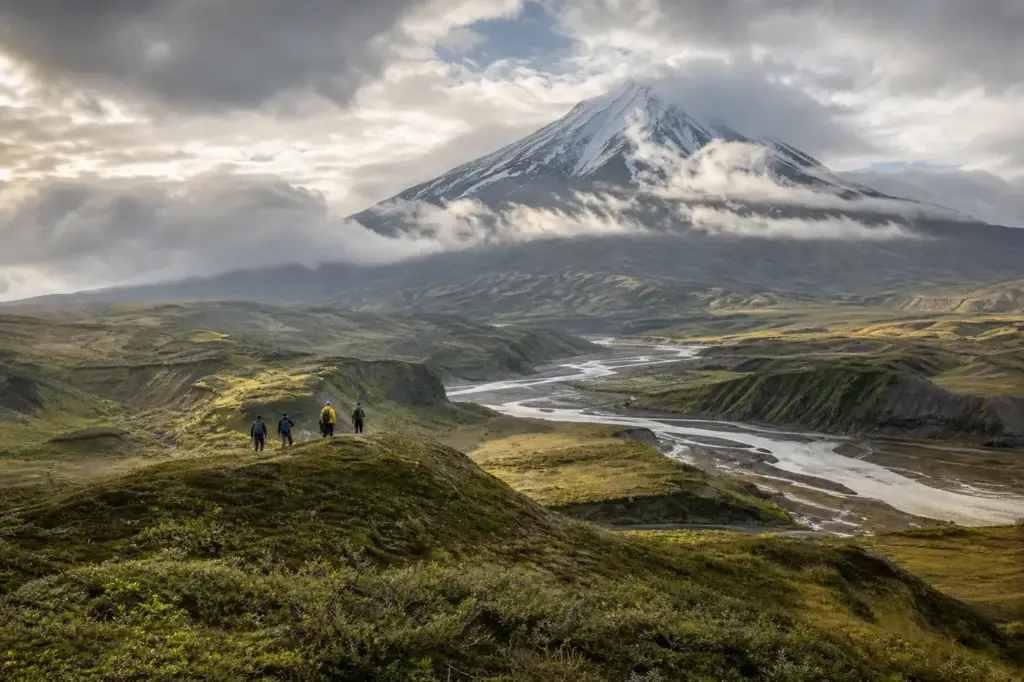
This guide explains how to prepare for Kamchatka weather and changing conditions, which can turn from sun to wind, rain, fog or snow within an hour, especially near volcanoes and the coast. It is for hikers, tour participants and photographers planning outdoor days.
The recommended approach is to check a forecast for the exact area, dress in layers, keep spare days in the schedule and agree a turn-back time with your guide. The steps below show how to plan before the trip and on the day, and the options compare the main information sources. Conditions differ by area and month, so use the steps as a routine rather than a forecast.
Quick answer: Check the forecast for your exact area, dress in layers with a waterproof shell, keep spare days for cancellations and agree a turn-back time with your guide. Recheck on the morning of every outdoor day.
At a Glance
| Total time | About 15 minutes of planning the day before |
|---|---|
| Typical cost | Free |
What You Need Before You Start
- Layered clothing and a waterproof shell
- Sturdy waterproof boots
- A phone with offline maps or an eSIM
- A flexible schedule with spare days
- Water, snacks and a headlamp
Compare Your Options
| Option | Duration | Price | Notes |
|---|---|---|---|
| National weather service forecast | Few minutes | Free | Official forecasts for regions and towns. Best for the general picture. |
| Mountain forecast for the area | Few minutes | Free | Shows wind and cloud by elevation. Best for hikes and volcanoes. |
| Your operator or guide | Few minutes | Free | Local knowledge about conditions on the route. Best for the final decision. |
| Hotel or local contacts | Few minutes | Free | Useful for road and transport news. Not a substitute for a forecast. |
| Webcams and live views | Few minutes | Free | Show current cloud and visibility. Best for last-minute checks. |
₽ budget · ₽₽ moderate · ₽₽₽ upscale · ₽₽₽₽ splurge. Price levels are estimates compared with typical prices for visitors.
Step-by-Step Instructions
Step 1: Know how the weather behaves
The peninsula sits between the Pacific and the Sea of Okhotsk, so fog, wind and rain arrive quickly. Mountains make their own weather, and a sunny valley can hide a cold, cloudy summit. Summers are mild, but nights are cold in the hills, and winters are snowy and windy. Expect change rather than a stable forecast.
Tip: Plan for the weather at the summit, not at the hotel.
Step 2: Check the forecast for your area
Look at a forecast for the exact area, such as the volcano or valley, not just Petropavlovsk-Kamchatsky. Use the national weather service or a mountain forecast that shows wind, cloud and precipitation by elevation. Check the next two days and the trend, not just the current hour.
Tip: Save the forecast pages for offline reading.
Step 3: Dress in layers
Wear a base layer that dries quickly, a warm middle layer and a waterproof, windproof shell. Add a hat and gloves even in summer, because wind chill is strong on ridges. Avoid cotton, which stays wet. Take a spare dry layer in a waterproof bag, and wear boots that grip on wet ground.
Tip: Pack gloves and a hat on every trip, whatever the month.
Step 4: Keep spare days
Flights, boat trips and helicopter tours are often postponed because of cloud and wind. Keep at least one spare day around any weather-dependent trip, and book the most important activity early in your stay. Avoid scheduling an international flight the evening after a remote trip.
Tip: Ask the operator how they rebook cancelled days.
Step 5: Protect against sun, insects and wet
The sun is strong on snow and on high ground, so bring sunglasses and sun cream. In summer, mosquitoes and midges can be intense in valleys, so carry repellent and consider a head net. Waterproof your gear and keep electronics in dry bags, because rain and river spray are common.
Tip: Keep your phone and camera in a dry bag.
Step 6: Set a turn-back time
Agree a turn-back time with your guide before you start, and respect it. Falling temperature, rising wind or thickening cloud are signs to descend. The guide has the final say. Turning back is part of mountain travel, not a failure, and weather can close a route within an hour.
Tip: Tell someone your route and your expected return.
Step 7: Recheck on the morning
Look at the forecast again at breakfast, ask your operator whether the route is open and adjust the plan if needed. Conditions change overnight, and closures are announced at short notice. If the guide changes the plan, accept it and use the spare day.
Tip: Keep a list of low-risk alternatives such as a hot spring or museum.
Common Mistakes to Avoid
- Checking only the city forecast and not the mountain area.
- Starting a long hike without a waterproof shell because the morning is sunny.
- Skipping gloves and a hat in summer.
- Booking a weather-dependent trip on the last day before an international flight.
- Ignoring the turn-back time because the view is good.
Tickets, Payment and Booking
Weather information is free, and you do not need a ticket. Use official forecasts, your operator and local contacts, and keep spare days for weather-dependent trips.
- Where: the national weather service, mountain forecasts, your licensed local operator and your hotel.
- Payment: nothing to pay for forecasts. For tours, cards issued outside Russia do not work, so ask which methods the operator accepts for visitors and plan cash.
- Warnings: do not rely on a single forecast, and avoid advice that cannot name its source.
Conditions change quickly, so confirm plans with your operator on the morning of each trip.
Russia Vibes Tips
- Check the forecast at breakfast and again at lunch; afternoon changes are common.
- Ask the guide which side of the mountain is sheltered and plan photo stops accordingly.
- Carry a thermos; hot drinks help more than extra clothes when you are cold and wet.
- Wear light gloves under warm ones so you can use a camera without bare hands.
- Dry your boots overnight; wet feet end days faster than steep ground.
- Download offline maps and consider an eSIM; coverage disappears on the slopes.
Explore Nearby How to Prepare for Kamchatka Weather and Changing Conditions, Kamchatka Peninsula
Related guides
 Kamchatka Peninsula: Volcanoes, Wildlife and Travel Guide
Main image: AI-generated illustration. It may not show the place exactly as it looks.
Browse more: All Etiquette and Safety · All How-To · All How-To in Kamchatka Peninsula · All Kamchatka Peninsula
FAQ
Why is Kamchatka weather so changeable?
The peninsula lies between the Pacific and the Sea of Okhotsk, and volcanoes create their own cloud and wind. Fog, rain and sun can follow each other within an hour. Plan layers, spare days and a flexible schedule. Check again on the morning, because conditions can shift overnight.
What should I wear on a summer hike?
Quick-drying base layer, a warm middle layer, a waterproof, windproof shell, hat, gloves and sturdy waterproof boots. Add sun protection and insect repellent. Nights and ridges are cold even in July, so carry a spare dry layer. Conditions differ by area and month, so ask your guide for local detail.
Can weather cancel tours?
Yes, often. Helicopter flights, boat trips and mountain excursions depend on cloud, wind and visibility. Ask how your operator reschedules, and keep at least one spare day around weather-dependent trips. A flexible plan matters more than a perfect forecast. Local guides notice changes early, so follow their advice on the day.
Where do I find a reliable forecast?
Use the national weather service and a mountain forecast for the exact area, and ask your operator. Check the next two days and the trend. Avoid relying on one source or old screenshots. Conditions differ by area and month, so ask your guide for local detail.
What are the signs to turn back?
Falling temperature, rising wind, thickening cloud, rain on the slopes or poor visibility. Agree a turn-back time with your guide before you start. The guide has the final say, and the decision is part of safe travel. Conditions differ by area and month, so ask your guide for local detail.
Are mosquitoes a problem?
Yes in summer, especially in valleys and near water. Bring repellent, long sleeves and, if you are sensitive, a head net. Wind on ridges helps, but camps and river valleys can be buggy. Insects are usually worst in calm, damp weather.
Is winter weather dangerous?
It can be, with deep snow, strong wind and low visibility. Avalanche risk exists on volcano slopes. Use licensed guides and gear, check conditions and keep plans flexible. Short outings near towns are the easiest option. Conditions differ by area and month, so ask your guide for local detail.
What if the weather ruins my plans?
Use the spare day, switch to an alternative such as a hot spring, museum or city walk, and ask the operator about rebooking. Do not push on for the sake of a plan; conditions change fast. Check again on the morning, because conditions can shift overnight.
Russia Vibes is a one-person project. A coffee keeps it going

Take this guide with you
Get a free PDF of this guide to print or read offline: key facts, tips and a map link on a few clean pages.
Report an issue on this page
Paying for your trip: please read
Payments and bookings between Russia and many other countries are currently restricted. In practice, cards issued in the EU, the UK, the US and several other countries often cannot be used in Russia, Russian cards usually cannot be used abroad, and some booking platforms, airlines and payment providers limit or pause their services for Russia. The situation changes frequently.
We do not give legal or financial advice, and this site does not encourage anyone to break any rule that applies to them. Whatever you plan, you are responsible for following the laws and regulations that apply to you, including those of your country of residence and citizenship.
Many travelers still organise their stay without problems. It is worth asking your bank or payment provider what is currently possible, contacting hotels, tour operators and carriers directly about the payment methods they accept, and checking which services are open to customers from your country. Clarify payment, cancellation and refund terms before you commit to a booking, and keep your plans flexible.
Partner links on this site may not be available in every country, and prices, availability and rules in our guides can differ from what you see when you book.
How we research and update our guides
About this guide: AI assistance and accuracy
This guide is created with the help of AI and is based on official sources where available. Mistakes can still happen. Opening hours, prices, rules and other details are given to the best of our knowledge as of the date shown and can change without notice. It offers general recommendations only, not professional, legal or travel advice. Please confirm important details with the official source before you travel; you are responsible for your own plans and decisions.
* Affiliate link: as an Amazon Associate we earn from qualifying purchases at no extra cost to you.